Inside COCOONMAN's Silk Digital Factory: How a Textile MES System Manages Every Stage
Inside COCOONMAN's Silk Digital Factory: How a Textile MES System Manages Every Stage
Silk production is one of the most demanding textile processes. Greige fabric is delicate, dyeing is sensitive to temperature, and finishing determines the final hand-feel. Managing every stage—from greige fabric to finished product—requires more than experience. It requires real data.
At COCOONMAN, we built our own textile MES system to manage exactly that. This article takes you inside our silk digital factory: how we track every order, every batch, and every process step across in-house and outsourced production.
Why Silk Production Is Hard to Manage
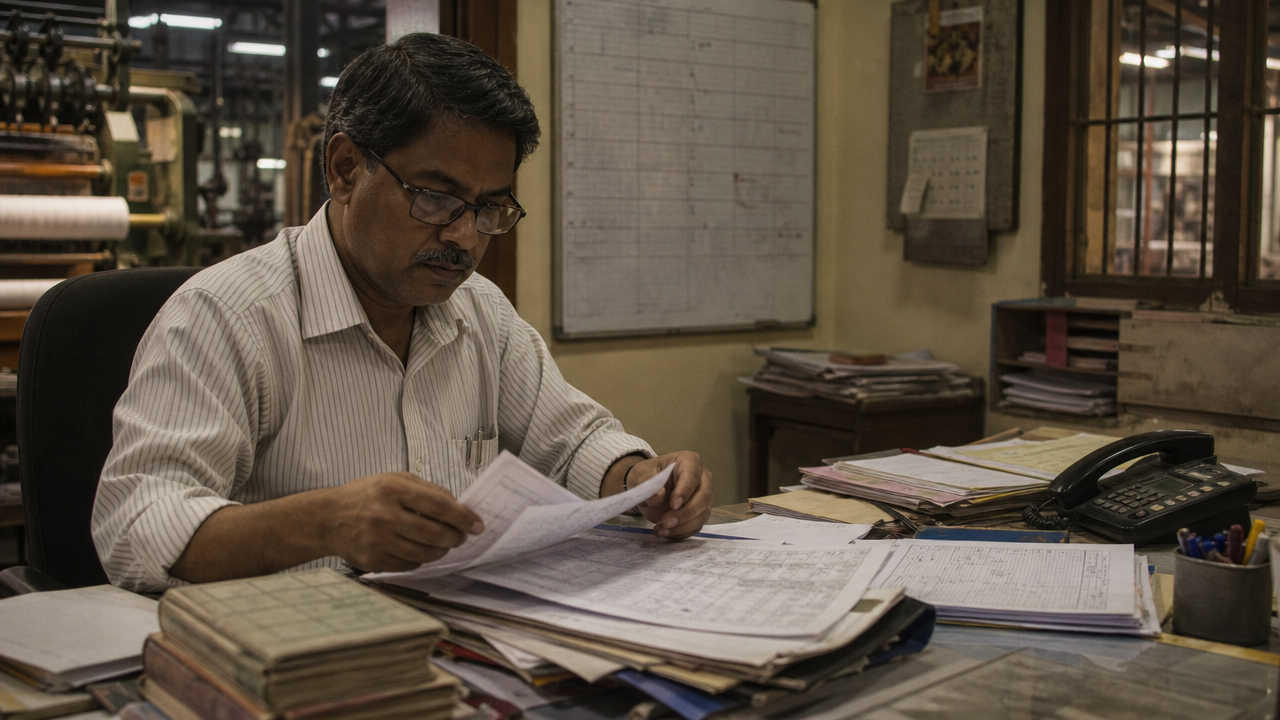
*Traditional silk production: paper records, manual tracking, no real-time data.*
Silk is not a forgiving material. A small deviation in dyeing temperature, finishing pressure, or process timing can change the final hand-feel. Managing this across dozens of process steps—and often across multiple workshops and external partners—is a real operational challenge.
In a traditional silk factory, three problems come up again and again:
1. Production status is not real-time. When a customer asks where their order is, someone has to physically walk to the workshop and ask. The answer is often vague: "It's in dyeing" or "Should be done next week."
2. Quality issues are hard to trace. A batch of silk products arrives with inconsistent color or texture. The factory traces back through paper records—if they exist. Days later, the answer is still uncertain. Was it the greige fabric batch? The dyeing temperature? The finishing process?
3. Delivery dates shift without warning. Without a real-time view of production capacity, scheduling is guesswork. A rush order comes in, and everything shifts.
These aren't rare edge cases. They are the default outcome of managing silk production with manual processes. The root cause is always the same: no real-time data, no batch-level records, no early warning system.
At COCOONMAN, we built our MES system to solve exactly this.
What Our Digital Factory Changes
A digital factory doesn't just talk about transparency. It changes what we can control on the factory floor—and what we can commit to the brands we work with.
Visibility: from "walk to the workshop" to "see it in the MES".
In a traditional setup, checking order status means walking to the workshop and asking a supervisor. In our digital factory, when a batch moves to a key production node—such as entering the dyeing factory, the finishing workshop, or an external partner—UWB positioning automatically updates its location status → the sales team sees it in the MES in real time. For nodes without UWB coverage, status is updated through manual entry, so the production record stays complete.
Traceability: from "paper records" to "batch-level trace in hours".
When a quality issue arises, the system pulls the full batch record—including which production node the batch passed through, when it arrived, and when it returned—based on UWB-tracked location updates and manual entries. The batch can be traced back to the exact workshop or external partner. Root cause found within hours.
Prevention: from "find out after the deadline" to "internal alert before the delay".
The planning module monitors capacity and lead times in real time based on actual UWB-tracked progress. When a potential delay is detected, an internal alert is triggered for the planning team—before the delivery date is missed.
Visibility tells us where things are. Traceability tells us why things went wrong. Prevention stops problems before they reach the customer.
This is the difference between reacting to problems and preventing them.
How COCOONMAN's MES System Works
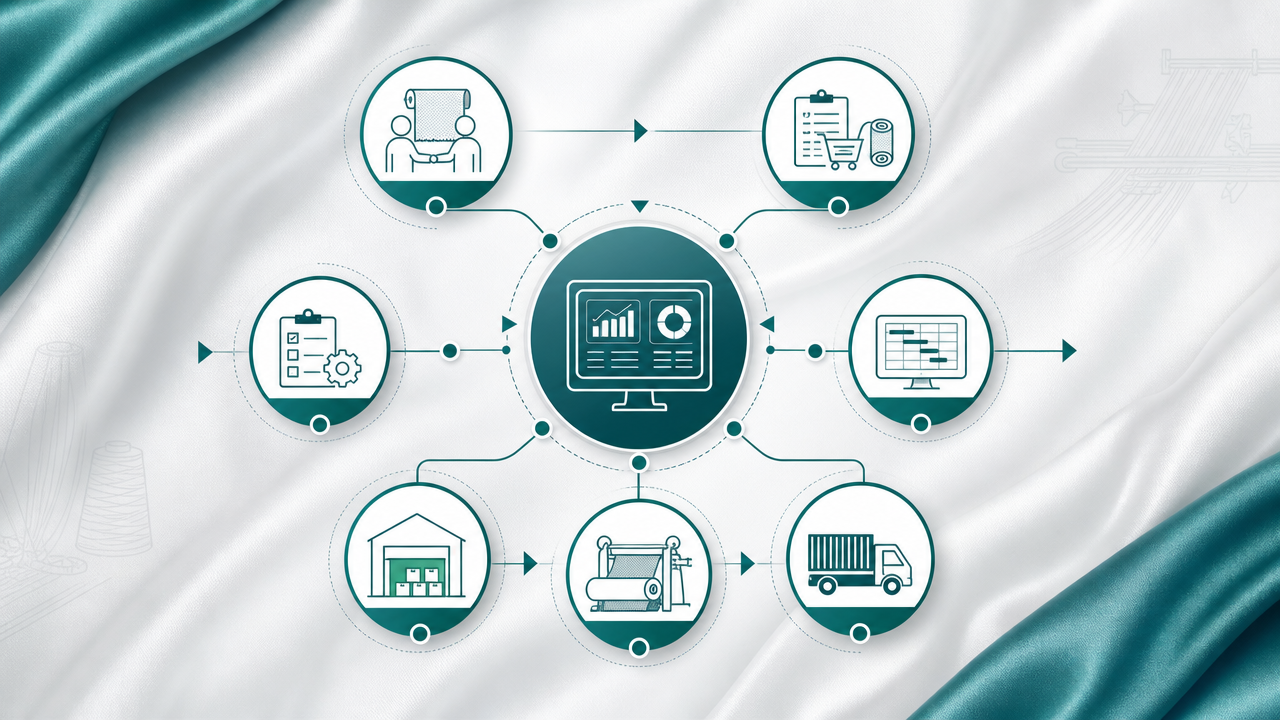
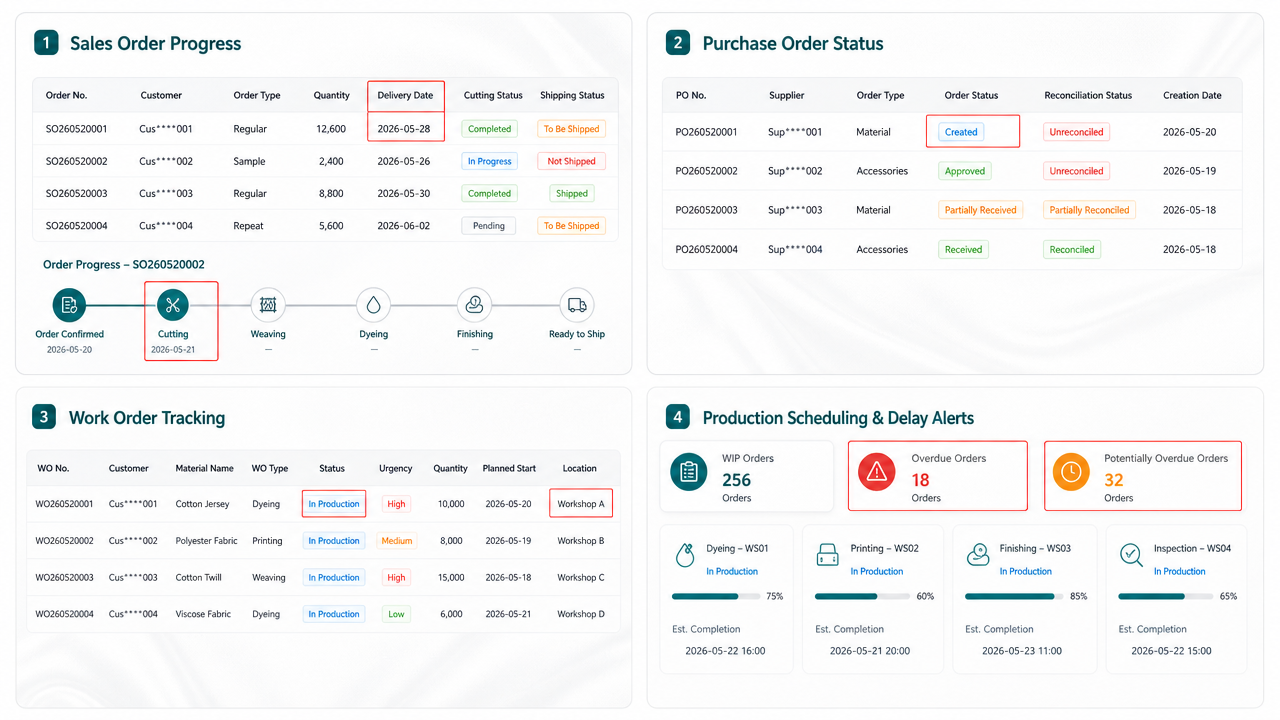
Our MES system connects every stage of silk production—from sales and purchasing to planning, warehousing, process control, and outsourcing. This translates into four practical capabilities:
1. Real-time order visibility. Every order is broken down into work orders. Each work order has a status. Status is updated through manual entry and, at key process zones, automatically via UWB positioning. The sales team can see exactly where each order is in production—no phone calls, no guesswork. *Result: faster and more accurate answers to customer inquiries.*
2. Batch-level traceability. Every batch of greige fabric is logged. Its location status at each key production node—such as in-house workshops, the dyeing factory, the finishing partner, or back from an external process—is recorded automatically via UWB and manual entry. If a quality issue arises, the system traces the batch back to the exact node and time. *Result: faster root-cause analysis, fewer repeated defects.*
Beyond tracing where a batch has been, the system also connects finished-product quality back to the greige fabric batch. When a batch of finished silk products shows a higher defect rate—such as inconsistent color, texture, or hand-feel—the MES system can trace the issue back to the specific greige fabric batch used in production. This allows COCOONMAN to identify whether the root cause lies in a particular raw material batch, and to make better-informed decisions in raw material selection and supplier evaluation. *Result: quality control that starts from the finished product and reaches back to the source.*
3. Proactive delay alerts. The planning module monitors capacity and lead times in real time based on actual production progress. When a potential delay is detected, an internal alert is triggered for the planning team—before the delivery date is missed. *Result: delivery dates we can actually commit to.*
4. External partner collaboration. For outsourced processes such as dyeing, printing, or special finishing, external partners can log into a dedicated portal to receive work orders, update progress, and upload inspection results. Their progress feeds back into the main MES, so outsourced stages are tracked with the same visibility as in-house production. *Result: no black-box outsourcing, no lost track of external batches.*
Traditional vs. Digital: What Changes on the Factory Floor
| Production Question | Traditional Silk Factory | COCOONMAN Digital Factory |
|---|---|---|
| Where is this order right now? | Walk to the workshop and ask | Check the MES in real time |
| Why did this batch have a quality issue? | Trace through paper records, often inconclusive | Batch-level traceability report within hours |
| Will this delivery be delayed? | Discover after the deadline passes | Internal alert before the delay happens |
| Can we prove the production conditions? | Rely on paper records | Digital batch records, including outsourced stages |
| How is the order status updated? | Manual reporting, often delayed | Manual entry plus UWB auto-updates at key production nodes |
The difference isn't just efficiency. It's the ability to make commitments we can keep—and prove it.
Full-Chain Management: From Greige Fabric to Finished Product
Full-chain management means every stage of production is connected and recorded. For silk products, this is not a luxury—it's a necessity.
In one case, a client reported inconsistent hand-feel across a batch of silk scarves. In a traditional setup, tracing this would take days. Our system pulled the batch record and traced the batch's movement across every production node—within 20 minutes.
The system showed:
- Greige fabric batch: #G-2501, from supplier A
- Dyeing factory: arrived 2025-03-12, returned 2025-03-15
- Finishing workshop: arrived 2025-03-16, returned 2025-03-18
- External partner: arrived 2025-03-19, returned 2025-03-22
These location updates are recorded automatically via UWB and manual entry, so any batch can be traced back to the exact node and time.
The record showed that the batch had spent longer than expected at one external partner before returning to the finishing line. The issue was identified and corrected before the next batch was sent out, saving the client from a potential recall.
With UWB-tracked location changes and logged manual entries, all production data can be traced and tracked back to each specific time point. This makes it easier to identify exactly when a problem occurred—whether a batch stayed too long at an external partner, entered a workshop later than planned, or returned from a process outside the expected window. The earlier a deviation is identified, the faster it can be corrected.
This is what quality traceability means in practice—not a feature list, but the ability to solve problems fast.
Because every location change is UWB-tracked and every manual entry is logged, the system can show not only which production node a batch passed through, but exactly when it arrived and when it returned.
What This Means for Brands Working with COCOONMAN
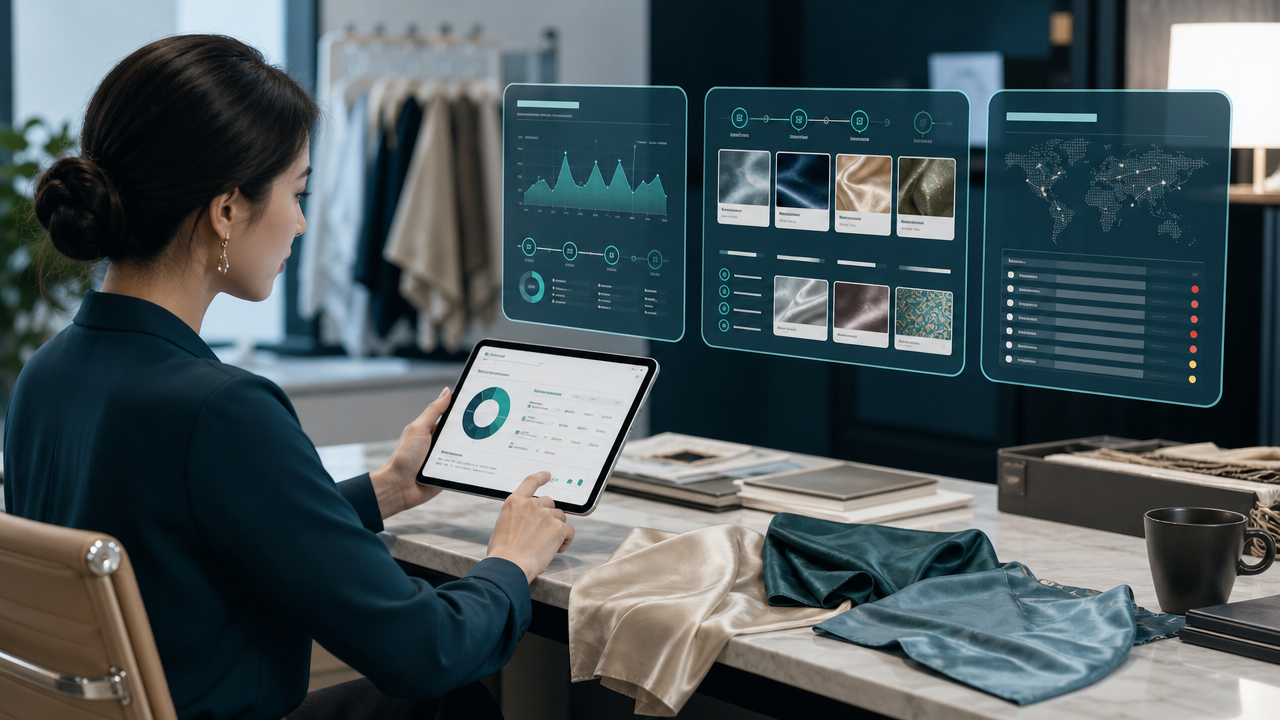
When brands work with COCOONMAN, they get more than silk products. They get a factory that can answer three questions at any time:
- Where is my order right now?
- Why did this batch have a quality issue?
- Will my delivery be delayed?
Our MES system makes these answers available in real time—through the account manager, backed by MES data. A UWB-enabled MES can even show not just what stage an order is in, but when it entered that stage—automatically.
FAQ
1. What are the main benefits of a digital silk factory?
Digital silk factories provide real-time production visibility, batch-level quality traceability, and proactive delay alerts. For the brands we work with, this means fewer surprises, faster problem resolution, and more reliable delivery.
2. How does COCOONMAN's textile MES system work?
A textile MES system connects every stage of production—from greige fabric sourcing to finished product delivery—into a single digital workflow. It tracks orders, records each batch's location status at key production nodes, and triggers alerts when issues arise. Status updates combine manual entry with UWB-based automatic updates at key production nodes.
3. How does COCOONMAN handle outsourced processes?
For outsourced processes such as dyeing, printing, or special finishing, external partners log into a dedicated portal to receive work orders, update progress, and upload inspection results. Their progress feeds back into the main MES, so outsourced stages are tracked with the same visibility as in-house production.
4. What makes COCOONMAN's MES system different from a standard MES?
Two things: UWB-based automatic location updates at key production nodes, and full-chain collaboration that includes external partners. Together, they mean the production record is not only complete, but real-time—and covers both in-house and outsourced stages.
5. Can brands access COCOONMAN's MES system directly?
No. The MES system is internal to COCOONMAN's factory operations. Brands receive production updates and traceability reports through their account manager, drawn directly from MES data.
Conclusion
Traditional silk production management works—until something goes wrong. And in silk production, something always goes wrong.
COCOONMAN's MES system doesn't just digitize the process. It changes what's possible: real-time visibility across internal and outsourced production, batch-level location traceability, and proactive delay management. For the brands we work with, this means fewer phone calls, faster problem resolution, and delivery dates we can actually commit to.
Request a 15-minute live demo. Send us one of your recent silk orders—we'll show you exactly how it would look inside our system, from greige fabric to finished product, including UWB-tracked location updates and outsourced stages.