Cocoonman Silk Quality Control: Six Checkpoints from Fabric to Finished Goods
Cocoonman Silk Quality Control: Six Checkpoints from Fabric to Finished Goods
A barely visible shade variation, a broken filament, or a concealed metal fragment can turn a high-value batch of custom silk shirts or scarves into rejected goods. Cocoonman prevents these risks through five defined quality checkpoints—from incoming fabric inspection through final pre-shipment release—giving buyers a clear, traceable basis for evaluating our capability as a silk supplier.
Checkpoint 1: Greige silk fabric inspection—Quality Control Starts Before Dyeing
Cocoonman's quality control begins before the silk enters any dyeing, printing, or finishing process—at the greige stage, when the fabric is still in its loom-state, untreated and undyed.
Each greige roll is inspected upon arrival against its label and batch record. We verify fabric type, roll number, quantity, and production batch, then open each roll and examine it across its full width under controlled lighting. Our inspectors look for weaving defects, broken filaments, oil stains, slubs, reed marks, holes, and uneven tension—issues that may become difficult or impossible to detect once the fabric is dyed or printed.
This inspection serves a specific purpose: to identify and isolate defects at the earliest possible stage, before dyeing or finishing processes set these issues into the fabric. A minor weaving irregularity that is visible on greige fabric can become a glaring surface defect after dyeing; an oil stain that is removable on greige fabric may become permanent after heat-setting. This is the first of two fabric inspections—the second takes place after dyeing and finishing to catch any issues introduced during wet processing.
Rolls that fail inspection, lack clear identification, or raise questions about surface condition are tagged and held for review. They do not proceed to wet processing until the disposition is confirmed and recorded. Accepted rolls are approved for dyeing and finishing—and all inspection findings are recorded by roll number, ensuring that every finished piece can be traced back to its original greige batch.
For Cocoonman, greige inspection is the first formal release decision in our quality system. It ensures that only sound material enters production, preventing defects from being carried through dyeing, sewing, and finishing.
Takeaway: Quality control begins at the greige stage—before dyeing and finishing make defects harder to detect and correct.
Checkpoint 2: Finished Fabric Inspection—Verifying Quality After Dyeing and Finishing
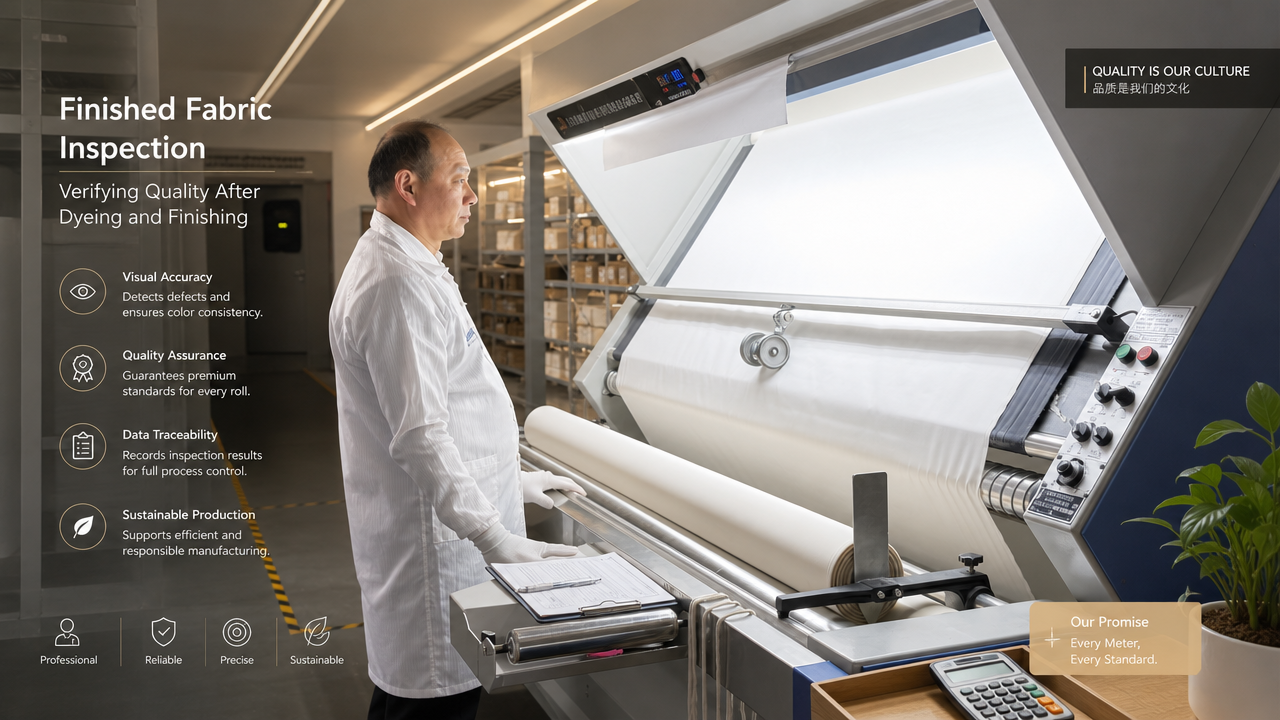
After greige silk has been dyed, printed, or finished, each finished fabric roll undergoes a second full inspection before it is released for cutting. While greige inspection catches base weaving defects, finishing processes can introduce new issues—uneven dye uptake, shade variation from head to tail or side to side, print misregistration, setting stains, or inconsistent hand feel—that did not exist on the greige fabric and cannot be detected at the earlier stage.
We verify every finished roll against the order specification: color accuracy, shade consistency across and within rolls, print registration, width, weight, and surface condition. Rolls are compared side by side under standardized lighting to confirm shade matching across the entire batch. Any roll showing unacceptable shade variation, finishing defects, or handling damage is segregated and reviewed rather than passed to cutting.
All inspection findings are recorded and linked to the original greige batch number, ensuring end-to-end traceability from loom-state silk through dyeing and finishing to finished goods.
Takeaway: Finished fabric inspection ensures that defects introduced during dyeing, printing, or finishing are caught before cutting—protecting both quality and traceability.
Checkpoint 3: Laboratory Testing for Color Performance and Durability
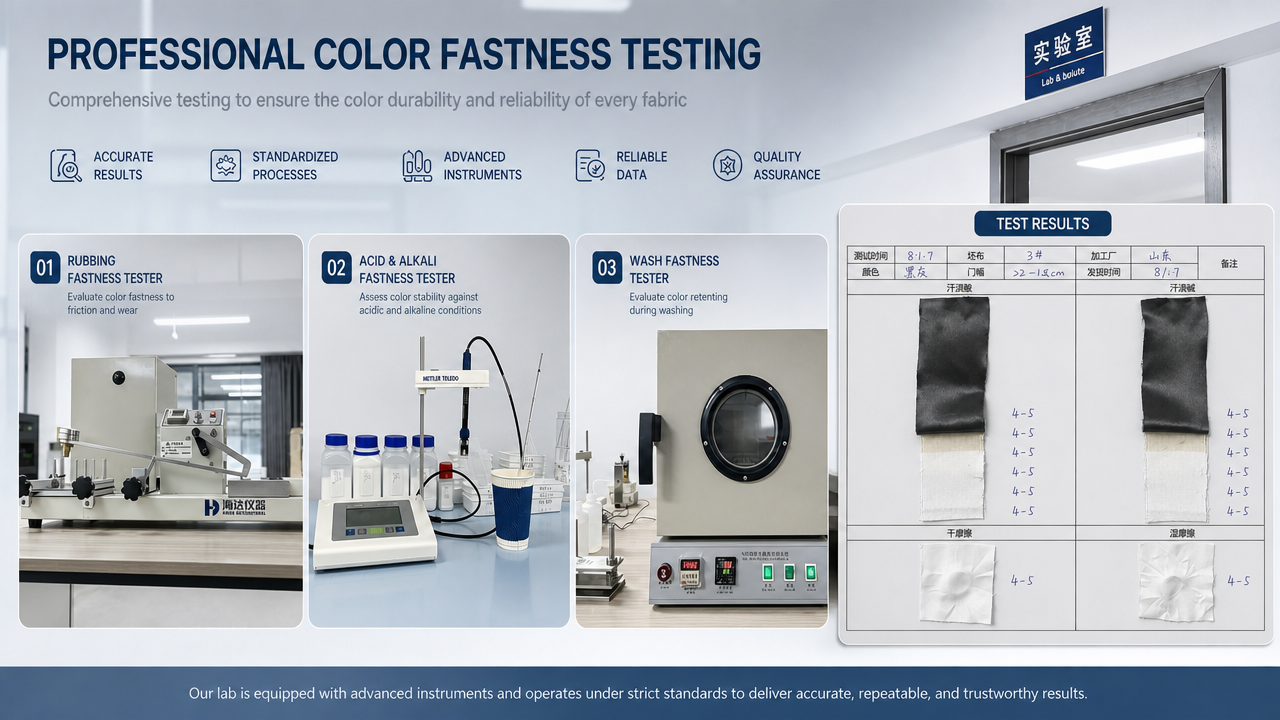
Colorfastness measures a silk fabric's resistance to fading, bleeding, or shade change when exposed to rubbing, washing, water, perspiration, or light. It directly affects the appearance, durability, and service life of silk products—and a silk that looks correct under inspection can still fail in use if color transfers during wear or cleaning.
Cocoonman operates an in-house laboratory equipped to test silk colorfastness against both China's GB/T standards and international ISO equivalents. This means we can verify performance against the customer's target market requirements—whether for domestic sale, EU, US, or other export destinations—without relying on third-party labs or delaying production timelines.
Our laboratory routinely conducts the following tests, with typical minimum grades for high-quality silk:
| Property | Test Standard (GB/T / ISO) | Typical Acceptable Grade |
|---|---|---|
| Dry Rubbing (Crocking) Fastness | GB/T 3920 / ISO 105-X12 | Dry ≥ 4 |
| Wet Rubbing (Crocking) Fastness | GB/T 3920 / ISO 105-X12 | Wet ≥ 3-4 |
| Water Fastness | GB/T 5713 / ISO 105-E01 | Change & staining ≥ 3-4 |
| Perspiration Fastness | GB/T 3922 / ISO 105-E04 | Acid & alkaline ≥ 4 |
| Washing Fastness | GB/T 3921 / ISO 105-C10 | Change ≥ 3-4 |
| Light Fastness | GB/T 8427 / ISO 105-B02 | ≥ 4 (or Blue Wool ≥ 6) |
*Grades are on a 1-to-5 scale (1 = poor, 5 = excellent).*
Dry rubbing fastness measures color transfer from the silk surface to another material under friction—predicting transfer during cutting, sewing, folding, and retail handling. Wet rubbing fastness is especially relevant for garments and accessories exposed to humidity, perspiration, or spot cleaning, because water dissolves and mobilizes dye molecules, often resulting in lower fastness than dry rubbing.
Perspiration fastness simulates the effect of human sweat (both acidic and alkaline) on color stability. Since silk is often dyed with acid dyes, this test is particularly relevant—acidic sweat may affect dye-fiber bonds and cause color change or bleeding. Water fastness evaluates color change and staining when the fabric is immersed in water, mimicking rain or heavy perspiration. Washing fastness assesses resistance to laundering, essential for washable silk items. Light fastness tests resistance to sunlight or artificial light—different dyes have widely varying lightfastness, and some modern treatments can achieve grade 5 on silk.
What this means for buyers:
- Faster approval cycles — in-house testing eliminates the lead time of sending samples to external labs
- Batch-level traceability — every test report is archived by batch and colorway, linked directly to the specific production lot
- Market-specific compliance — we test against the standards your destination market requires, not a one-size-fits-all protocol
- Supplementary testing available — washing, water, or perspiration tests can be added based on product type and customer specification
Takeaway: Our in-house laboratory gives buyers faster, traceable, market-specific colorfastness verification—before silk reaches cutting, sewing, or shipment.
Checkpoint 4: In-Process Quality Control at Each Production Stop
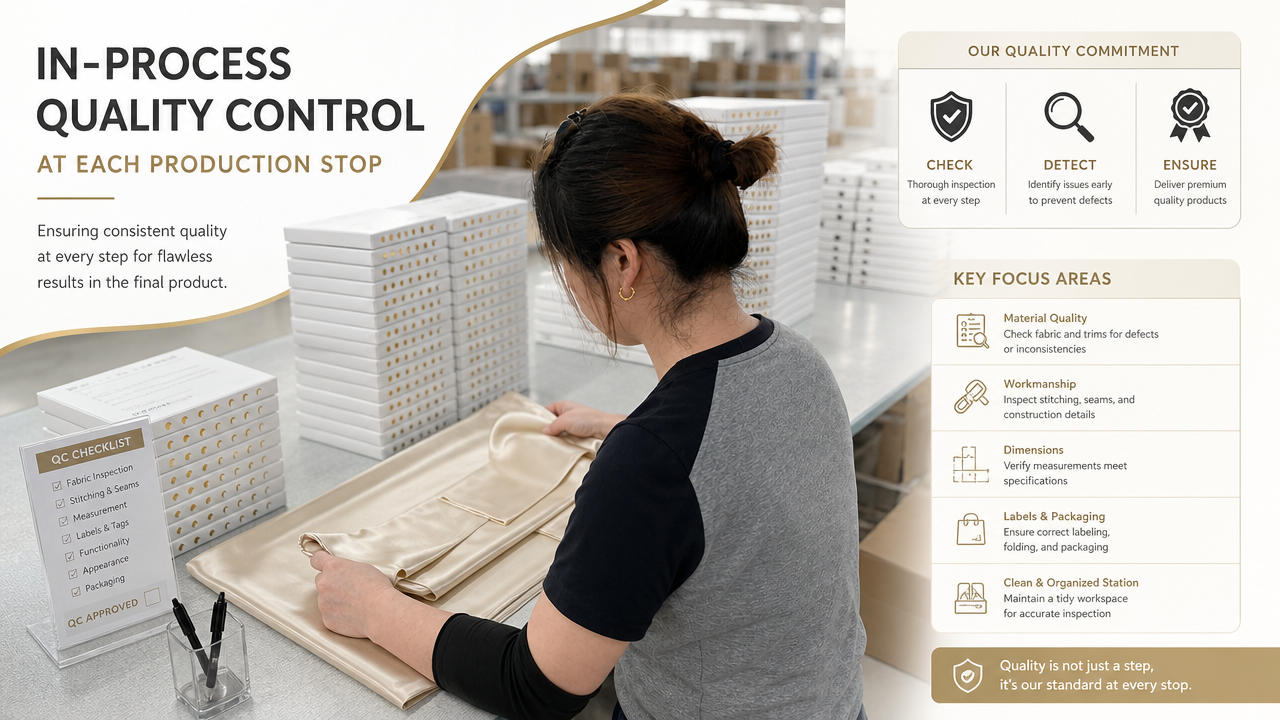
A poorly controlled sewing operation may leave weak seams, skipped stitches, unsuitable stitch density, loose threads, or pulled yarns that worsen during pressing and wear. At Cocoonman, operators and QC staff examine seam lines during production, with stitch density reviewed according to the fabric structure and product design. Threads are trimmed promptly, while oil marks, chalk residue, snags, and handling damage are checked under suitable lighting. Silk must be handled with clean hands, clean work surfaces, and tools that will not catch the yarns.
Repeated manual inspection matters because defects can be created between two machine operations, not just at the end of the line. We check cut panels again after bundling, inspect sewn sections before pressing, and review pressed pieces before they enter finishing. Inspection results are logged by operation stage and production batch, enabling root-cause traceability if issues arise.
Takeaway: Every silk garment process needs a deliberate "look back" before the next operation begins.
Checkpoint 5: Machine-Assisted Inspection for Hidden Contamination Risks
Cocoonman uses high-sensitivity needle detection equipment calibrated to each product's construction. Sensitivity is validated with standard test pieces at the start of every shift and after any machine adjustment. Any item triggering an alarm is immediately segregated, manually examined, and re-screened before release. Products with intentional metal trims receive separate handling to avoid false alarms.
Every screening session is documented with machine ID, settings, operator, time, and outcomes—providing batch-level traceability. Beyond needle detection, we continue to expand our equipment capabilities to match evolving order requirements.
Takeaway: Machine inspection adds a documented safety layer that human vision alone cannot provide.
Checkpoint 6: Final Pre-Shipment Inspection—Release Only When Records Match
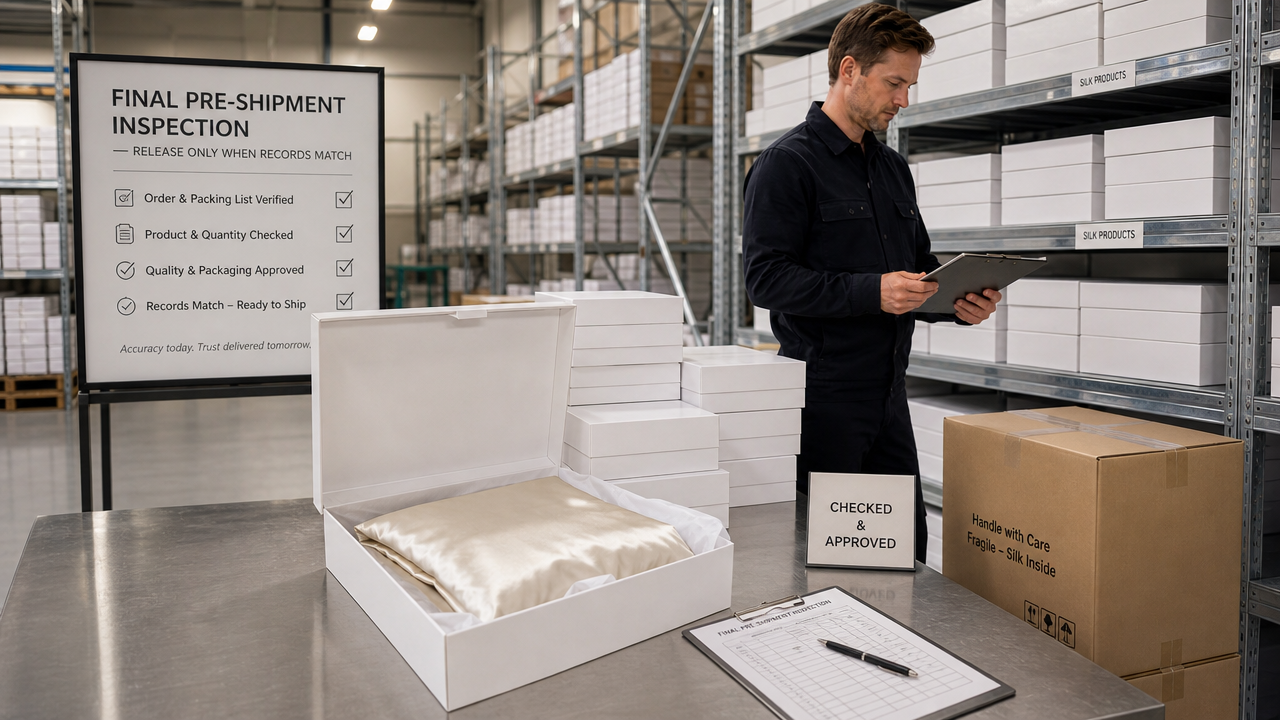
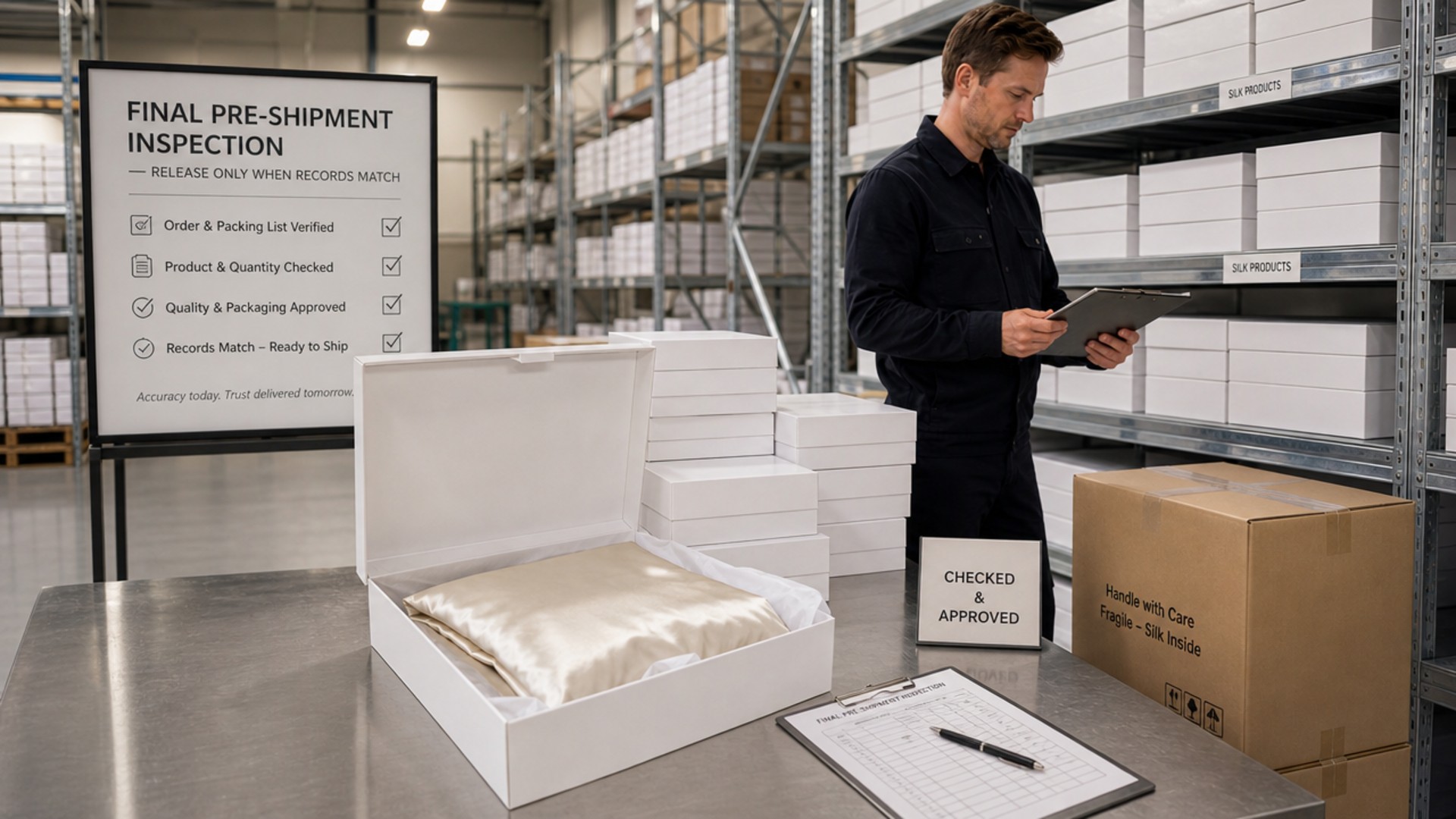
Packaging creates a second risk. If polybags, tissue, hangtags, or cartons are damaged, damp, dirty, or incorrectly identified, goods may arrive unsellable or become difficult to trace. We verify folding and protection, carton markings, purchase-order details, style or color codes, batch references, carton counts, and the actual quantity packed. A short count, overage, or mixed carton is recorded before release, not discovered during receiving.
Previous fabric inspection, lab testing, and machine screening records feed into the final approval file, but they do not replace finished-goods checks. The final release checklist consolidates all prior records into a single batch file—linking fabric inspection, laboratory results, production checks, and machine screening to the final approval decision.
Takeaway: Release the shipment only when appearance, measurements, identity, quantity, and packaging all match the order.
How Buyers Verify Cocoonman's Quality Control System
Buyers can request three types of evidence to verify our system: the batch-linked QC checklist showing each checkpoint's findings, laboratory test reports with clear pass/fail determinations, and the final pre-shipment approval record consolidating all prior checks. These documents demonstrate that our quality system operates as a traceable chain, not as isolated inspections. Cocoonman provides these records as part of our standard documentation, giving buyers practical evidence behind every quality claim.
FAQ
What does Cocoonman check during incoming silk fabric inspection?
A stain, hole, weave fault, shade mismatch, or short usable width found after cutting can affect multiple garments and delay replacement decisions. Each incoming roll is checked against its label, roll number, color reference, quantity, production batch, fabric type, and usable width. The fabric is also reviewed across the roll for visible defects and compared with related rolls under consistent lighting. This first checkpoint helps isolate unsuitable material before it reaches production.
Does Cocoonman have laboratory support for silk colorfastness testing?
Poor colorfastness or weak rubbing resistance may appear only after washing, handling, or contact with another material, so visual inspection alone cannot confirm performance. Cocoonman operates an in-house laboratory for selected checks, including silk colorfastness testing and rubbing fastness testing. Results are recorded with the relevant batch information, giving buyers measurable evidence alongside appearance and construction checks.
What is inspected during silk production?
If a process defect is found only during final inspection, correction may require reworking finished goods or rejecting completed pieces. Our production teams inspect at relevant stops for issues such as sewing faults, uneven construction, contamination, component placement, and conformity with the approved specification. Inspection findings are recorded during production so problems can be traced to the affected stage rather than assessed only after completion.
What does machine-assisted inspection detect?
A concealed metal fragment, including a possible broken-needle piece, can create a safety risk even when the product looks acceptable. Machine-assisted inspection is applied at required production points according to the product and process specifications. Manual checks remain part of the control system because machines detect metal contamination, not stains, workmanship faults, shade problems, or every material defect.
What quality records should a buyer request from a silk supplier?
General claims about factory quality do not show whether the shipped batch was actually controlled. Buyers should request the incoming inspection record, laboratory results where applicable, in-process inspection records, machine screening records, and final pre-shipment checklist linked to the order or batch number. Cocoonman's release decision is based on matching the finished goods, inspection findings, and order requirements, giving buyers a practical way to verify our quality control capability.
Conclusion
Cocoonman's silk quality control uses five linked checkpoints that assess material before cutting, verify performance during production, and confirm the completed order before dispatch. For buyers, the value lies in traceable checks that connect fabric condition, manufacturing control, test results, and shipment records. A supplier's quality capability is best judged by this documented chain of evidence, not by a single visual review.
For buyers, the next step is straightforward: request the batch-linked QC records for your next silk order and verify the evidence against our five-checkpoint framework.