Silk Printing Techniques in China: How to Choose the Right Method
Silk Printing Techniques in China: How to Choose the Right Method
Choosing a print method for silk changes more than the artwork: it affects minimum quantities, setup costs, the fabric's hand and whether both sides show color. COCOONMAN produces all four methods covered here — digital, double-sided digital, water and hand screen printing — and this guide explains where each one fits and what to confirm before sampling.
Digital printing on silk favors flexibility over volume
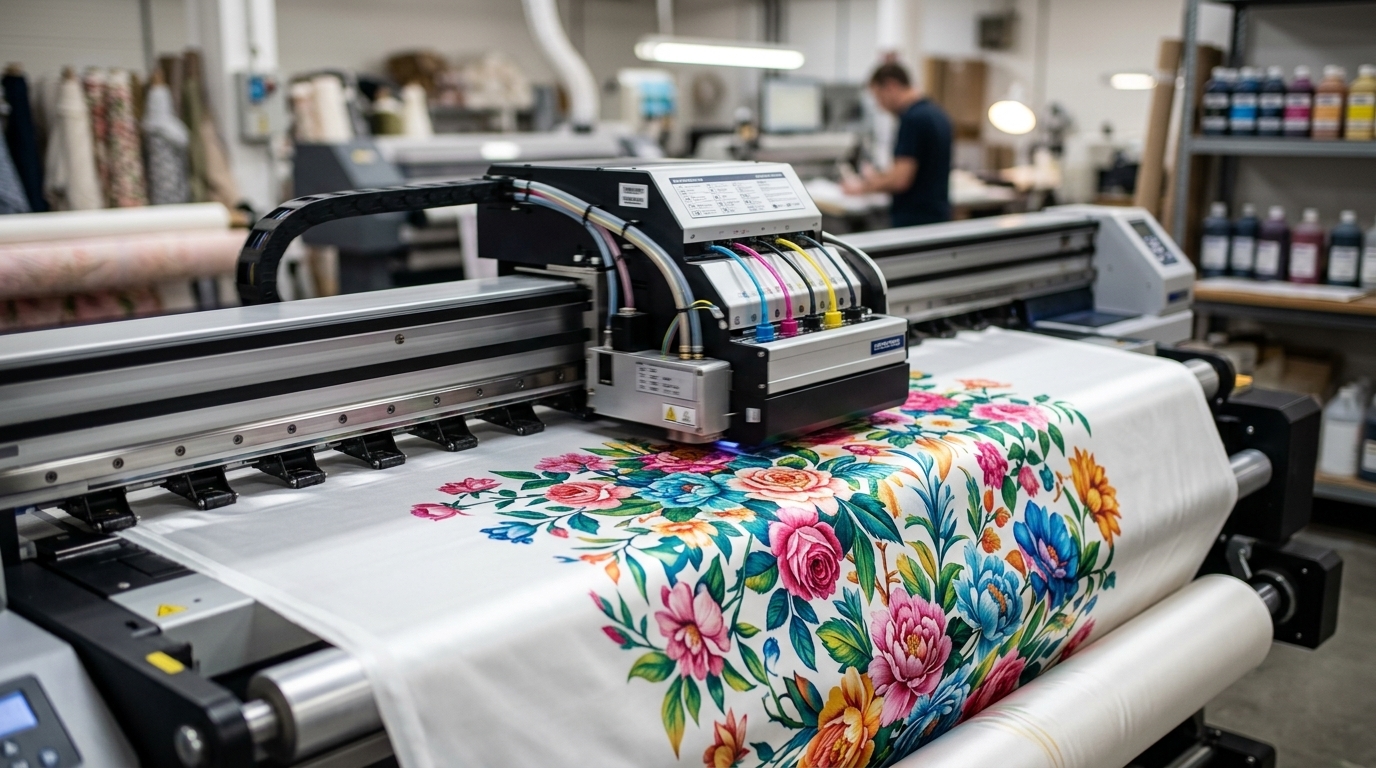
Digital printing on silk is the flexible route: it reproduces intricate artwork and multiple colorways without a separate screen for each one, so design changes do not trigger new plate preparation. Because there are no screens to set up, digital printing typically offers a relatively low minimum order quantity (MOQ), making it accessible for short runs and sample orders.
In production terms, the method is a continuous inkjet process followed by fixation. Silk mainly requires acid dyes, though reactive inks can be used depending on the fabric and process. After printing, steaming fixes the dye and washing removes unfixed color and residue; if fixation or washing is poorly controlled, the bulk lot can show uneven color or lose color in use.
Before bulk production, lock the silk type, weight and finish, since these govern ink absorption and the final hand. Confirm artwork resolution, color settings and repeat dimensions, and approve color on a printed strike-off — screen colors cannot reliably predict the result on silk. That approved sample becomes the reference for the production batch.
Double-sided silk printing solves show-through at a price
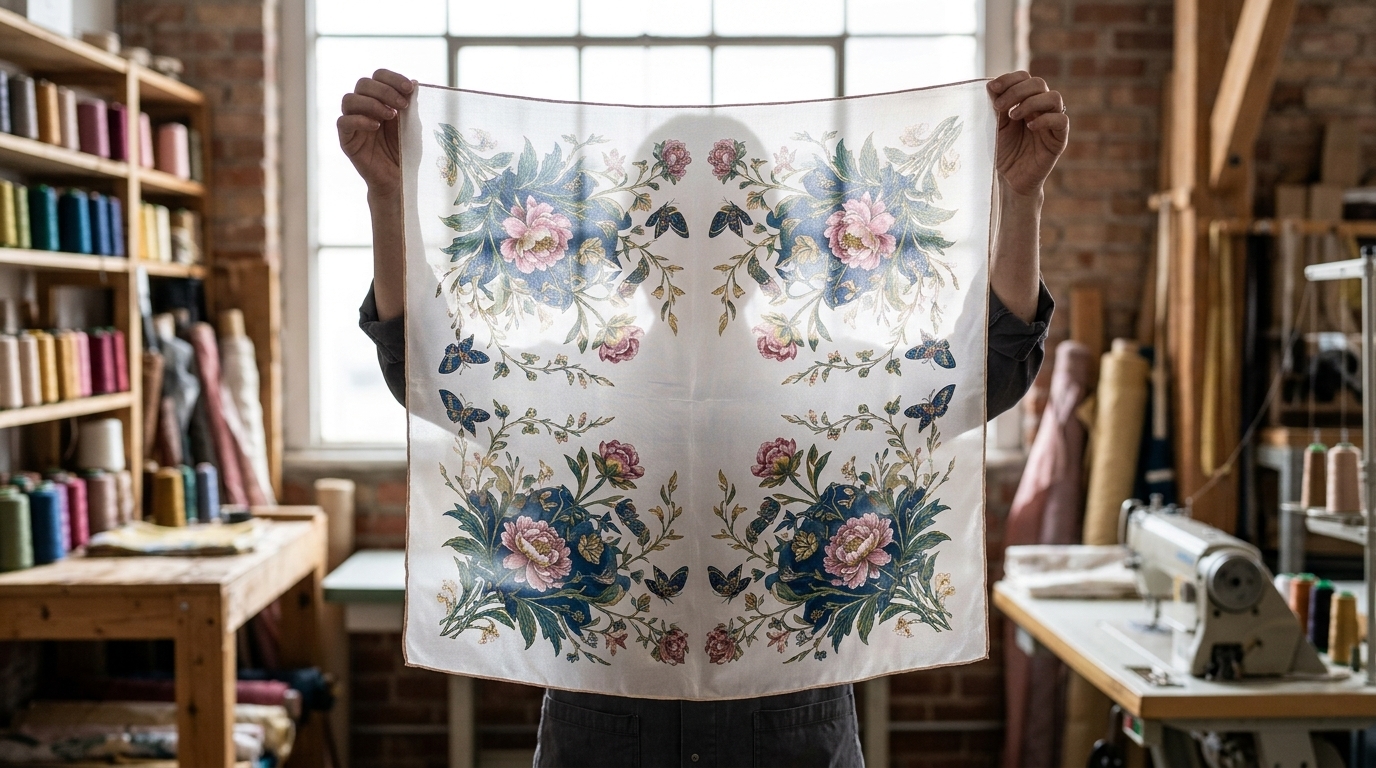
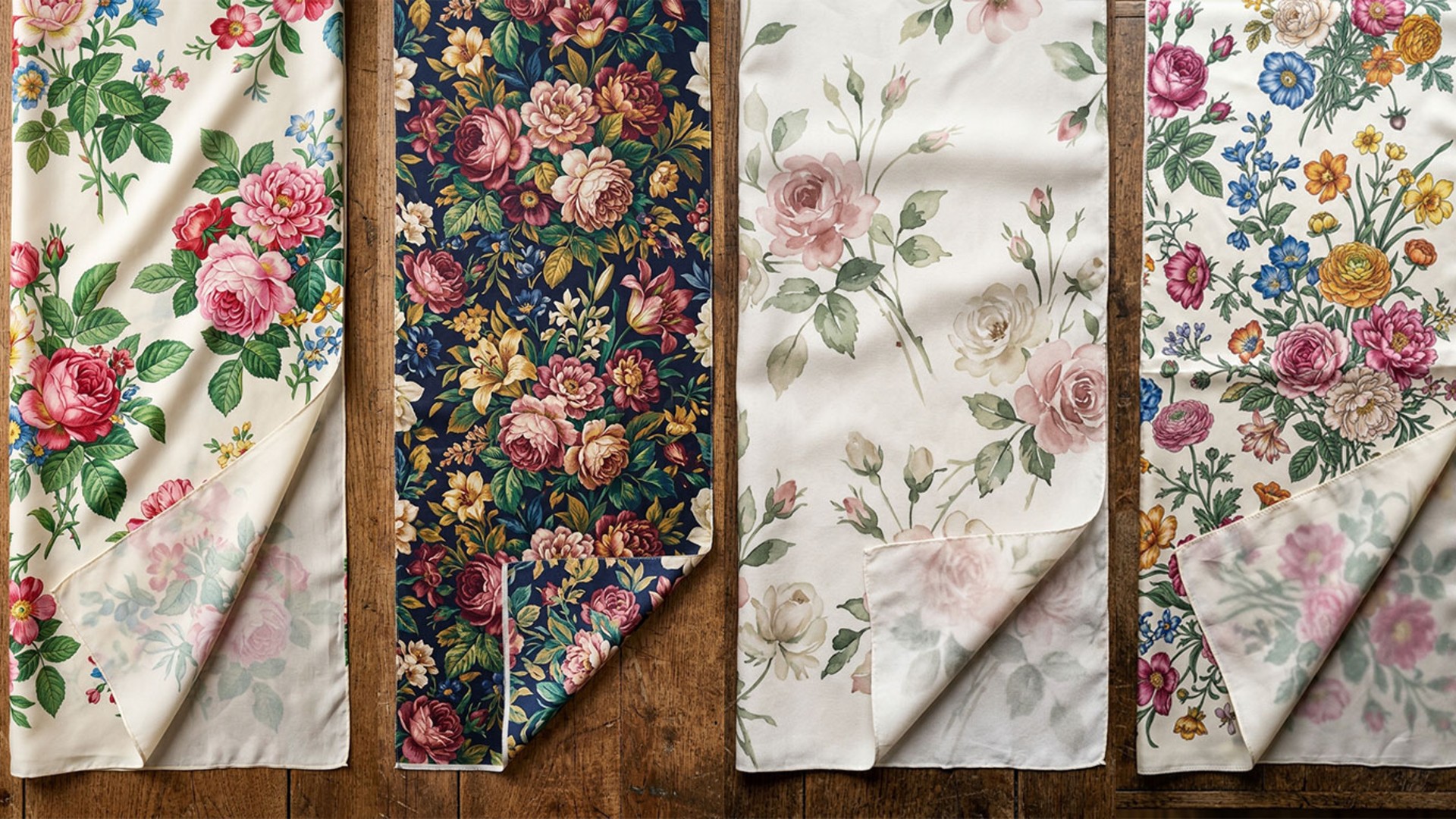
For a reversible scarf, the production brief must state what each face shows before the print is approved. The options are the same design in the same colors on both sides, the same design in different colors, or a different design on each face. The choice drives the artwork layout and the inspection points during sampling. (MOQ requirements remain relatively low, similar to single-sided digital, as the process is still digital.)
Three production risks need controls. Registration error can leave a visible mismatch where a motif crosses the two faces, so approve a sample with the intended face-to-face alignment and write acceptable tolerances into the spec — typically ±1–2 mm depending on motif size and silk weight (confirm the exact figure with the supplier). Color bleed can muddy details, so review color boundaries on both sides. Fabric distortion can shift motifs or alter their proportions, so check how the silk handles on the machine and inspect the printed sample before bulk production.
This finish costs more than printing one side because both faces require controlled design and production. It suits reversible scarves, wraps and other items regularly folded, draped or viewed from either side. For a lined product or one worn with a single face outward, the added expense serves no visible purpose — weigh it against actual use.
Water printing vs digital printing: setup can outweigh unit cost
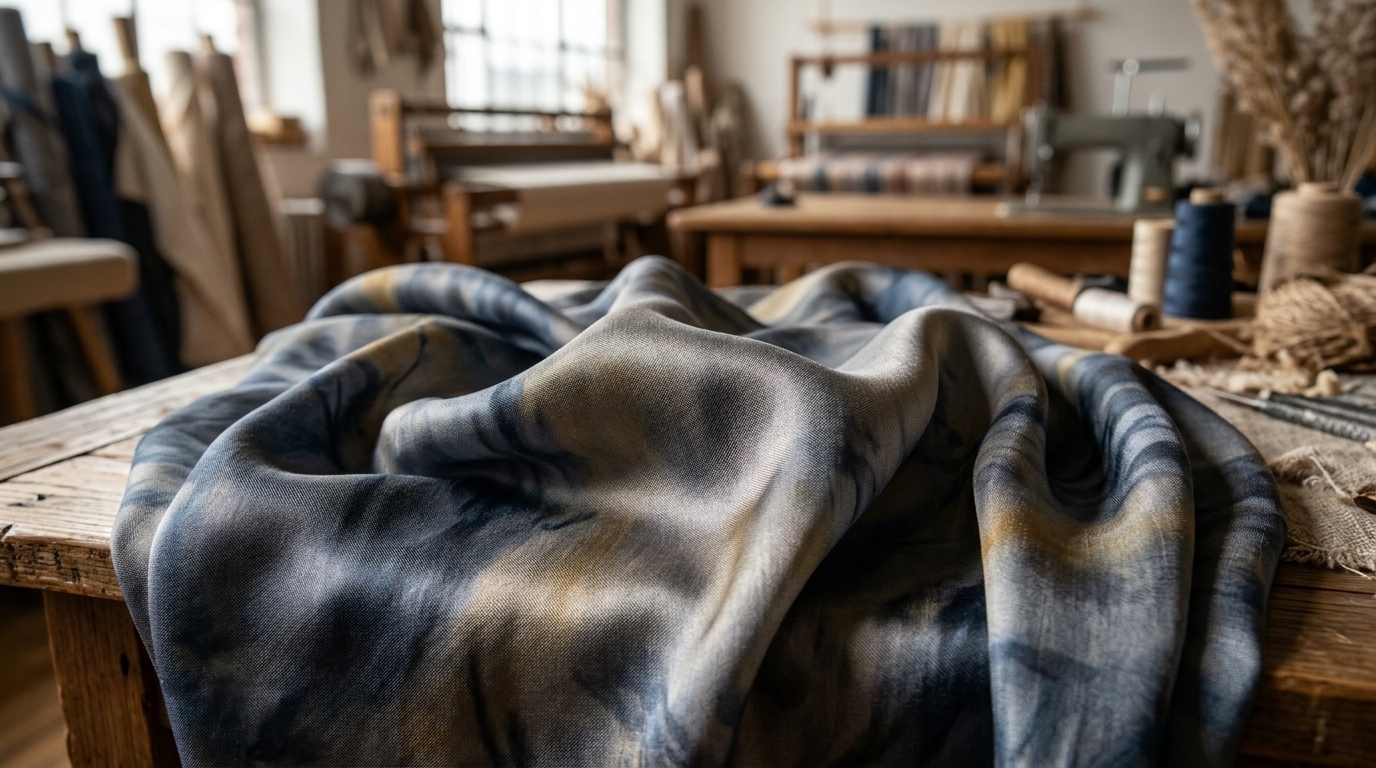
This section compares the two methods on fixed cost versus unit cost, because that trade-off usually decides the quotation. Water printing applies aqueous dye paste through a prepared screen, giving silk a soft hand feel with no plastic layer. It requires plate or screen preparation, which is a fixed cost before production begins. *(Due to this plate-making process, water printing typically demands a higher MOQ to justify the setup costs.)* On a larger order of regular designs, that setup is amortized across more pieces and can make water printing cheaper per unit; on a small quantity or with frequent artwork changes, preparation may outweigh the savings.
Digital printing avoids dedicated screen preparation, so short runs and complex artwork are easier to schedule, and design or colorway changes need no new screen set. Compare the full quotation — preparation, sampling, printing and finishing — because a low unit price may assume a volume or setup that does not match the order.
Either method can fail at the fixation stage: prints can fade in care or transfer color to adjacent fabric. Approve a strike-off with the intended artwork and process, then test it on the specified silk quality and weight. Check wash and rub performance against the product's care requirements, since results on a different silk may not predict performance on the ordered fabric. The sound choice is the one whose setup economics and tested color performance both fit the order.
Hand screen printing on silk keeps the human mark
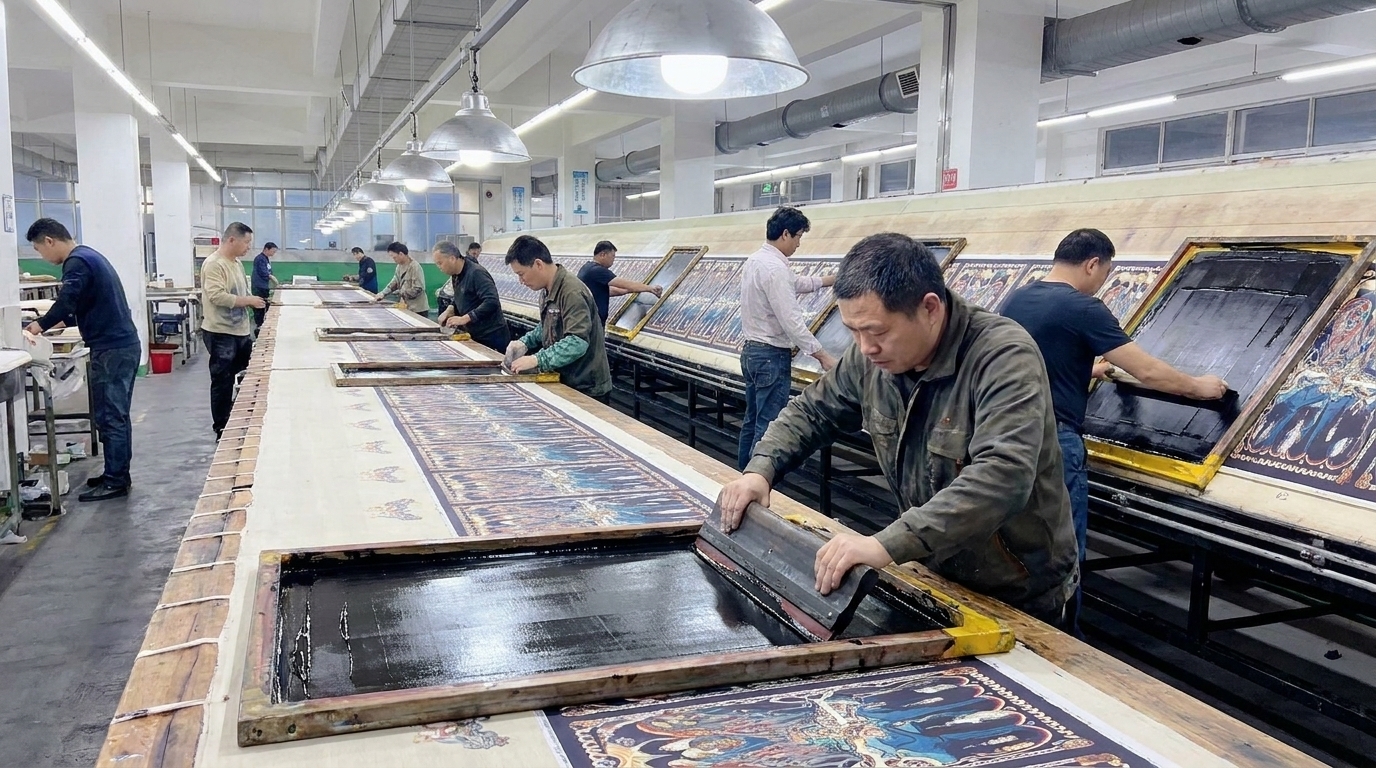
In hand screen printing, a printer pushes ink through a prepared screen with a squeegee, working each color onto the fabric by hand. Pressure and movement leave subtle variations in coverage and edge, giving the print a tactile surface and visible squeegee character rather than a uniform finish. (Because it is highly labor-intensive and requires separate screens for each color, this method usually has a very high MOQ for commercial viability, though some factories accept small premium runs at a higher unit cost.)
The method allows multiple colors, but each must be separated and applied in controlled passes. Inaccurate color separations can throw details out of alignment; uneven pressure or squeegee movement can make coverage and edges inconsistent — differences that are part of the process but must match the look the buyer intends to sell.
Manual production is slower, so output is lower than methods built for larger runs. That makes hand screen printing a fit for premium, small-batch work where a crafted finish is part of the brief — not for orders driven by high-volume targets. Before bulk production, approve a physical sample on the intended silk: a digital image cannot show the surface texture or the character of the hand passes. Choose hand screen printing when its visible variation supports the design and the order can accommodate lower output.
One fabric, four prints: reading the differences on a single piece
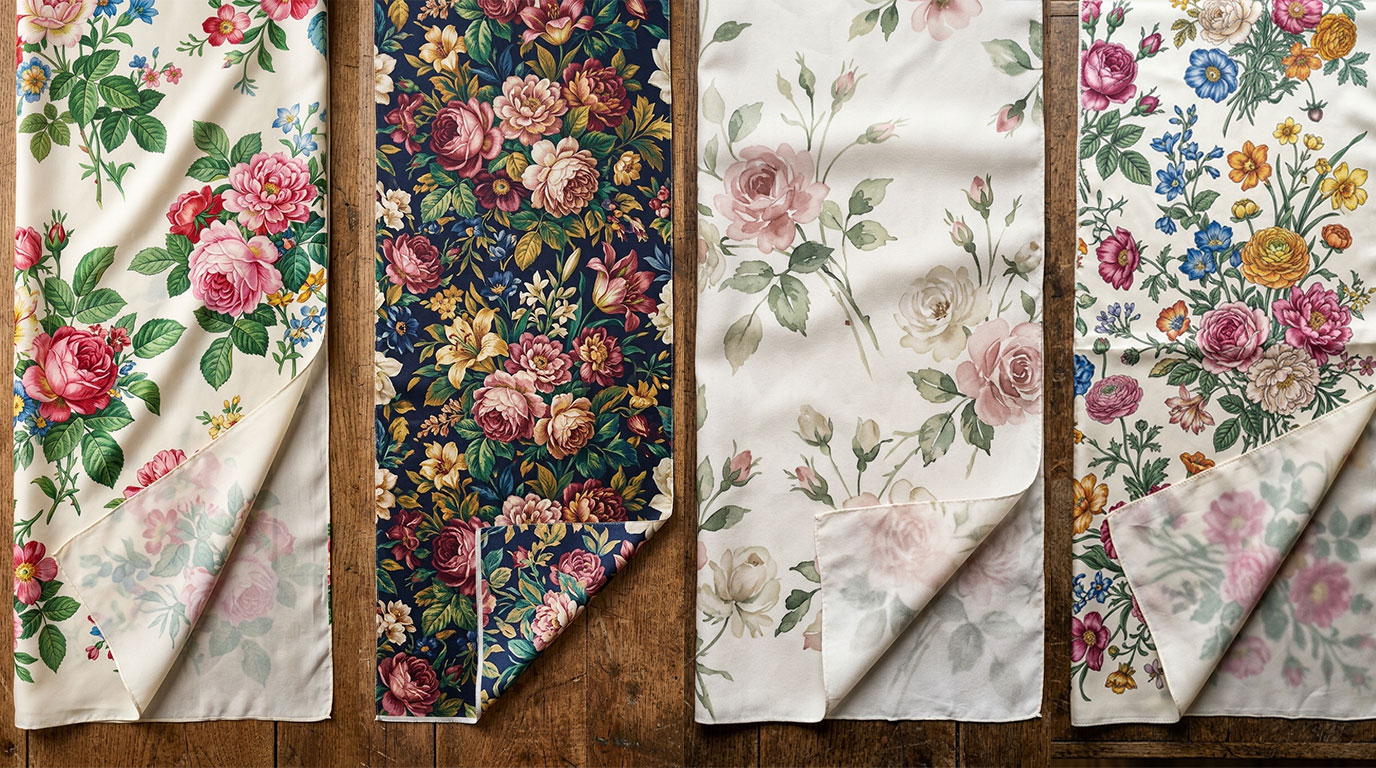
The fastest way to industrialize the decision is to print one silk panel with four zones — single-sided digital, double-sided digital, water printing and hand screen — using the same artwork and the same silk quality, then read the differences on the same piece:
- Face count. Hold the panel against a light: single-sided digital shows color on one face only, double-sided shows aligned motifs on both, water and hand screen are typically single-face unless specified.
- Edge and detail. Under a loupe, digital holds fine lines and gradients; water printing shows a softer edge where paste meets fabric; hand screen shows the squeegee's edge variation.
- Hand and drape. Fold each zone: water printing keeps the softest drape, digital adds slight coverage-dependent body, hand screen carries a tactile ink surface.
- Color behavior. Compare the same motif across zones for saturation and boundary sharpness, then run wash and rub tests on each zone to see how fixation performs on that specific silk.
A single panel built this way turns four quotations into one physical reference, and it can be filed with the approved sample as the production standard. Use this panel as the physical check that the comparison table below summarizes on paper.
A four-method comparison puts the trade-offs side by side
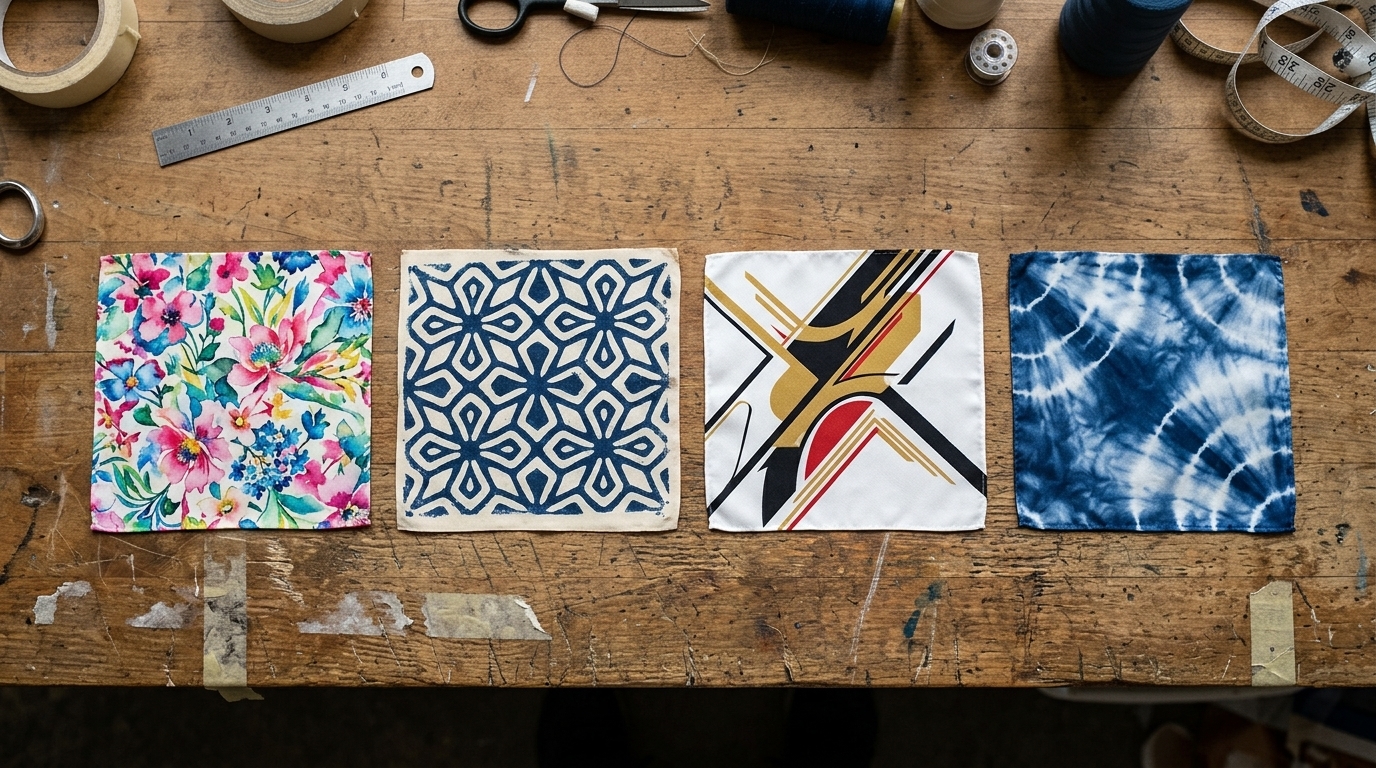
To keep quotes comparable, ask suppliers to quote the same silk quality, usable width, print area, finishing and tolerances; otherwise, a per-unit figure may hide plate preparation or screen charges — or describe different goods.
| Method | Batch suitability | MOQ (Relative) | Artwork complexity | Double-sided capability | Hand feel | Setup cost | Unit cost at volume | Typical products |
|---|---|---|---|---|---|---|---|---|
| Single-sided digital | Short, mixed runs | Relatively low | Fine detail, many colors | One face | Light; coverage-dependent | Low (no screens) | Higher than water at volume | Silk bedding, sleepwear, pillowcases |
| Double-sided digital | Planned two-face runs | Relatively low | Paired, detailed artwork | Both faces | Check feel on both faces | Low (no screens) | Higher than single-sided | Reversible scarves, double-face pillowcases |
| Water printing | Large repeat orders | Higher | Regular designs; changes require new plates | Possible but uncommon; labor-intensive | Soft | High (plate/screen prep) | Lowest at volume | Silk bedding at volume, sleepwear |
| Hand screen printing | Small premium runs | Very high (for volume) | Layered work; manual variation remains | Possible, labor-intensive | Tactile squeegee character | Medium (screen prep) | Highest per unit (labor) | Premium scarves, eye masks, gift accessories |
Final pricing and achievable results depend on the silk fabric, artwork and approved specifications. The sound choice is the method whose setup economics and approved sample match the order's repeatability, face visibility and finish requirements.
Which print method fits your order?
There is no single default method; the right choice depends entirely on your order's volume, face visibility, and artwork complexity. Use this four-way starting point, then confirm on a sample of your specified silk.
- Small runs, many colorways, detailed artwork → single-sided digital printing.
- Reversible scarves, wraps or double-face pillowcases → double-sided digital printing; specify whether both faces match or differ.
- Larger repeat orders with regular patterns → water printing, where plate setup is spread across volume.
- Premium limited runs where visible squeegee character is part of the design → hand screen printing.
COCOONMAN produces all four methods and can recommend a route against your product, quantity and intended appearance. To get a useful recommendation, share the artwork, silk fabric details, target quantity and whether both sides must be printed — and ask for a sample on the specified fabric with batch-specific inspection or colorfastness records, so the decision rests on the actual order rather than a generic reference. Where useful, request the four-zone comparison panel described above as the sampling reference.
Send those details to support@cocoonmantex.com or reach out to COCOONMAN directly; the right method is the one that fits the product, quantity and intended appearance.
FAQ
1. Can digital printing on silk start at a low quantity?
Yes. Because digital printing requires no screen preparation, it generally has a relatively low MOQ compared to traditional methods, making it suitable for short runs and sampling. However, exact minimums still vary by fabric type and finishing requirements, so always confirm with the supplier before ordering.
2. Can double-sided silk printing use different designs on each side, and does it affect the MOQ?
Yes; the two faces can carry matching artwork, matching artwork in different colors, or separate designs. Since it is still a digital process, the MOQ remains relatively low despite the double-sided requirement. Check a sample for alignment, color migration, and fabric distortion before placing the order.
3. How should buyers compare water printing and digital printing?
Compare total setup charges and unit prices at your planned order quantity. Because plate or screen preparation adds fixed costs, water printing usually requires a higher MOQ to be cost-effective and is best suited for repeatable larger runs. Digital output accommodates intricate or varied artwork without that setup, making it ideal for lower quantities. Test fixation and colorfastness on the specified silk rather than relying on a general claim.
4. Does hand screen printing require a very high MOQ?
Typically, yes. Hand screen printing is highly labor-intensive and requires dedicated screens for each color. For commercial viability, factories usually require a very high MOQ. However, some suppliers may accept smaller premium runs if the buyer is willing to absorb higher per-unit setup costs.
5. What should a silk print sample and inspection record confirm?
Use the approved sample to check the artwork, color, silk base, printed faces, and finish. Request inspection records tied to the production batch, along with colorfastness results for the agreed specification. Without batch-level evidence, a passing sample alone does not confirm that the bulk order matches.
Conclusion
There is no universal winner in silk printing; the right method must meet the order's artwork, quantity, visible faces, and finish requirements at a justifiable cost. Whether you choose the flexibility of digital, the precision of double-sided, the cost-efficiency of water printing at scale, or the craftsmanship of hand screen printing, the final decision must rest on an approved sample — ideally a single silk panel printed in all four zones for direct comparison, filed with the approved sample as the batch reference. COCOONMAN produces all four methods and can recommend a route against those specifications. Request samples and an inquiry response at support@cocoonmantex.com.