How to Start a Silk Business Without a Factory, Big Budget or Sourcing Experience

How to Start a Silk Business Without a Factory, Big Budget or Sourcing Experience
We wrote this guide for DTC founders, Etsy & Amazon sellers, and emerging small‑business owners who want to launch their own silk product line — with zero factory access, limited capital and no prior importing or sourcing background.
> What this guide is: A practical, small‑batch playbook for launching a silk brand with 50–100 piece MOQs.
> What this guide is not: A get‑rich‑quick scheme. Silk has real risks — we cover them honestly.
Who This Guide Is For

If you're a small business owner or planning to start one, and you're considering silk as your next product line, this guide is for you.
Maybe you've never sourced a product before. Maybe you don't have a factory connection. Maybe you want to start small—not bet your savings on inventory—and you want your own brand, not just to resell someone else's.
This guide is not for people who already have a supply chain, or who want to dropship low-quality polyester and call it silk. It's for people starting from zero who want to do it properly.
Why Silk Is Worth Considering
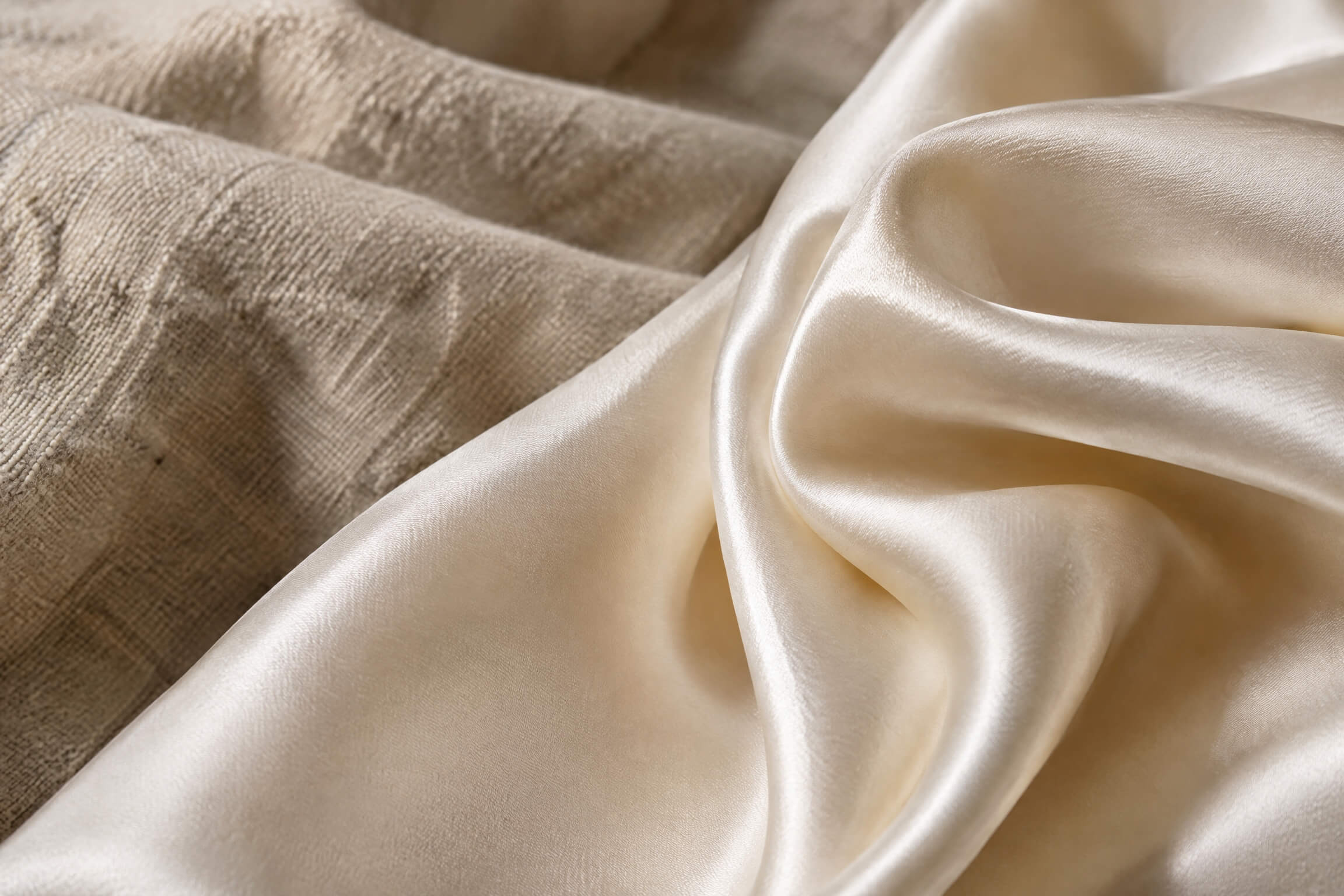
Silk sells at a premium. A silk product that costs a reasonable amount to produce can sell for many times that at retail. That margin gives you room to build a business—not just hustle for pennies.
It's also versatile. Pillowcases, eye masks, scrunchies, sleepwear, robes, hair ties, lingerie, bedding. Same supply chain, different SKUs. You can test what works and double down.
And demand isn't going anywhere. Silk has been considered a luxury material for thousands of years. It's not a trend. People buy it for themselves, and they buy it as gifts.
One thing most guides won't tell you: the silk category is not empty. Lilysilk, Slip, and Blissy already own the premium sleep space. Your opportunity is not to out-spend them — it's to out-focus them. Niche down: silk for curly hair, silk for eczema-prone skin, silk for hot sleepers. The brands that win in the next three years will be the ones that own a specific customer, not the ones that sell "silk" generically.
The Part Most Guides Skip: What Actually Makes This Hard

Let's be honest about the obstacles.
You don't know where to find fabric. You start searching for "silk fabric supplier" and immediately hit a wall of terms. What's the difference between 16mm and 22mm? Is charmeuse better than crepe de chine for a silk product? Is the supplier quoting you a low price reliable, or are you about to get burned?
You're worried about MOQ. You've heard horror stories about factories demanding thousands of pieces. You don't have a massive budget to drop on inventory for a product you haven't even tested yet.
You can't tell good silk from bad silk. The samples look fine. But will the bulk order match? Will the color be consistent? Will the stitching hold up after three washes?
You don't want to manage five different suppliers. Fabric from one factory. Sewing from another. Labels from a third. Packaging from a fourth. Every one of them is in a different time zone.
You're afraid it won't sell. What if you order hundreds of pieces and they sit in your garage?
These are real concerns. And they're exactly why most people never start. But none of them are unsolvable. They just require the right approach—and often, the right partner. Working with an experienced small-batch OEM supplier removes much of this friction.
What You Actually Need (It's Less Than You Think)

Most first-time founders overestimate what's required.
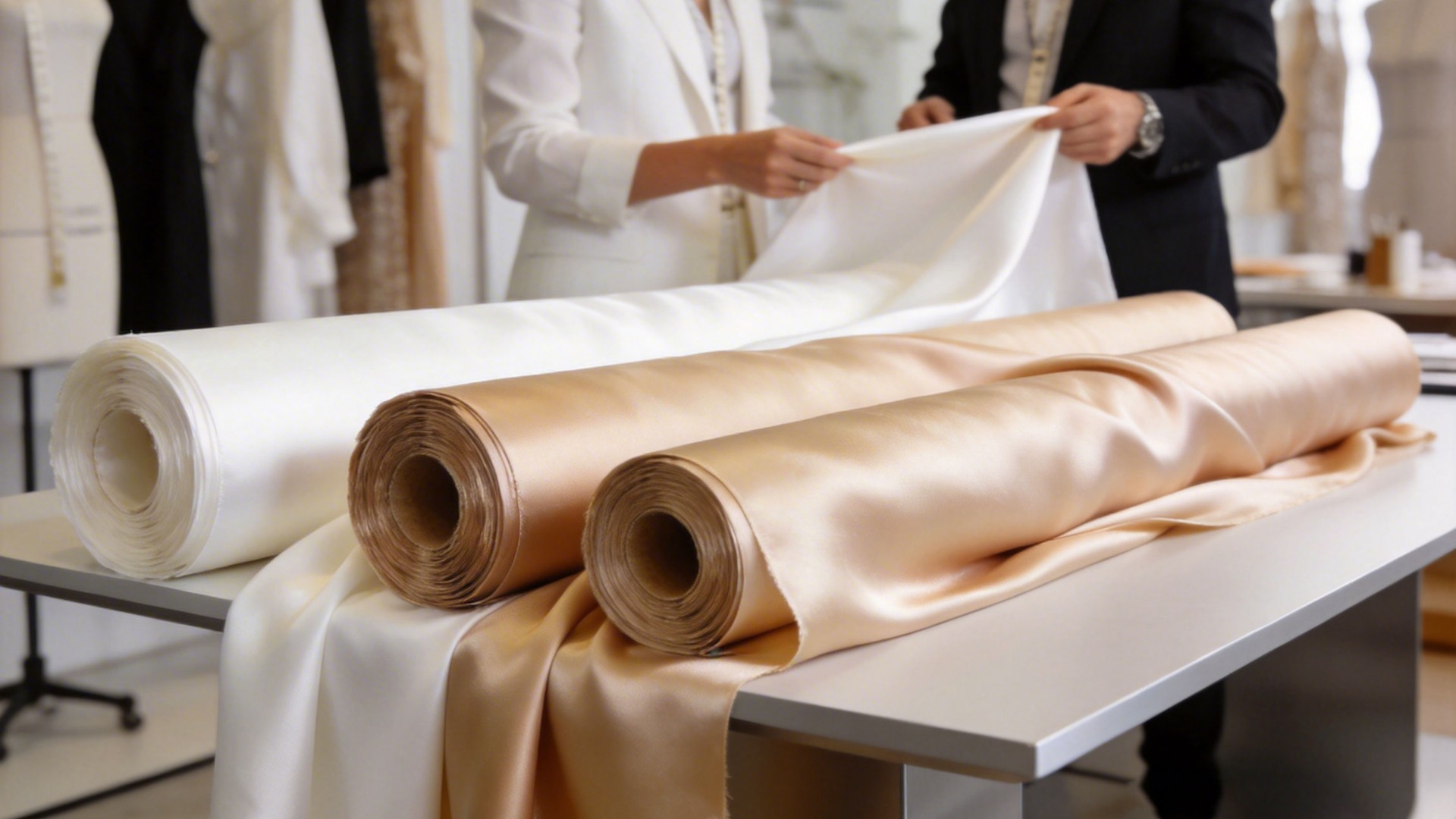
You don't need a factory. You need a supplier who works with small brands—someone who already has the fabric, the sewing capacity, and the quality control in place. You're renting their infrastructure, not building your own.
You don't need thousands of units per design. 50 to 100 pieces is enough to test a product.
You don't need a huge budget. A realistic starting budget for 3 to 5 SKUs covers samples, a small production run, and basic packaging. Start with one product if you want to keep the number low.
You don't need months of lead time. Samples take about a week to 10 days. Bulk production is usually 2 to 4 weeks after you approve the sample.
You don't need a sourcing team. You need one reliable partner who handles fabric, sampling, production, and packaging. That's the model we built COCOONMAN around.
But you DO need these four capabilities — even if you outsource the execution:
- Fabric literacy — know what 19mm vs 22mm feels like, and what "crepe de chine" means.
- Sample discipline — never approve bulk without a physical sample in hand.
- Basic unit economics — know your landed cost before you price.
- Customer expectation management — silk requires care instructions, or you'll eat returns.
> The biggest shift in thinking: you're not building a supply chain. You're finding someone who already has one and renting access to it.
In-Stock Silk Products & Unbranded Packaging (No Inventory Risk)
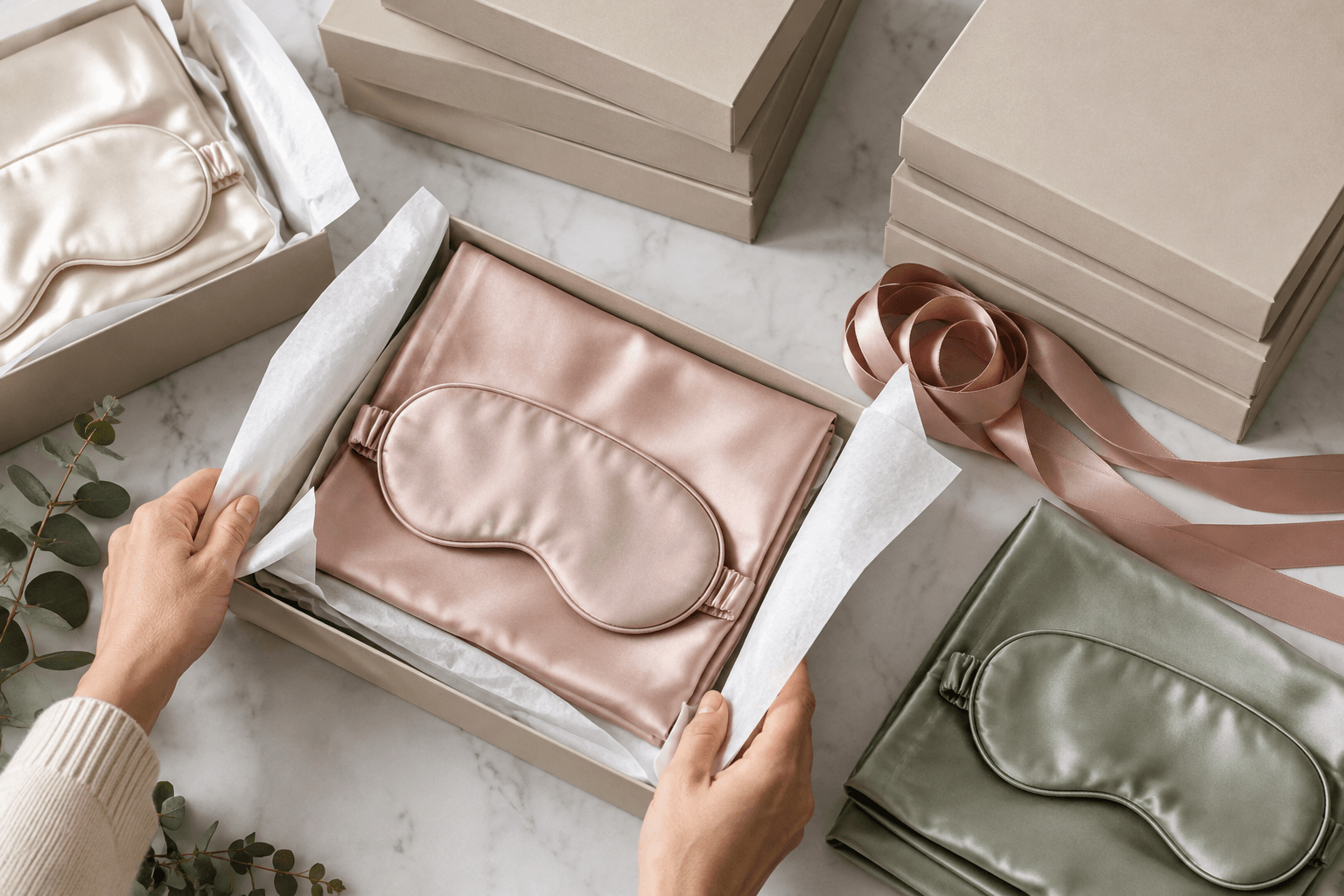
If you want to test the silk market before committing to a custom production run, you have another option that most guides never mention: buy ready-made silk products from stock, and pair them with high-end unbranded packaging. At COCOONMAN, this is exactly what we built our warehouse around.
We keep a large variety of silk products in stock — pillowcases, eye masks, scrunchies, hair ties, sleepwear and more — available for immediate order at low quantities. No tooling, no sampling cycle, no production lead time. You can list them on your store this week and start learning from real customers.
We also stock premium unbranded boxes and packaging designed for small business owners who want a luxury unboxing experience without the cost and MOQ of fully custom packaging. Plain, high-end, ready to ship. Add your own sticker, insert card or ribbon — and it looks like a brand.
This is the lowest-risk path into the silk category:
- No large inventory commitment — order only what you can sell.
- No custom production lead time — stock ships fast.
- No packaging MOQ — unbranded boxes are ready now.
- A real market test — validate demand before you invest in OEM/ODM.
Think of it as your bridge: start with in-stock product and unbranded packaging, prove the market, then move to private label or full custom production once you know what sells.
Explore what's available:
- Browse in-stock silk products →
- Unbranded gift boxes — current box styles, sizes and photos are listed alongside the products: see packaging in the stock catalog →
> Tip: In-stock products and unbranded boxes can also be combined with custom labels or hang tags later — so your first test run doesn't have to be wasted.
What to Sell: Product Ideas That Actually Work
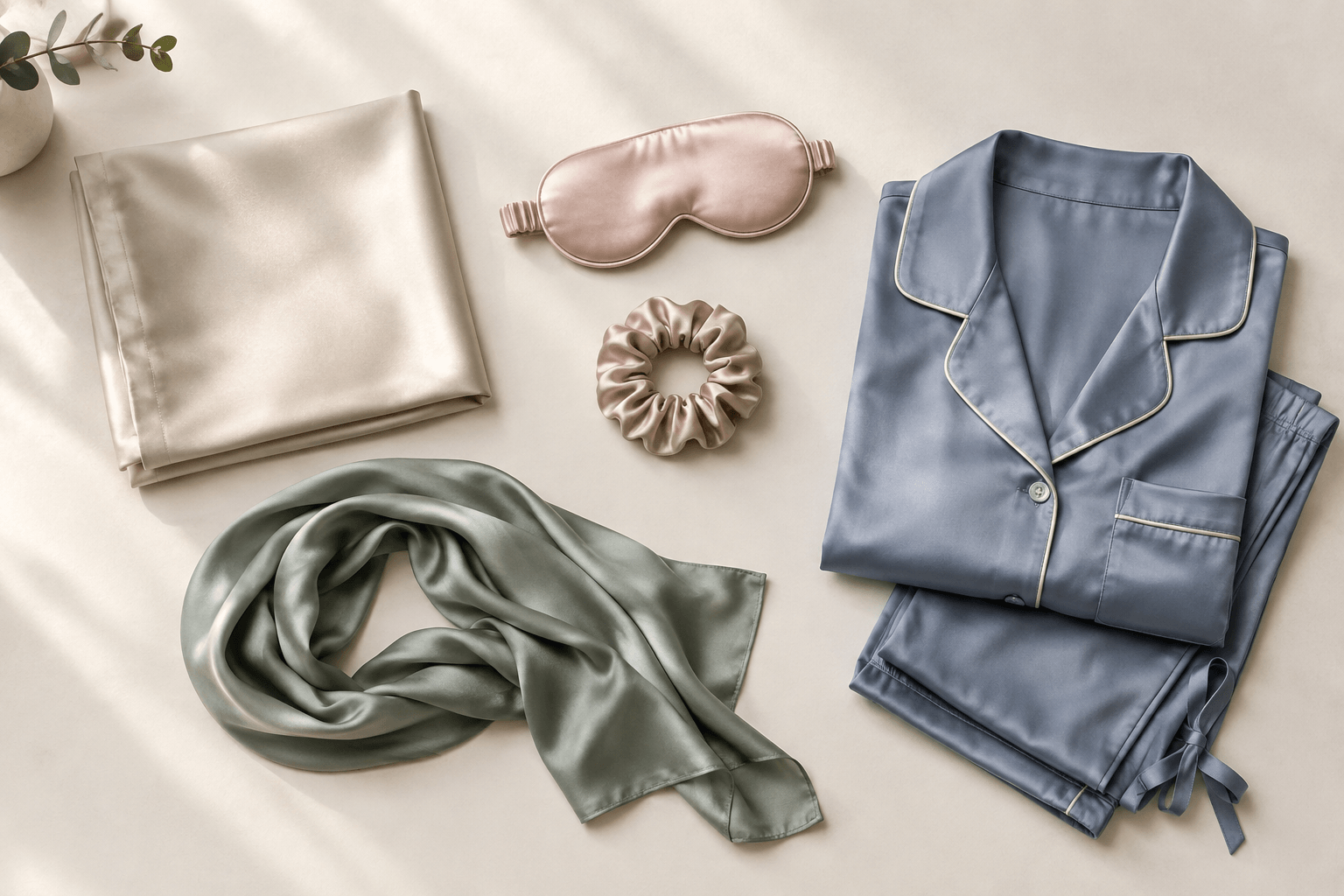
If you're not sure what to make, here are the categories that tend to work best for small brands.
Silk pillowcases are the most common entry point. Easy to ship, easy to photograph, clear gifting appeal. 19mm to 22mm mulberry silk is the standard for anything you'd call premium.
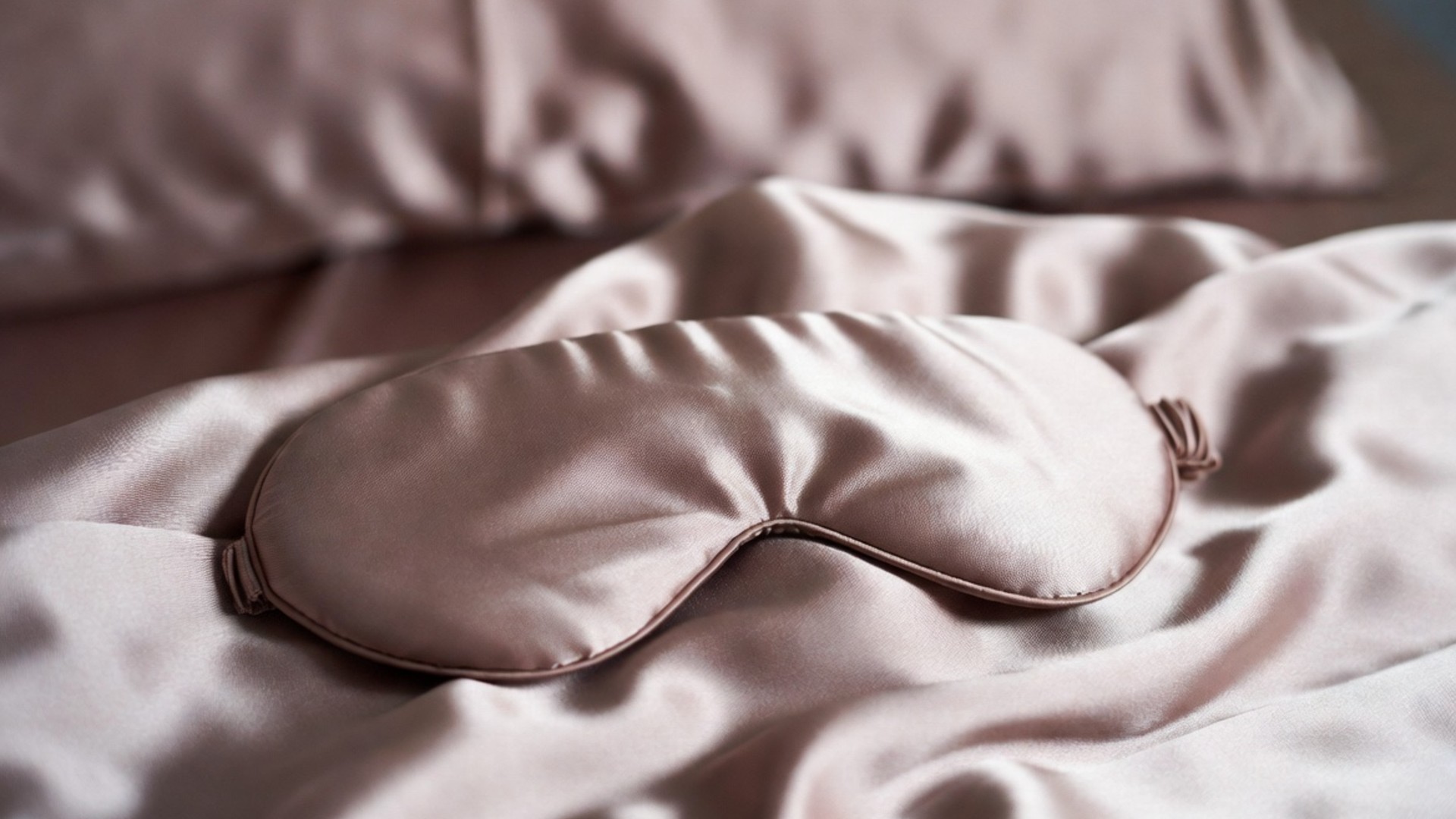
Silk eye masks are smaller, cheaper to produce, and popular in beauty and travel. 16mm to 19mm is typical. They make great bundle add-ons.
Silk scrunchies and hair accessories are low-cost, high-margin impulse buys. Same 16mm to 19mm range.
Silk scarves work well in fashion and gifting. Lighter weights—8mm to 12mm—are standard.
Silk sleepwear and robes are a bigger commitment but higher ticket. 16mm to 19mm crepe de chine or charmeuse.
Our advice: pick one category and start with one to three products. Not ten. You want to learn what sells before you scale.
> Tip: Confirm whether your manufacturer supports mixed-SKU bundles, this is a popular upsell tactic for small silk brands.
> Want to skip the production wait entirely? Many of these categories are available from our in-stock silk product range — ready to ship at low quantities, with matching unbranded gift boxes listed in the same catalog.
How to Choose Silk Fabric Without Getting Burned
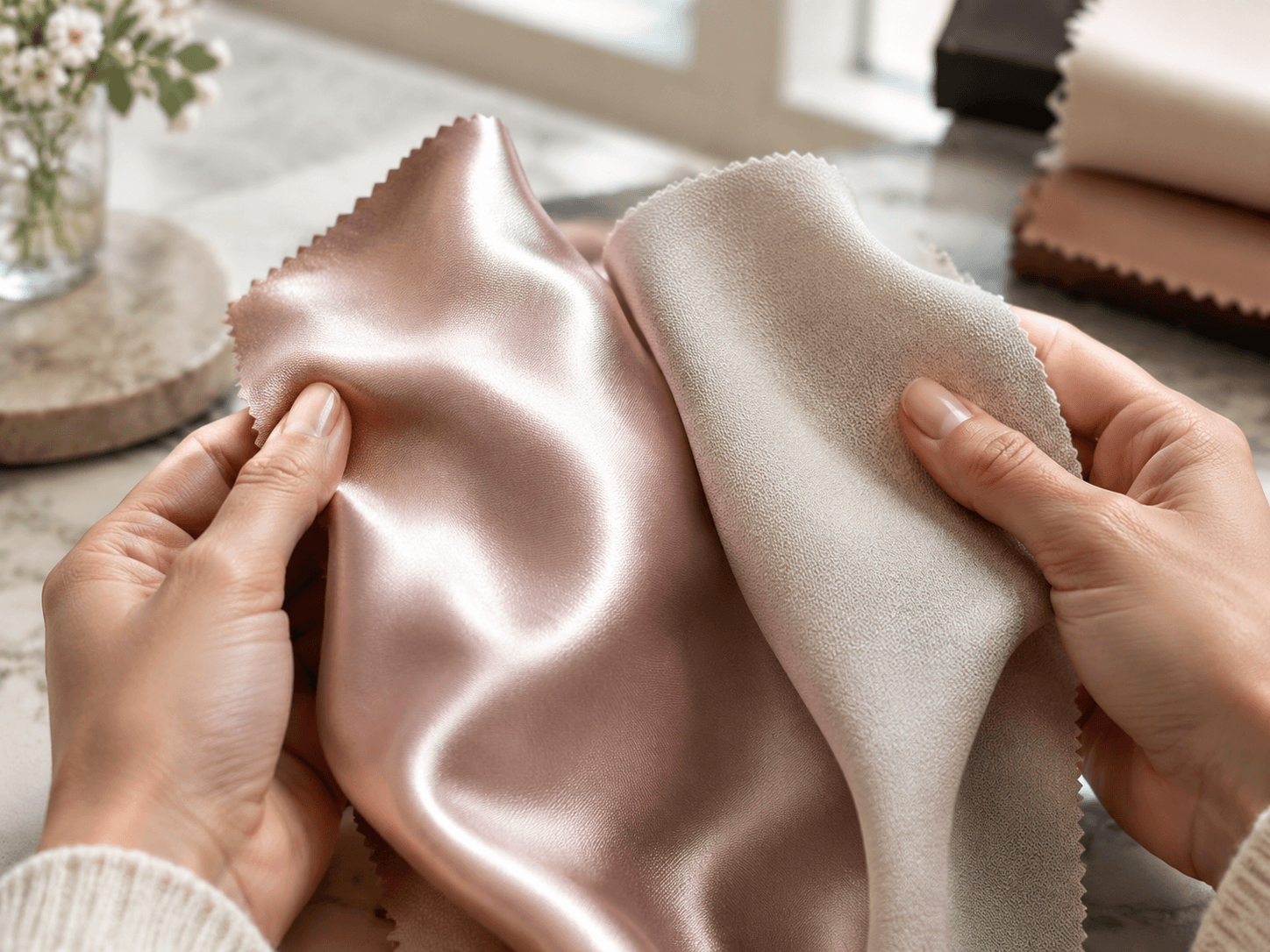
Fabric is where most beginners make expensive mistakes.
Weave determines how the fabric looks and feels. Charmeuse has a glossy front and matte back—it's what most people picture when they think of luxury silk. Crepe de chine is matte with a slight texture, better for garments. Habotai is lightweight and smooth, common for scarves. Mulberry silk is the most common premium silk overall.
Momme measures weight and density. Think of it like thread count for sheets.
| Momme | Best for | Avoid for |
|---|---|---|
| 8–12mm | Scarves, hair ties | Silk products that need durability (too thin, wears out) |
| 16–19mm | Eye masks, sleepwear, scrunchies | Heavy bedding |
| 19–22mm | Pillowcases, bedding | Lightweight scarves (too stiff) |
| 22mm+ | Luxury bedding, statement pieces | Budget entry products |
Certifications matter more than most beginners realize. OEKO-TEX Standard 100 means the fabric is free from harmful chemicals. GOTS covers organic standards. BSCI or Sedex relates to factory labor conditions. If you're selling on Amazon or to EU retailers, you'll likely need at least OEKO-TEX.
How to actually test silk — and what each test can and cannot tell you:
- Burn test — real silk smells like burnt hair and leaves crushable ash; polyester melts into a hard bead. Tells you fiber type, not momme or dye quality.
- 84 disinfectant test — real silk dissolves; polyester doesn't. Doesn't distinguish mulberry from tussah.
- Touch test — quick read on softness and drape, but subjective and easily fooled by finishes.
- Third-party lab test — the only way to verify momme, fiber content, dye fastness, and chemical residue.
The mistake we see most often: choosing fabric based on price alone. A 16mm silk product feels noticeably thinner than a 22mm one. Customers notice. They return it. They leave a bad review.
Beware of falsely labeled momme weights; always validate with physical swatches and certification documents. If a supplier won't send samples, that's your answer.
The fix: Always put the momme weight, fiber content, and dye lot tolerance in the purchase order. "22mm ± 0.5mm, 100% mulberry silk, dye lot match to approved sample" is a spec. "22mm" is a hope.
OEM, ODM, and Private Label: What's the Difference?
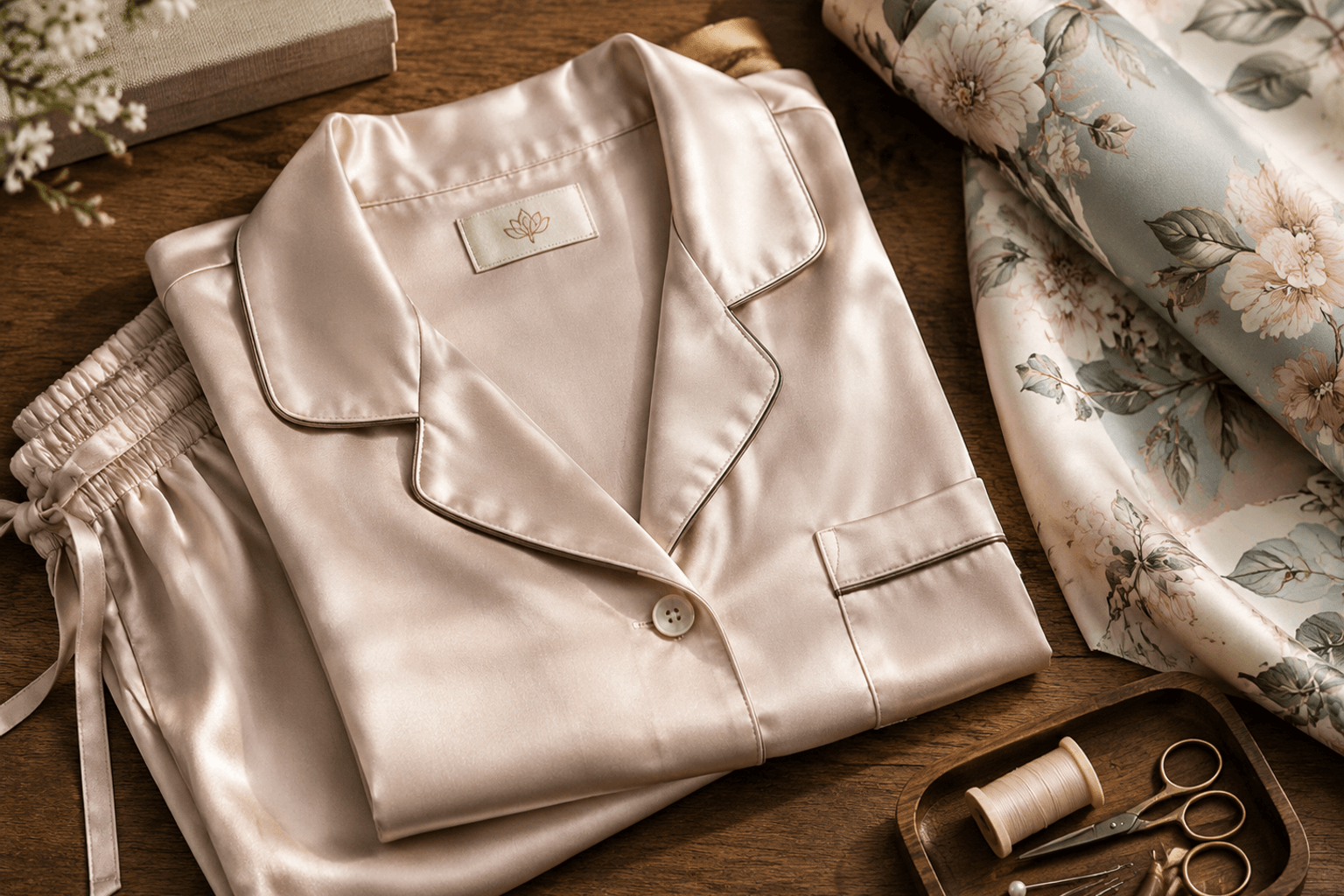
These three terms get thrown around constantly, and they're not the same thing.
OEM means you provide the design and specifications. The supplier produces exactly what you've asked for. This is for founders who know what they want to make.
ODM means the supplier has existing designs, and you customize them. You might change the color, add your label, adjust the packaging. This is faster and easier if you don't have a design background.
Private label is the simplest version. The supplier has a finished product. You put your brand on it.
For most first-time founders, the choice comes down to three paths:
- Private label — lowest MOQ, fastest to market, lowest risk. Best for testing whether silk sells at all.
- ODM — medium MOQ. Best if you have a market angle but no design skills.
- OEM — highest MOQ. Best if you have a clear product vision and design files.
Our advice: start with private label or ODM. Prove the market first. You can always move toward full custom later.
The key is finding a supplier who's comfortable working at your scale. Some factories only want large OEM orders. Others are purpose-built to serve small-batch projects.
The Step-by-Step Process
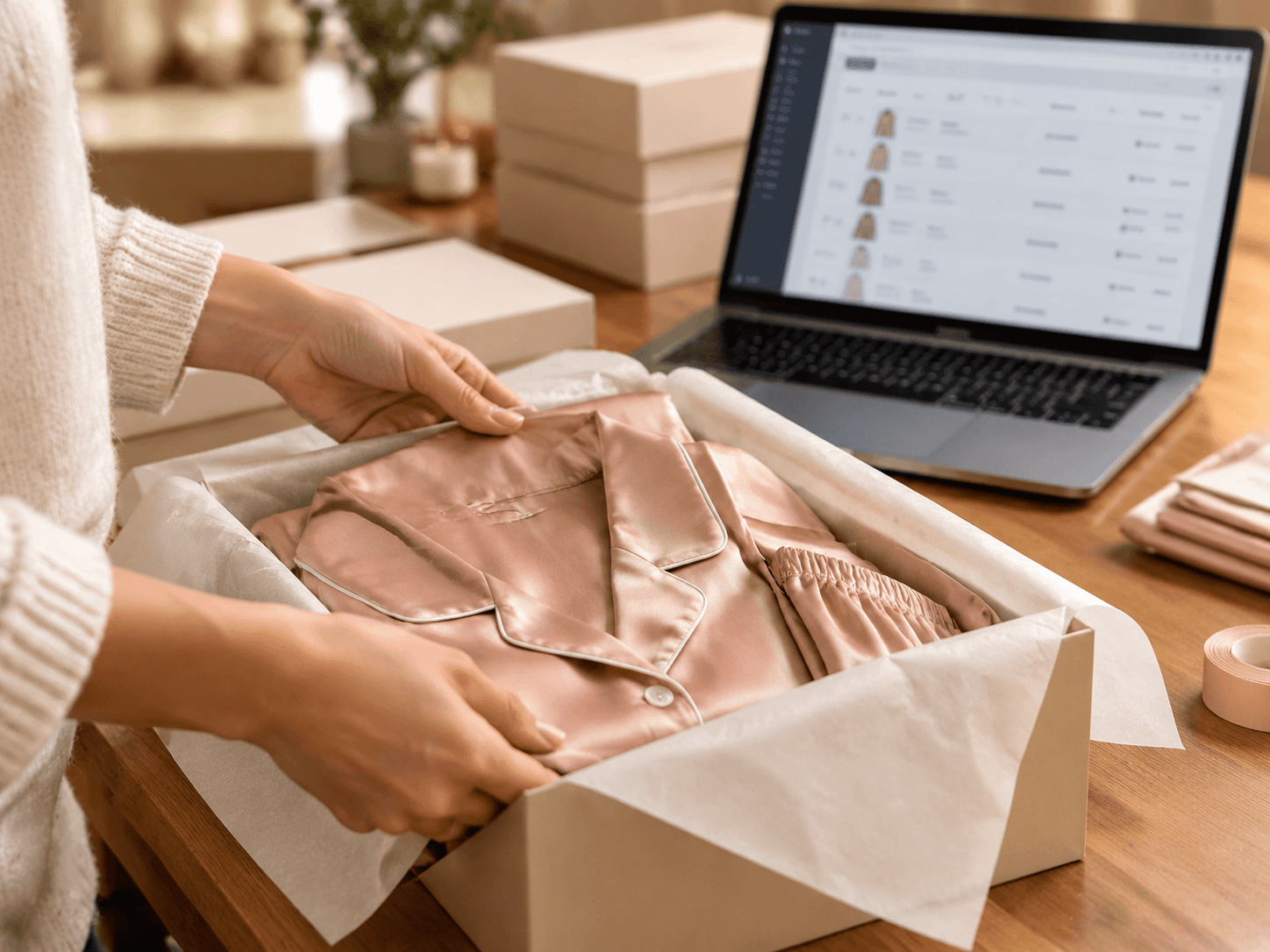
Here's the whole thing, from idea to first sale.
Step 1: Decide what you're selling and who you're selling to
Pick one to three products. Identify your customer—beauty-focused, gift buyers, luxury shoppers, wellness enthusiasts? Your answer affects fabric choice, packaging, and price point.
Step 2: Choose your fabric
Based on your product, select weave and momme. Order swatches. Compare feel, color, and weight. Confirm certifications before you commit.
Step 3: Find a supplier and request samples
This is where most people get stuck. You need a supplier who works with small brands, responds quickly, and can actually produce what you're asking for. Share your requirements—fabric, size, color, packaging. Ask for a sample timeline and cost.
Your first week, in short: Shortlist 3 product categories and 3 supplier candidates. Request swatches and quotes. Compare feel, momme, color, and certifications. Order 1–2 samples from your top choice. While samples ship, set up your store.
> Important: Clarify payment terms before approving sampling or bulk production.
Step 4: Order a small batch
50 to 100 pieces per design. This is your market test. Launch on your store, Etsy, Amazon, or social media.
Step 5: Learn from real data
Maybe one silk product sells and another doesn't. Maybe customers want a different color. Adjust based on what you actually see—not what you assumed.
Step 6: Scale what works
Increase order quantity for your best sellers. Negotiate better pricing. Add complementary products.
> If you'd rather skip the trial and error, work with a supplier who's done this before. That experience is worth more than a slightly lower unit price.
Mistakes First-Time Silk Founders Make

1. Launching too many SKUs at once. You tie up cash and spread your attention too thin. Start with one to three products.
2. Choosing fabric by price only. Cheap silk means lower momme, inconsistent dye, missing certifications. It costs you more in returns and bad reviews.
3. Skipping packaging. Silk is a premium product. If it arrives in a plastic bag, the customer feels cheated.
4. Not requesting samples. Never go straight to bulk. Always approve a sample first, and confirm the bulk matches.
5. Working with too many suppliers. Every additional supplier adds communication overhead, quality risk, and delay.
6. Not putting specs in the purchase order. "22mm silk" is not a spec. "22mm ± 0.5mm, 100% mulberry silk, dye lot match to approved sample" is a spec. Without it, you have no recourse.
Real Numbers: What It Actually Costs
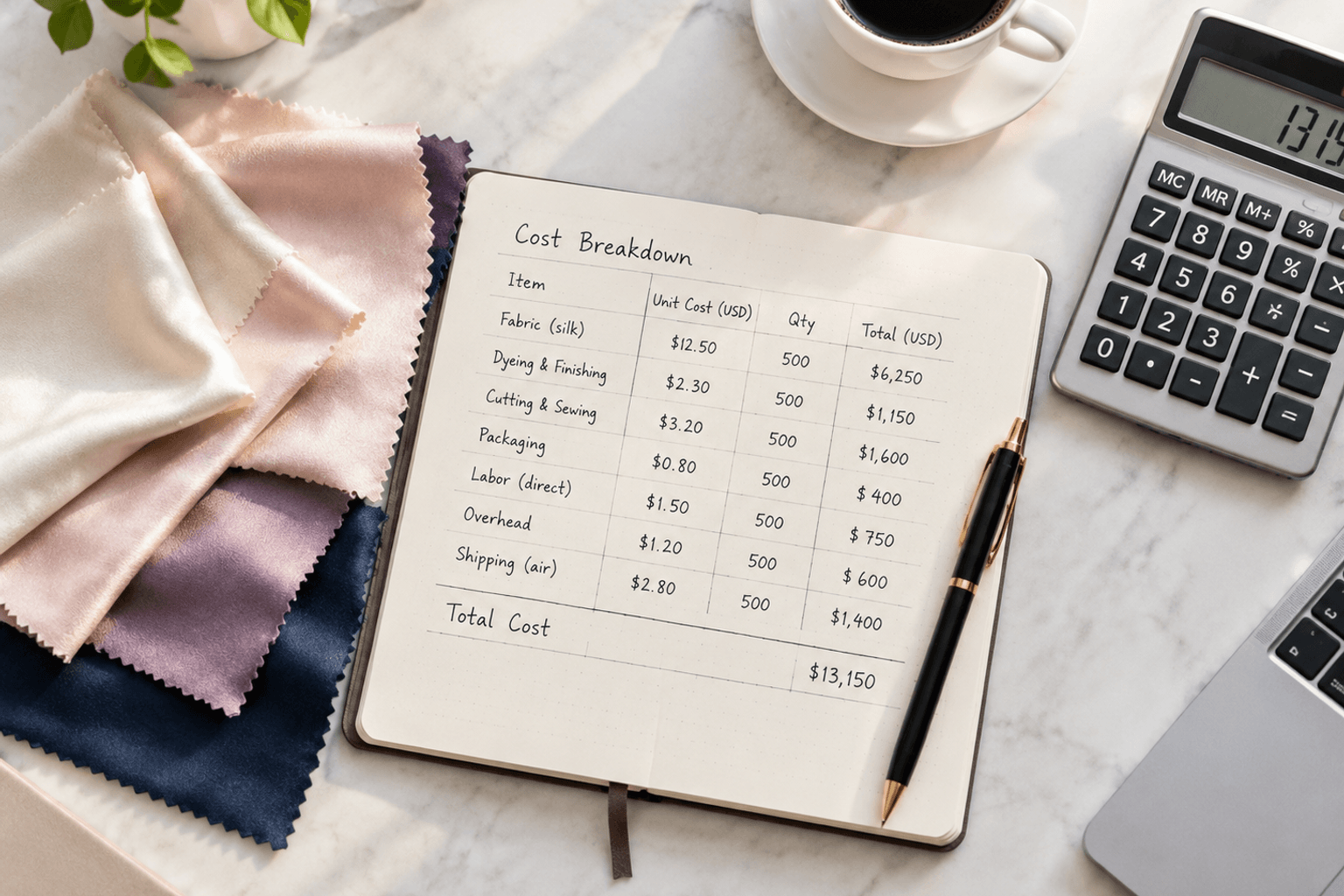
Most guides give you a single "starting budget" number. That number is almost always wrong — because your real cost depends on your fabric, your MOQ, your shipping method, and your packaging.
Here's the only cost principle you need to remember: your landed cost is always higher than the factory quote. A supplier quote of $X per unit is not your cost. Your cost is $X plus shipping, duties, packaging, platform fees, and the percentage you lose to returns. If you price based on the factory quote alone, you will lose money — even if the product sells.
Before you commit to a bulk order, build a simple spreadsheet with these categories: production, shipping, duties, packaging, platform fees, and returns. If you don't know a number yet, estimate high. It's better to overestimate than to underprice and bleed on every order.
*Sample fees, shipping terms, and payment schedules vary by supplier. Confirm everything in writing before you pay a deposit.*
How to Tell If a Supplier Is Worth Working With

Here's what we'd look for.
- They respond quickly. If they're slow during the inquiry stage, they'll be worse after you've paid.
- They send samples without drama. A supplier who hesitates on swatches is a supplier who'll hesitate on quality.
- They ask questions. Good suppliers want to understand your product, your market, and your price point.
- They're clear about MOQ, lead time, and cost. No vague answers.
- They can scale with you. If you grow from 100 pieces to 5,000, can they handle it?
- They have certifications. OEKO-TEX, GOTS, BSCI—these aren't optional if you're selling to certain markets.
The 10 questions to ask every silk supplier before you pay a deposit:
- What is your MOQ per design, and does it change by product type?
- Can you send fabric swatches before I commit to a sample?
- What is the sample cost, and is it refundable against a bulk order?
- What is your sample lead time and bulk lead time?
- Can you put the exact momme weight, fiber content, and dye lot tolerance in the PO?
- What certifications do you hold (OEKO-TEX, GOTS, BSCI)?
- Do you provide QC reports and allow pre-shipment inspection?
- What are your payment terms? (Never pay 100% upfront.)
- Do you support custom labels, hang tags, and packaging? What are the setup fees?
- What is your policy if the bulk order doesn't match the approved sample?
The supplier relationship is the most important decision you'll make. The right partner will feel like an extension of your business—not a vendor you have to chase.
This is the model we built COCOONMAN around — because we kept seeing small brands get burned by suppliers who weren't set up for them.
Red Flags: Warning Signs of Bad Silk Suppliers
Watch for these warning signals when vetting potential manufacturing partners:
- Promising ultra-low prices for high-momme mulberry silk without lab certifications
- Refusing fabric swatches or pre-production samples
- Vague MOQ, lead-time and pricing information
- Avoiding QC inspection and third-party test documentation requests
- Demanding full payment before sample approval
- Quoting "22mm" but refusing to put the tolerance in writing
- Sending a perfect sample, then shipping bulk from a different dye lot
- No physical address or verifiable business license
- Communication that disappears after payment
Questions I Hear From Beginners
1. Can I really start with just 50 pieces?
Yes. Many suppliers now offer MOQs of 50 to 100 pieces per design, specifically for small brands and first-time founders. But confirm this in writing before you invest time in sampling.
2. How much do I need to start?
It depends on your product, your MOQ, and your shipping method. The honest answer is: enough to cover samples, a small production run, packaging, and a buffer for shipping and duties. Start with one product if you want to keep the number low. What you should NOT do is spend your entire budget on inventory and leave nothing for marketing or unexpected costs.
If you want to reduce risk further, start with COCOONMAN's in-stock silk products and unbranded packaging — order only what you can sell, skip the production lead time, and validate demand before committing to a custom run. See our in-stock range for details.
3. What if I don't have a design yet?
Use ODM services. You provide the product direction and target market. The supplier handles design and production.
4. Can I put my own logo on the products?
Yes. Most suppliers offer custom labels, tags, and packaging. Always request a mockup or sample before bulk production. Expect a one-time setup fee for custom labels or hang tags — confirm the amount before you commit.
5. How long does the whole process take?
Four to eight weeks on average: one to two weeks for sampling and approval, two to four weeks for production, plus shipping.
6. What's the best silk for sleep and bedding?
19mm to 22mm mulberry silk or charmeuse. It's durable, smooth, and gentle on skin and hair. Anything below 19mm will wear out faster and feel thinner than customers expect.
7. How do I make sure the bulk order matches the sample?
Work with a supplier who provides QC reports and allows pre-shipment inspection. Always approve a sample before production starts. Put the momme weight, fiber content, and dye lot tolerance in the PO.
8. Are sample fees refundable when I place a bulk production order?
Many silk manufacturers refund or credit sample fees toward your bulk order. Confirm this in writing before you place sampling orders.
9. Do you handle custom hang tags, woven labels and gift packaging? Are there extra setup fees?
Most small-batch OEM partners support custom labels and packaging. One-time artwork setup charges may apply. Always ask for mock-ups before mass production.
10. Who covers shipping and export documentation?
Suppliers can offer EXW, FOB or DAP shipping terms. Clarify shipping responsibility, customs documents and freight cost early — freight alone can meaningfully change your landed cost, especially at small volumes.
11. Can you comply with EU / US product safety requirements?
Confirm your supplier can provide OEKO-TEX, test reports and documentation required for your target sales market.
12. What happens if bulk goods have quality issues?
Agree on QC rules, pre-shipment inspection options and resolution policy before placing your order. A good supplier will offer a replacement or credit for defective units — but only if you agreed on this upfront.
Start Small, Start Smart
Launching a silk product line doesn't require owning a factory, huge startup capital or years of sourcing expertise. Success hinges on clear product positioning, well-specified fabric, a trusted manufacturing partner and low-risk small-batch market testing.
The biggest risk is not starting small — it is partnering with the wrong supplier.
COCOONMAN specializes in small-batch OEM & ODM silk manufacturing for emerging brands and first-time founders. We wrote this guide because we believe informed buyers make better partners.
Three ways to move forward with COCOONMAN:
- The Custom Route: Want professional feedback on your product concept? Get honest, no-pressure feasibility & cost feedback from our sourcing team.
[Talk to a Sourcing Advisor →]
- The Quality Check: Prefer evaluating fabric & product quality first hand? Order our sample kit to inspect materials, stitching and finish.
[Request a Sample Kit]
- The Zero-Risk Route (In-Stock): Want to launch today without a factory order? We hold a large variety of in-stock silk products and premium unbranded gift boxes ready to ship — no MOQ, no production wait. Add your brand and start selling this week.