GOTS Certified Silk Sourcing: What Brands Need to Know Before Ordering

If you're sourcing silk and a client asks for GOTS-certified products, the first question is usually: what does GOTS actually cover — and can my supplier handle it?
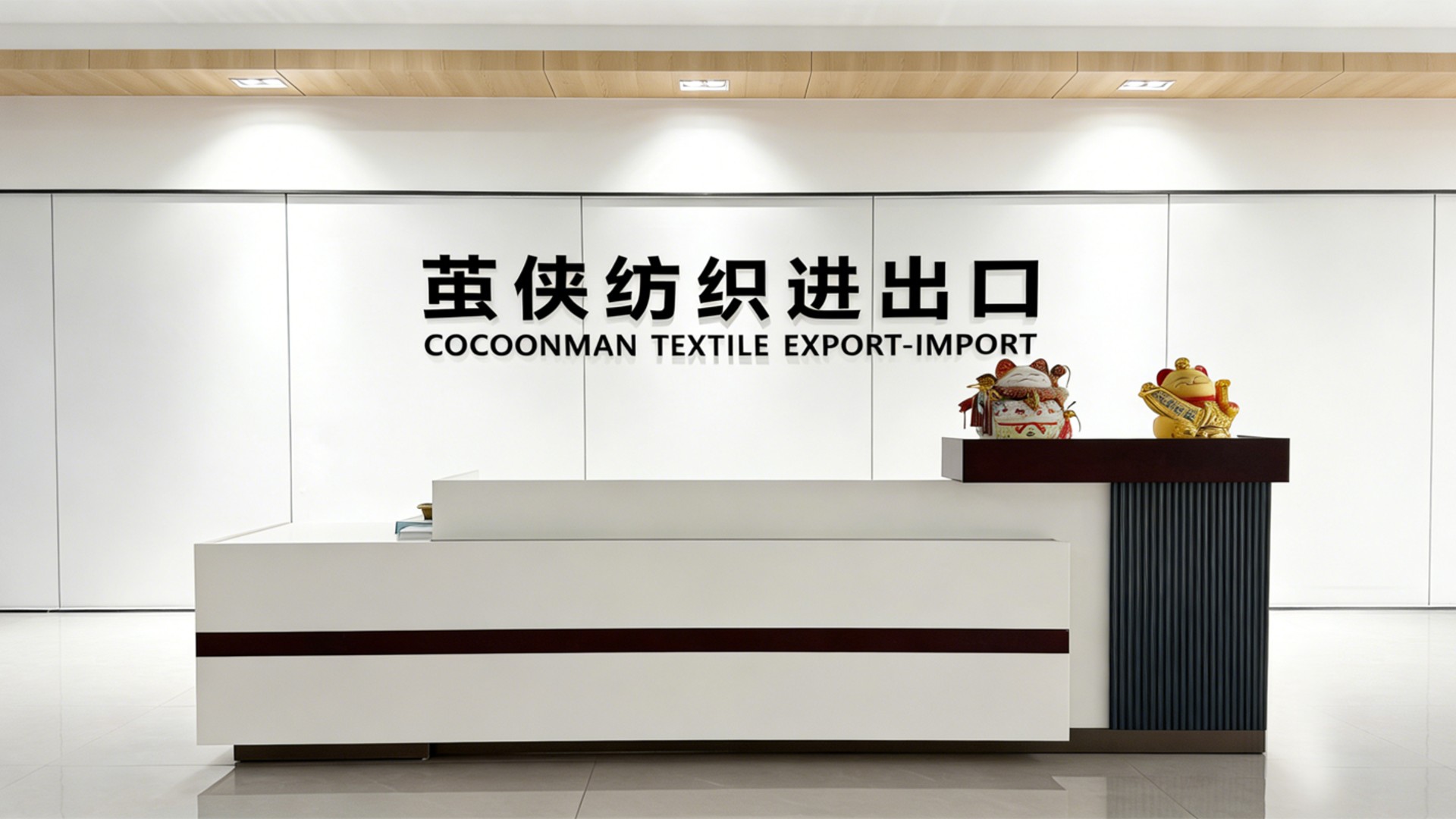
COCOONMAN is a 2B silk supplier focused on finished silk goods and OEM/ODM services. We hold a GOTS Scope Certificate, which means we're set up to take on GOTS-certified silk orders when a project requires it.
This guide walks through what GOTS certification really means, what it covers, and how it compares with GRS, RCS, OCS, and OEKO-TEX — so you can judge a certificate, a supplier, and a quote with more confidence.
What is GOTS Certified?
GOTS stands for the Global Organic Textile Standard. It is the world's leading processing standard for textiles made from certified organically produced raw materials, covering the entire production chain from fiber to finished product.
Before GOTS emerged, different countries had their own organic textile standards, making global comparison difficult. In 2002, leading standard-setting organizations formed the GOTS International Working Group. The first version was implemented in 2006, and the standard is revised every few years to stay aligned with industry developments.
Today, GOTS is recognized in all major markets globally. As of 2025, more than 17,800 facilities across 95 countries are certified to GOTS — a 15.3% increase year-on-year. The standard continues to grow rapidly as brands and manufacturers increasingly adopt verified sustainability commitments.
What Does GOTS Certification Mean?

When a product is GOTS-certified, it means three things:
First, its raw materials are certified organic fibers — the materials must come from farms certified to organic agricultural standards.
Second, the product does not contain explicitly prohibited harmful chemicals such as pesticides, formaldehyde, and azo dyes. All chemicals used must meet strict toxicity and biodegradability rules.
Third, certified products guarantee safe working conditions and fairness for workers throughout the supply chain. No forced labor, no child labor.
However, GOTS certification does not mean:
- The product is 100% organic
- The product is completely free of chemical components
- The product is entirely harmless to the environment
GOTS Certification Standards and Requirements

Organic Fibers
Natural organic fibers are the foundation of all GOTS audits. These fibers can be plant-based or animal-based, including organic cotton, silk, wool, linen, and hemp.
GOTS has two label grades:
- "Organic": ≥95% certified organic fibers
- "Made with Organic": ≥70% certified organic fibers
Products with less than 70% organic fiber content cannot be labeled as GOTS-certified.
Restrictions on Harmful Chemicals
GOTS prohibits a wide range of hazardous substances. The prohibited list includes:
- Toxic heavy metals (lead, cadmium, mercury, hexavalent chromium)
- Formaldehyde and its derivatives
- Carcinogenic aromatic amines (from azo dyes)
- Chlorine bleaches
- Alkylphenol ethoxylates (APEOs)
- Perfluorinated compounds (PFCs)
- Organotin compounds
Some chemicals are allowed after strict evaluation, but must comply with residue limits. These standards protect workers, consumers, and the environment.
Wastewater Treatment and Environment Management
GOTS requires that all wastewater from wet processing operations be treated before discharge. This includes removing chemical residues, dyes, heavy metals, and other pollutants.
Social and Labor Responsibility
GOTS integrates social criteria into the same certification as environmental and chemical requirements — this distinguishes it from focused standards like OCS. Based on International Labour Organization (ILO) conventions, GOTS requires:
- No forced labor — prohibition of debt bondage, trafficking, and involuntary work
- Prohibition of child labor — no employment below minimum working age
- Safe working conditions — protective equipment, adequate ventilation, fire safety
- No discrimination — based on religion, race, age, or marital status
- Workers' rights — freedom of association and collective bargaining
Supply Chain Traceability
GOTS requires comprehensive documentation at every stage. Transaction Certificates (TCs) are mandatory for every shipment of GOTS goods. This creates a clear audit trail from organic fiber farm to finished product.
What is a Transaction Certificate (TC)?
A TC is issued by the certification body for each shipment of GOTS goods. It documents the transaction between buyer and seller, including product type, quantity, and the certified status of the material. For buyers, the TC is the primary document for verifying that a specific shipment meets GOTS requirements.
How certification works across the supply chain
In the GOTS supply chain, each entity holds its own Scope Certificate (SC) listing the product categories and processing stages it is certified for. The chain is connected through TCs — each time GOTS goods change hands, a TC confirms that the specific shipment is certified.
COCOONMAN's role in the chain: Our GOTS Scope Certificate covers trading, manufacturing, warehousing, and packing. For a GOTS-certified order, we work with certified upstream silk suppliers and issue the corresponding TC for each shipment, so the certification chain stays intact from cocoon to finished product.
How GOTS orders work with COCOONMAN: GOTS-certified orders are confirmed per project. If your project requires GOTS-certified silk, we'll confirm the certification scope and provide the matching TC for each shipment.
For finished silk goods, GOTS is a chain-wide certification. The full chain is: GOTS silk fiber → GOTS greige silk fabric → GOTS degumming/scouring → GOTS dyeing/printing → GOTS finished product. All accessories (sewing threads, zippers, buttons, labels, interlinings, elastic, etc.) must also meet OEKO-TEX Standard 100 or equivalent GOTS-approved requirements. If any link is missing — a non-certified dyehouse or a non-OEKO accessory — the final product cannot be labelled GOTS.
Annual Audit
GOTS certification is not permanent. Certified entities undergo annual inspections and compliance reviews. If serious violations occur — such as child labor or falsification of records — certification can be suspended or revoked.
GOTS-Certified Labels and Packaging
GOTS Label
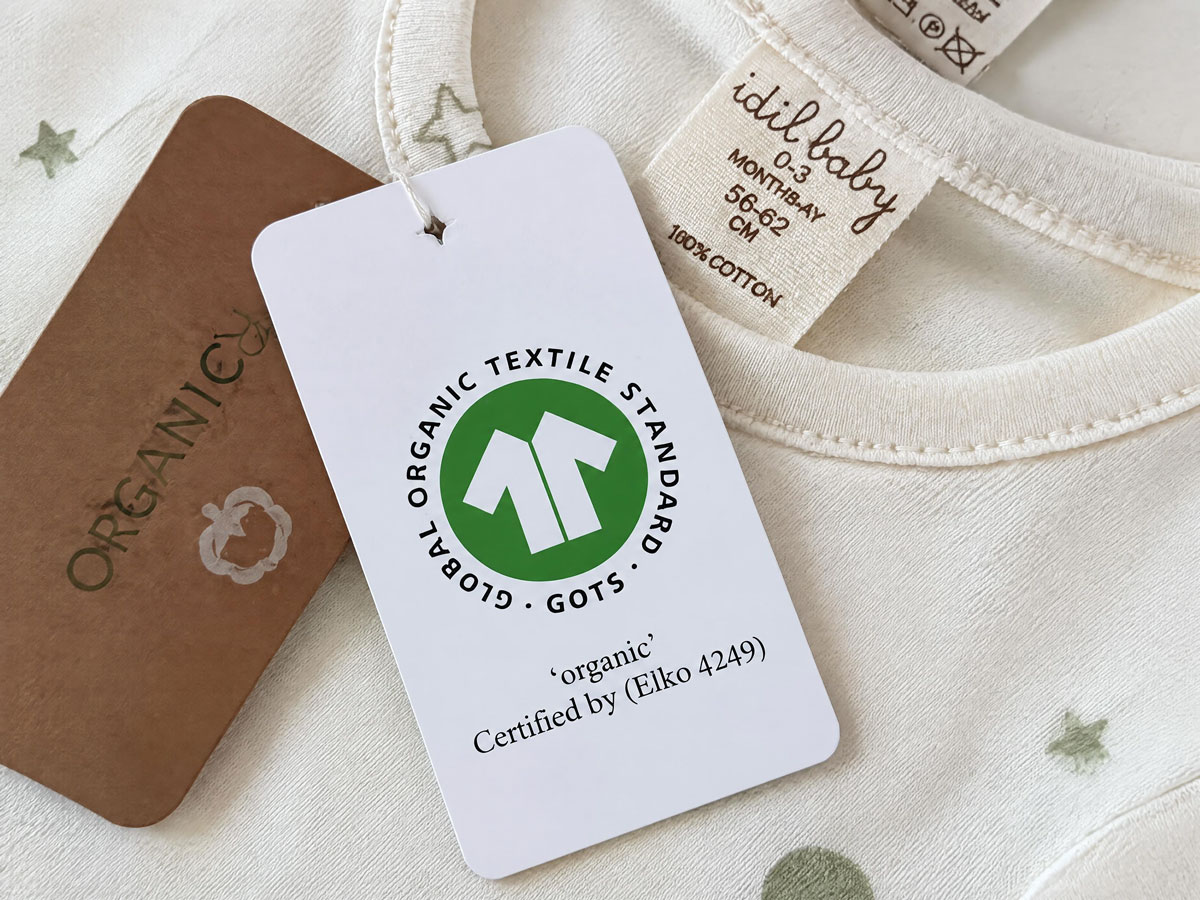
The GOTS logo may only be used after valid certification. The label must include:
- The GOTS logo
- The certification level ("organic" or "made with organic")
- The certifying body name (Control Union, ICEA, Ecocert, etc.)
- The license number of the certified entity
- Fiber composition by percentage
GOTS Packaging
GOTS Version 8.0 introduces comprehensive packaging criteria. For plastic packaging, certified entities should target at least 35% post-consumer recycled content. Paper or cardboard for hangtags must be made from recycled fiber or certified to a sustainable forestry program.
GOTS Version 8.0: Key Updates
The latest version of GOTS introduces stricter requirements across several areas. Key changes include:
- Stricter PFAS controls: Tightened limits and updated testing strengthen the existing PFAS ban.
- Due diligence: New risk-based due diligence requirements for human rights and environment in the supply chain.
- Living wage assessment: Certified entities must use a credible Living Wages estimate, calculate the Living Wage Gap, and develop a plan to bridge the gap.
- Greenhouse gas emissions: New GHG inventory and reduction requirements.
- Textile waste management: New textile waste classification and reduction requirements.
Certified entities and brands sourcing GOTS goods should begin preparing for these changes during the transition period.
What Products Can be GOTS Certified?

GOTS applies to textile products made from at least 70% certified organic fibers. Common products include:
- Textile materials: fibers, yarns, fabrics
- Apparel: children's clothing, T-shirts, pajamas, dresses, underwear, socks
- Accessories: scarves, shawls, bags
- Home textiles: towels, blankets, curtains, sheets, duvet covers
Scarves made from organic silk can obtain GOTS certification.
Note for silk buyers: For silk, GOTS certification begins at the cocoon-processing stage (boiling and washing cocoons). This means the certification chain for silk starts upstream — with the mill that processes the cocoons. As a buyer, what matters is that every entity in your supply chain holds a valid GOTS Scope Certificate and can provide the corresponding TCs.
Which Products are Ineligible for GOTS Certification?

Products that cannot obtain GOTS certification include:
- Synthetic products: Textiles mainly made of polyester, nylon, acrylic, or spandex
- Low organic fiber content: Products with less than 70% certified organic fibers
- Conventional natural fibers: Even natural fibers must be certified organic
- Leather and fur products: Finished leather and fur are outside GOTS scope
The Benefits of GOTS Certification

Benefits for Consumers
Reduced exposure to harmful chemicals: GOTS prohibits toxic chemicals from the source. For babies and people with sensitive skin, GOTS-certified products reduce allergies and irritation.
Supporting sustainable agriculture: Choosing GOTS products supports environmentally responsible farming that avoids GMOs, pesticides, and chemical fertilizers.
Greater transparency: The entire supply chain is traceable, helping consumers distinguish genuinely organic products from false claims.
Benefits for Brands and Companies
Enhancing market competitiveness: GOTS is a widely trusted standard that helps brands stand out in infant products, sustainable fashion, and home textiles.
Building customer trust: Independent third-party verification and supply chain transparency strengthen customer relationships.
Supply chain transparency: Strict record-keeping throughout the supply chain improves quality control and reduces procurement risks.
Benefits for Manufacturers and Suppliers
Scientific production management: GOTS requirements help manufacturers manage chemicals properly and safeguard workers' rights.
Enhanced competitiveness: Brands increasingly prefer certified suppliers. GOTS certification verifies both products and production capabilities.
Benefits for the Environment
Reducing environmental impact: Organic farming, chemical restrictions, and wastewater management reduce the environmental strain of textile production.
Preserving biodiversity: Organic practices avoid the soil and water damage caused by conventional farming, supporting biodiversity.
How to Check or Verify a GOTS Certificate?
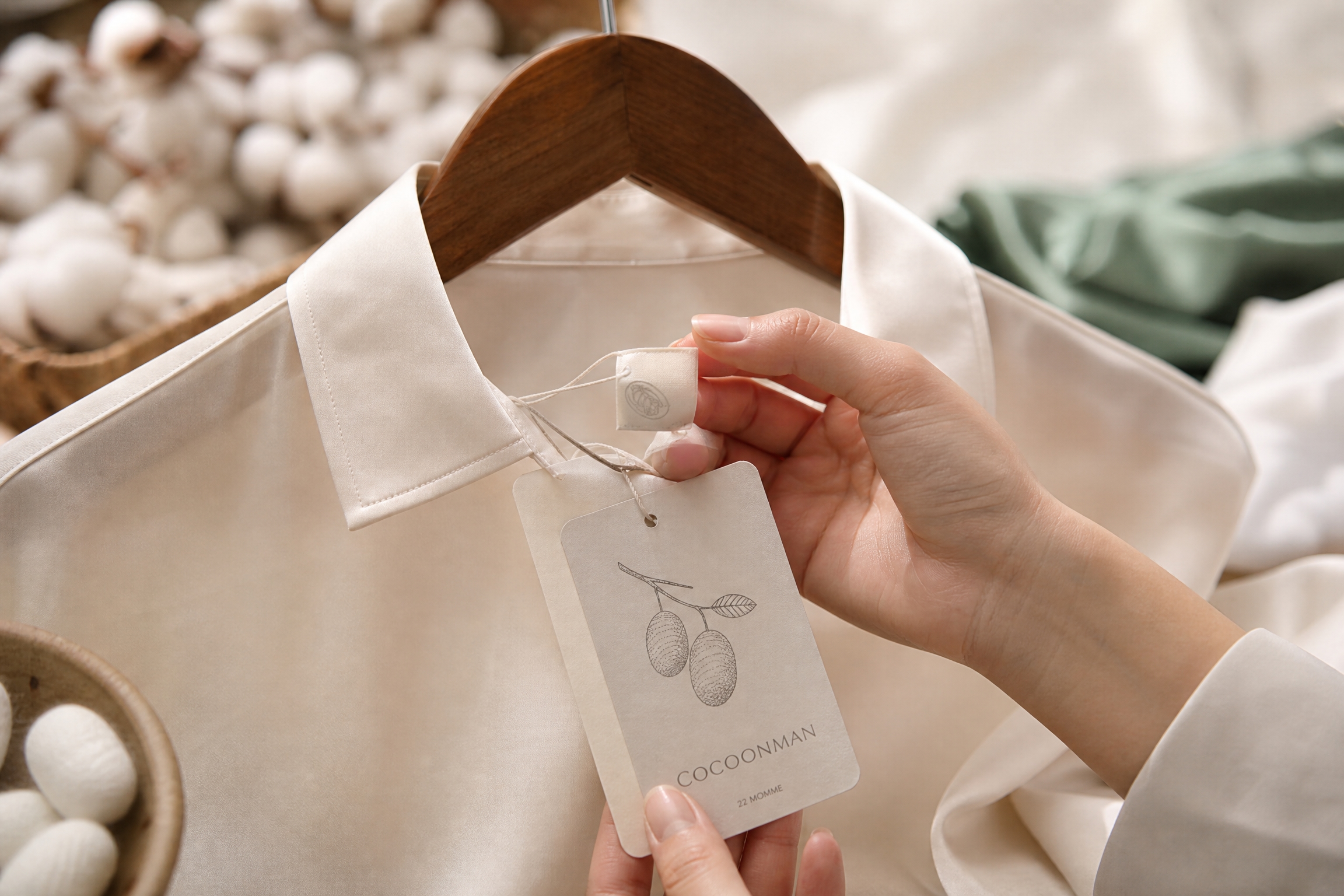
Step 1: Look for the GOTS logo and related information. Certified products display the GOTS logo on the hangtag or label, along with organic fiber content, certification body, and license number.
Step 2: Obtain certification information. Verify the certificate's authenticity and confirm whether the certification scope includes the specific product category you need. For traders, check that the Scope Certificate covers Trading as a certified process. For manufacturers, check that it covers the relevant processing stages (e.g., weaving, dyeing, manufacturing).
Step 3: Verify through official channels. Search the company name or license number in the GOTS public database.
Step 4: Verify consistency. Compare the certificate with the label and ingredient information. Focus on fiber composition, organic fiber percentage, and product type.
GOTS vs. Other Certifications: A Practical Comparison

GOTS is one of several certifications available in the textile industry. Each serves a different purpose. Understanding how they differ helps brands choose the right certification for their product and market positioning.
GOTS vs. OCS
Both are certifications for organic textiles, but they emphasize different aspects.
GOTS covers compliance across the entire textile production chain — from non-GMO seeds to environmental management, from social responsibility to traceability. It is a comprehensive certification.
OCS (Organic Content Standard) verifies whether a product contains organic fibers and their content. It focuses on the planting and production of organic fibers, but does not require chemicals used in the production process or worker conditions. OCS does not set its own chemical, environmental, or social criteria. Its focus is purely on organic content verification and chain of custody.
| Feature | GOTS | OCS |
|---|---|---|
| Full Name | Global Organic Textile Standard | Organic Content Standard |
| Primary Purpose | Verifies organic fibers and sustainable processing | Verifies organic fiber content only |
| Organic Fiber Requirement | Minimum 70% certified organic fibers | No minimum requirement; verifies actual organic content |
| Environmental Standard | YES | NO |
| Chemical Restrictions | YES | NO |
| Wastewater Management | YES | NO |
| Social and Labor Standards | YES | NO |
| Supply Chain Traceability | YES | YES |
| Third-Party Certification | YES | YES |
| Suitable For | Brands seeking comprehensive sustainability certification | Brands seeking proof of organic material content |
| Typical Claim | Certified organic and responsibly produced | Contains verified organic fibers |
Which one should you choose? If your brand needs to communicate full sustainability commitments — organic fiber, responsible chemistry, and ethical labor — GOTS is the standard your clients will recognize. If you only need to verify organic content for a specific product line, OCS provides a lighter-weight option. For silk products, GOTS applies to organic silk with ≥70% organic fibers; OCS applies to any silk product with ≥5% verified organic content.
GOTS vs. GRS
GOTS and GRS are both managed by globally recognized third-party organizations, but they target completely different material types. GOTS targets organic natural fibers, while GRS targets recycled materials.
Both share an important common ground: they are comprehensive standards. Beyond verifying material content and supply chain traceability, they both impose requirements on chemical restrictions, wastewater management, and labor conditions. Obtaining either certification demonstrates that a company meets high environmental and social responsibility standards.
The key difference lies in the minimum content threshold. GOTS requires at least 70% organic natural fibers; GRS requires at least 20% recycled content for transactions, or 50% for consumer-facing labels.
Industry Requirement: GRS for Recycled Silk
Major luxury groups such as Kering require GRS certification as mandatory for recycled silk content in their supply chains, with a minimum recycled content of 20% and a strong preference for >50%. This makes GRS the industry-standard proof for brands incorporating regenerated or reclaimed silk.
Which one should you choose? These two certifications are not competing — they apply to different materials. If your collection uses organic silk, GOTS applies. If it uses recycled silk (regenerated or reclaimed), GRS applies. Some suppliers hold both to cover multiple product lines.
GOTS vs. RCS
RCS (Recycled Claim Standard) and GRS are both managed by Textile Exchange and both target recycled materials, but RCS has a lower threshold.
RCS requires only 5% recycled content and only verifies recycled content and supply chain traceability. It does not cover chemical management, environmental practices, or social responsibility. GRS starts at 20% and covers environment, chemicals, and social responsibility.
| Feature | GOTS | RCS |
|---|---|---|
| Material Focus | Organic natural fibers | Recycled materials |
| Minimum Content | 70% organic fibers | 5% recycled content |
| Environmental Standard | YES | NO |
| Chemical Restrictions | YES | NO |
| Social and Labor Standards | YES | NO |
| Supply Chain Traceability | YES | YES |
| Label Grades | Organic (≥95%) / Made with Organic (≥70%) | RCS 100 (≥95%) / RCS Blended (5–95%) |
Think of it this way: RCS is an entry-level recycled certification; GRS is a comprehensive recycled certification. If a brand only needs to prove that a product contains recycled materials, RCS is sufficient. If the brand wants to communicate a broader sustainability commitment, GRS is more appropriate.
GOTS vs. OEKO-TEX® STANDARD 100
These two are often confused, but their verification objectives are completely different.
OEKO-TEX® STANDARD 100 focuses on product safety. It tests finished products for harmful substances, covering more than 1,000 substances including banned azo dyes, formaldehyde, and heavy metals — even sewing thread and accessories. Its core question is: "Is this product safe for consumers?"
GOTS focuses on full-chain compliance for organic textile production. It verifies organic fiber content and also controls chemicals, wastewater treatment, and labor conditions during production.
| Feature | GOTS | OEKO-TEX® STANDARD 100 |
|---|---|---|
| Primary Purpose | Organic fiber + sustainable production certification | Product harmful substance testing |
| Organic Fiber Requirement | Minimum 70% | No requirement |
| Chemical Restrictions During Production | Strict control | Limited focus |
| Finished Product Chemical Testing | Required | Core function |
| Environmental and Wastewater Management | Required | Not covered |
| Social and Labor Standards | Required | Not covered |
| Applies To | Primarily organic products | Both conventional and organic textiles |
The two can coexist. Many brands hold both GOTS and OEKO-TEX certifications: GOTS proves organic origin and production compliance, while OEKO-TEX further verifies the finished product's chemical safety for consumers. For silk products, this combination is particularly valuable — GOTS confirms organic origin, OEKO-TEX confirms skin-contact safety.
Certification Selection Quick Guide
| Client Need | Recommended Certification |
|---|---|
| Organic silk products with comprehensive environmental and social responsibility assurance | GOTS |
| Recycled silk materials with complete sustainability certification | GRS |
| Recycled silk materials with recycled content verification only | RCS |
| Organic silk content verification only (no environmental/social requirements) | OCS |
| Finished product chemical safety verification (skin-contact products) | OEKO-TEX® STANDARD 100 |
FAQs
1. Does GOTS certification mean a product is non-toxic?
Not necessarily. GOTS does not guarantee that the product is completely non-toxic. Apart from prohibited azo dyes and toxic heavy metals, the product may still contain other lower-level substances.
2. Is GOTS certification worth it?
Yes. GOTS is a widely recognized global certification that provides reliable guarantees and enhances trust. It helps improve market competitiveness and business opportunities.
3. How does Better Cotton compare with GOTS?
Better Cotton aims to improve conventional cotton farming by promoting reduced pesticide use and optimized water efficiency. However, Better Cotton does not equate to organic certification. GOTS is a more comprehensive certification for organic textiles.
4. Is GOTS only for cotton?
No. GOTS covers various certified organic natural fibers, including organic cotton, wool, silk, and linen. Organic cotton is the most representative and widely used material among them.
5. How do I verify a supplier's GOTS certificate?
Ask for the supplier's GOTS license number and Scope Certificate, then search the GOTS public database. Confirm that the certificate covers the specific product category you are sourcing — not just the company name.
- For traders, check that Trading is listed as a certified process on the Scope Certificate.
- For manufacturers, check that the relevant processing stages (e.g., weaving, dyeing, manufacturing) are listed.
- For silk products, verify that the supply chain includes boiling and washing cocoons as a certified processing stage — this is the first step in the silk supply chain under GOTS.
Also request the Transaction Certificate (TC) for each shipment. The Scope Certificate alone does not prove that a specific shipment is GOTS certified — the TC does.
6. Does GOTS certification apply to silk accessories and finished garments?
Yes. GOTS covers finished textile products including scarves, shawls, apparel, and home textiles, provided they contain at least 70% certified organic fibers.
7. Can a product carry both GOTS and OEKO-TEX certification?
Yes, and many premium brands require both. GOTS verifies organic origin and responsible production; OEKO-TEX STANDARD 100 verifies finished-product chemical safety. The two certifications complement each other.
8. What is the difference between GOTS and GRS?
GOTS applies to organic natural fibers, requiring at least 70% certified organic content. GRS applies to recycled materials, requiring at least 20% recycled content for transactions. Both are comprehensive standards covering chemical restrictions, environmental management, and social responsibility.
9. What is the difference between GOTS and OCS?
GOTS covers the entire textile production chain, including chemical restrictions, wastewater treatment, and labor conditions. OCS only verifies organic fiber content and supply chain traceability, without environmental or social requirements.
10. What is the difference between GOTS and RCS?
GOTS applies to organic natural fibers with a 70% minimum threshold and comprehensive environmental and social criteria. RCS applies to recycled materials with a 5% minimum threshold and only verifies recycled content and traceability.
11. What is the first processing stage for silk under GOTS?
For silk, boiling and washing cocoons is defined as the first processing stage covered by GOTS. This means the organic certification chain for silk begins at the cocoon-processing level. Buyers should confirm that their supplier has certified this stage to ensure full supply chain compliance.
12. What does the GOTS supply chain look like for a finished silk product?
It must be GOTS certified at every stage: silk fiber → greige silk fabric → degumming/scouring → dyeing/printing → finished product. All accessories must also meet OEKO-TEX Standard 100 or equivalent GOTS-approved requirements. If any link is missing, the final product cannot be sold as GOTS.
13. Can COCOONMAN produce GOTS-certified silk products?
Yes. COCOONMAN holds a GOTS Scope Certificate covering trading, manufacturing, warehousing, and packing. For GOTS-certified orders, we work with certified upstream suppliers and issue the corresponding TC for each shipment. If your project requires GOTS-certified silk, send us your requirements and we'll confirm the scope.
Conclusion
GOTS certification provides verifiable assurance of organic textile integrity — from fiber to finished product, from environmental management to social responsibility. For brands sourcing organic silk, it is the most widely recognized standard in global markets.
For finished silk goods, GOTS is chain-wide: fiber, greige fabric, degumming/scouring, dyeing/printing, and the final product must all be certified, and accessories must meet OEKO-TEX or equivalent requirements. A single missing link means the final product cannot be labelled GOTS.
Understanding how GOTS compares with GRS, RCS, OCS, and OEKO-TEX helps you match the right certification to your product strategy:
- Organic silk collections → GOTS
- Recycled silk programs → GRS or RCS
- Skin-contact safety verification → OEKO-TEX STANDARD 100
Sourcing GOTS-certified silk for an upcoming collection?
COCOONMAN supports OEM/ODM for finished silk goods, including scarves, apparel, and home textiles. We hold a GOTS Scope Certificate and can take on GOTS-certified silk orders. Send us your project requirements and we'll confirm the scope for you.