Golden Cocoon: The Secret Behind Natural Gold Silk
Golden Cocoon: The Secret Behind Natural Gold Silk
Golden cocoon silk is a naturally gold-colored raw silk produced by a specific silkworm breed. Its color comes from the silkworm itself, not from dyeing. This article explains what golden cocoon silk is, how it is produced, and what brand sourcing teams should evaluate when considering it for a product line.
What Is Golden Cocoon Silk?
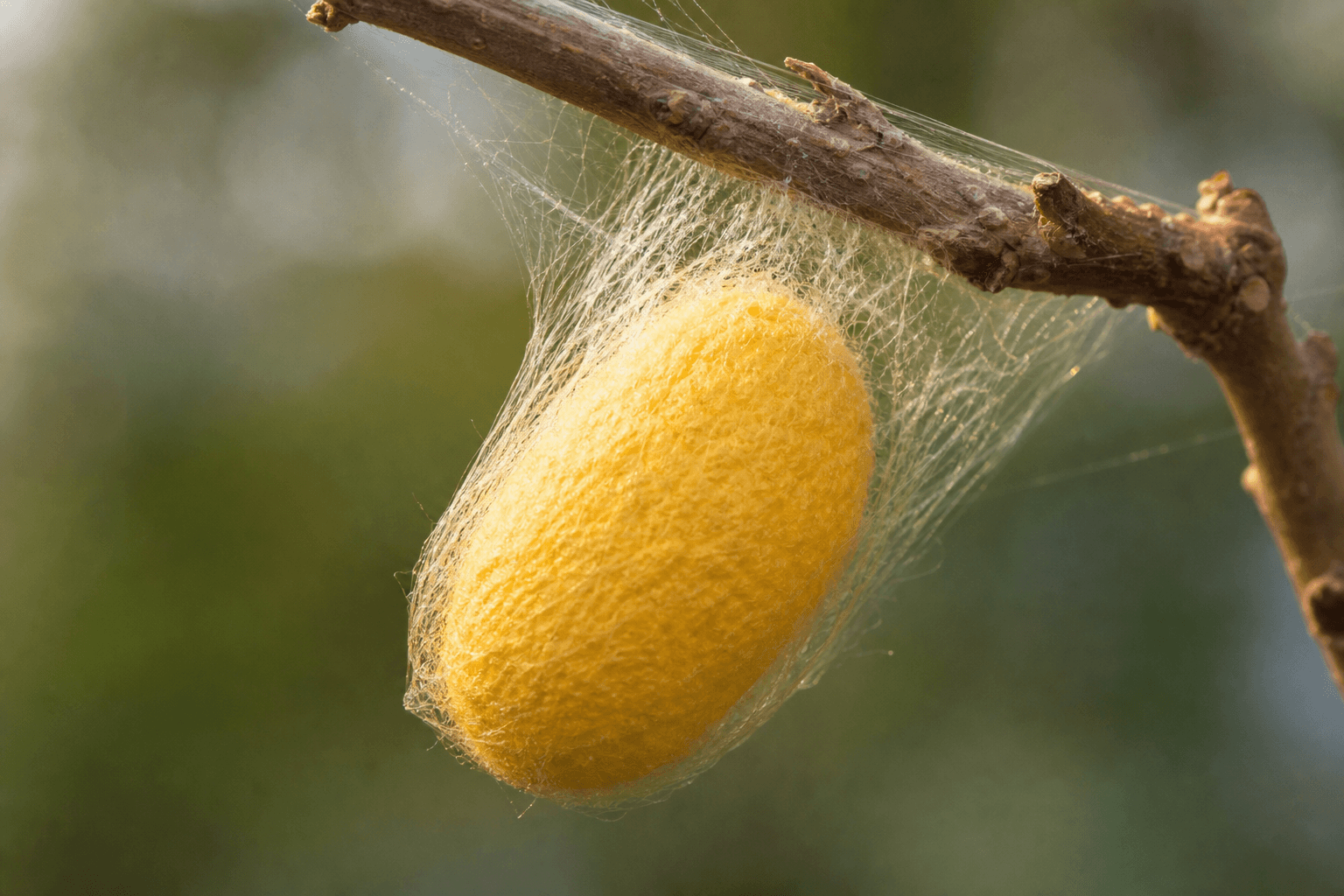
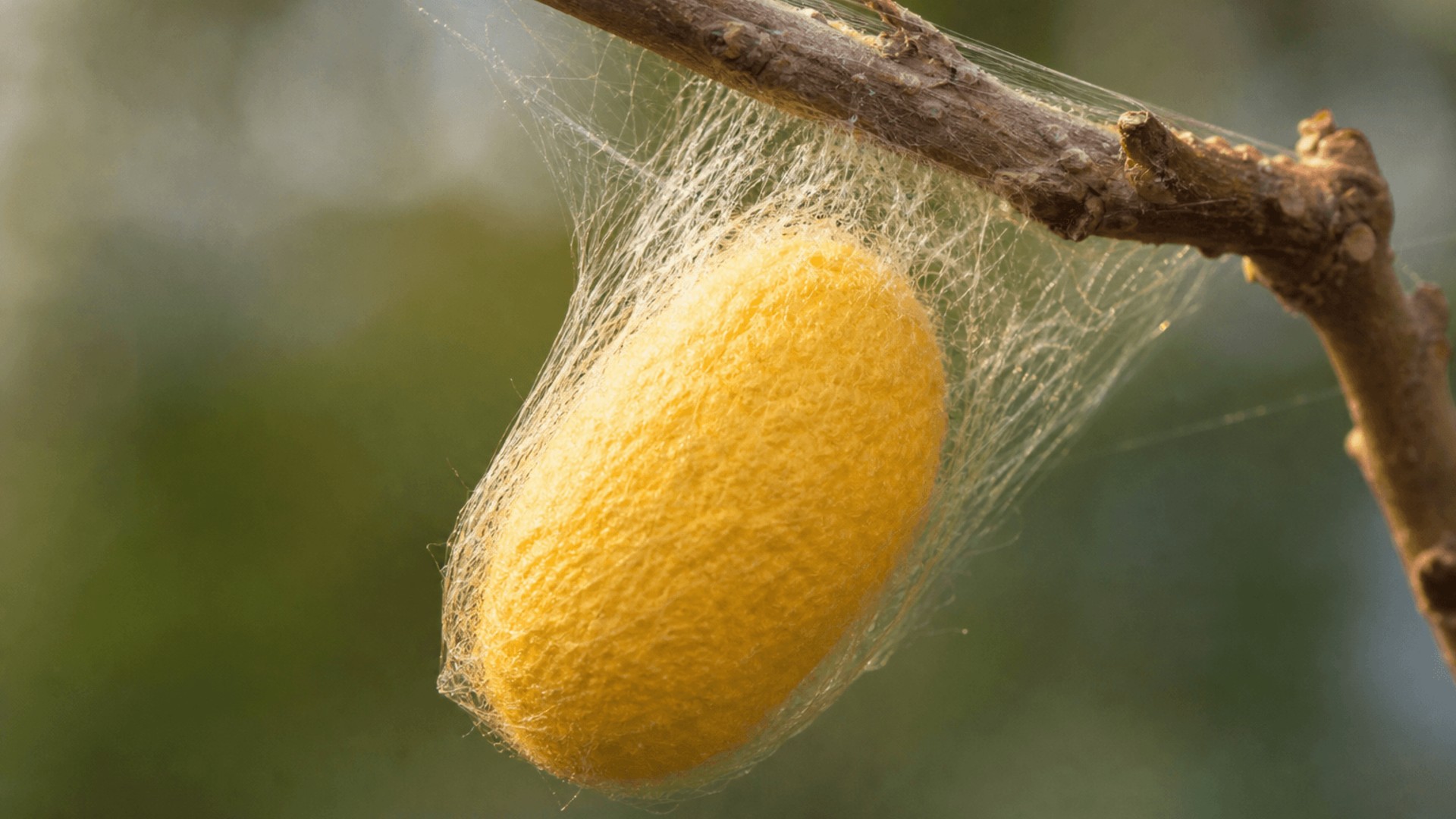
Golden cocoon silk is a type of raw silk derived from a specific silkworm breed that produces naturally gold-colored cocoons. The color is not applied afterward. It results from the biological deposition of carotenoids, primarily lutein, from mulberry leaves into the silk fibroin during the spinning process. Because the color is inherent to the fiber, no chemical dyes or treatments are required.
The primary breed used for commercial production is "Jinqiu × Churi" (金秋×初日), developed by Zhejiang University. It has been cultivated at scale in regions such as Zhejiang, Sichuan, and Chongqing. These silkworms are bred for their ability to incorporate carotenoids into silk, producing fibers that retain a stable golden hue through weaving and finishing.
What distinguishes golden cocoon silk from conventional white silk is its inherent colorfastness and lower reliance on wet processing. Unlike white silk, which typically requires dyeing to achieve color, this material comes with a built-in coloration that does not fade easily. For sourcing teams, the key point is that the color is inherent to the fiber, not applied afterward, which affects colorfastness, compliance, and product positioning.
Technical Background and Production
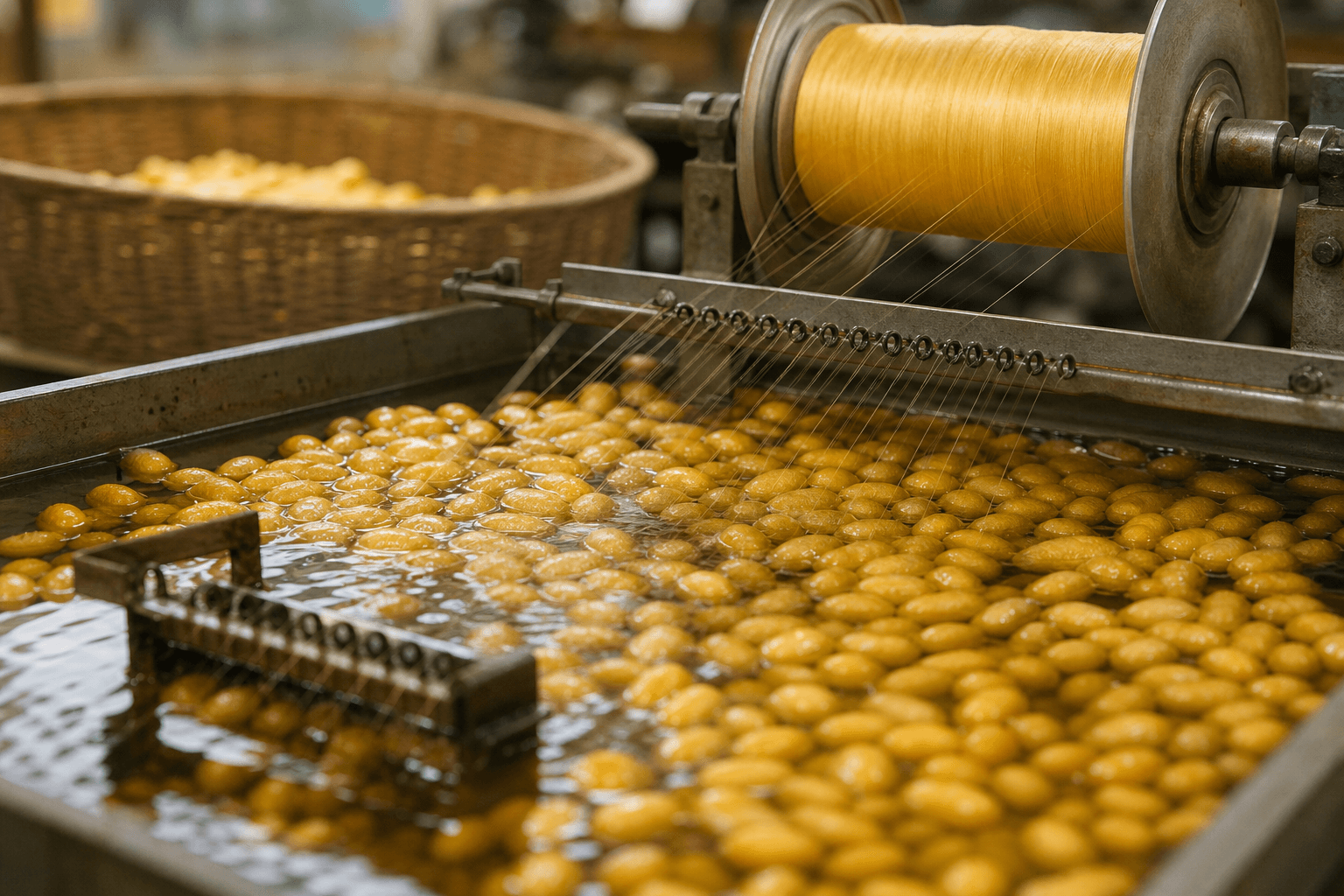
Golden cocoon silk is produced from the "Jinqiu × Churi" silkworm breed. These silkworms are selectively bred to accumulate carotenoids from mulberry leaves, which are then deposited into the silk fibroin during spinning. This biological process replaces the need for conventional dyeing.
Commercial production has expanded in Zhejiang, Sichuan, and Chongqing, where large-scale rearing and reeling facilities support consistent output. The breed has been optimized for yield and reliability, making it suitable for commercial applications. Farmers and manufacturers work together to maintain rearing conditions that preserve the distinctive gold hue throughout the production cycle.
In practical terms, this material offers several advantages. Its color stability reduces the need for additional chemical treatment, which lowers environmental impact. The raw silk can be used in greige fabrics and integrated into product lines that prioritize natural materials. Its durability and visual character make it relevant for high-end fabric design and eco-conscious brands.
One takeaway is that the production of golden cocoon silk depends on careful breeding and industrial scalability. That combination determines whether the material is a viable option for brands evaluating natural gold silk.
What Brand Buyers Should Evaluate
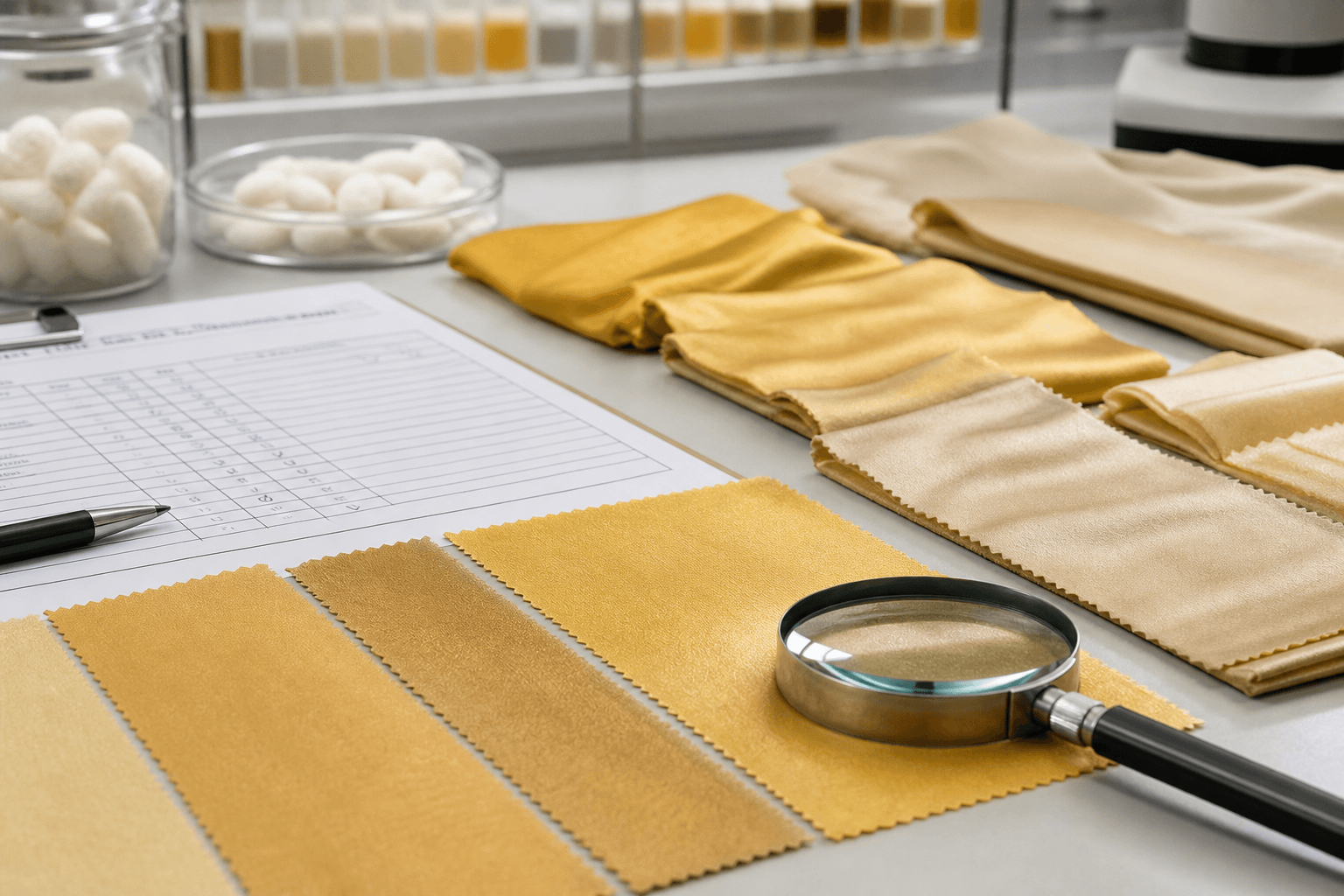
Golden cocoon silk offers distinct advantages, but sourcing teams should evaluate it against clear criteria.
Colorfastness. Because the color is inherent to the fiber, this material generally holds its hue well through washing and light exposure. Buyers should still request test data, since performance can vary by batch and finishing.
Environmental profile. The absence of dyeing reduces water use and chemical discharge. This supports sustainability claims, but brands should verify documentation rather than rely on general statements.
Functional properties. The fiber contains carotenoids, primarily lutein, which are associated with UV protection and antibacterial properties. These properties depend on fiber processing and should be confirmed with supplier test reports before being used in marketing.
Product positioning. The natural gold color offers a visual differentiator. It can support narratives around natural materials, reduced processing, and premium positioning.
Cost structure. This material is typically priced above conventional white silk. The higher raw material cost may be partly offset by reduced dyeing and finishing steps, but buyers should model total landed cost rather than compare fiber price alone.
In short, golden cocoon silk offers visual and functional appeal, but it should be evaluated with the same rigor as any other specialty fiber.
Sourcing Golden Cocoon Silk: What to Look For
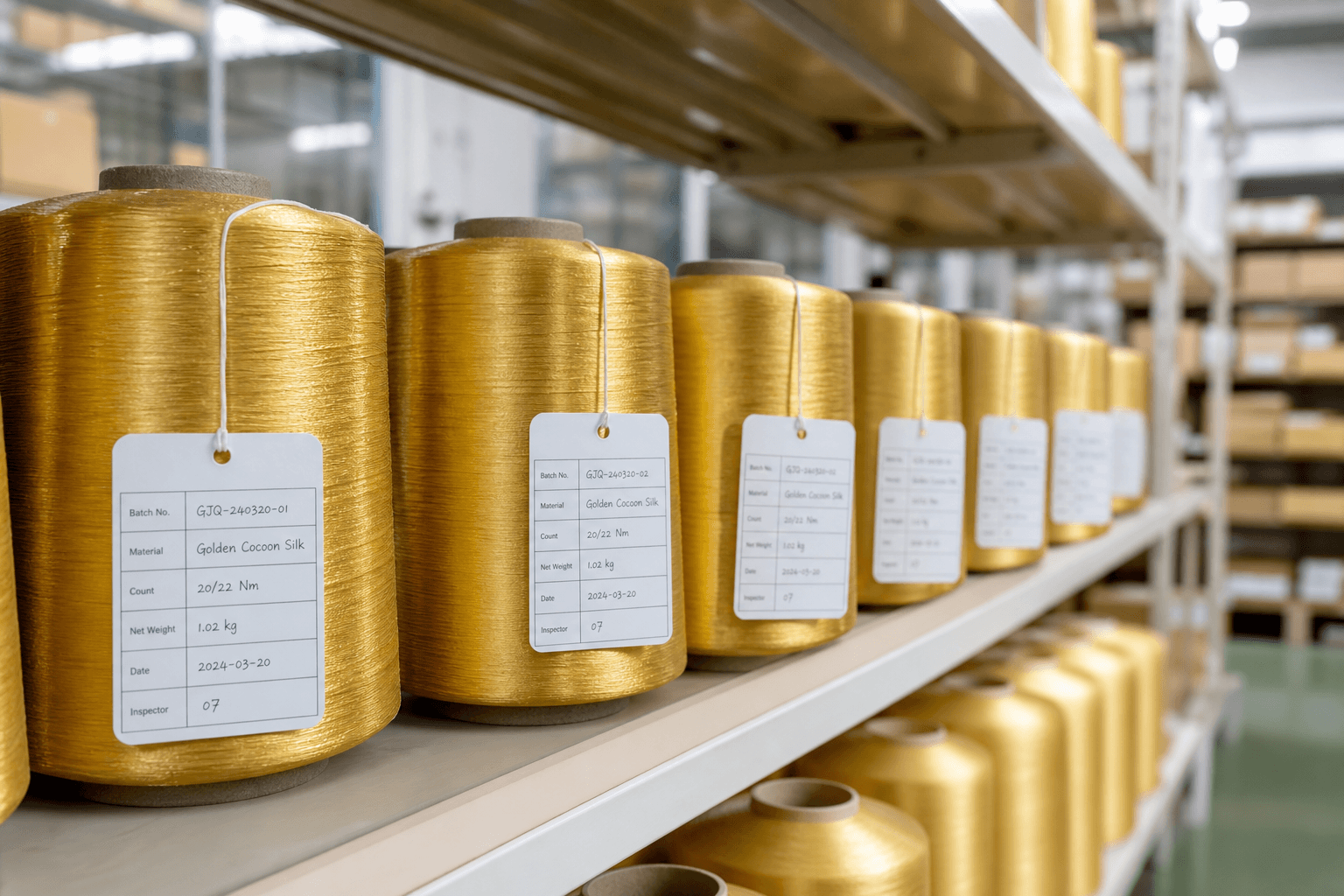
When evaluating golden cocoon silk suppliers, sourcing teams should focus on several factors.
Breed and origin. Confirm the silkworm breed and production region. "Jinqiu × Churi" is the main commercial breed, and origin affects consistency and traceability.
Batch consistency. Color and fiber specifications should be controlled per batch. Small color variations are common in natural coloration and should be defined in advance.
Traceability. Request origin and production records. Traceability is increasingly required by brand compliance teams and sustainability reporting.
Testing documentation. Ask for colorfastness, fiber composition, and functional test reports. Claims about UV protection or antibacterial properties should be supported by third-party data.
Customization. Check what can be adjusted: fiber specification, fabric construction, finishing, and minimum order quantities.
Lead time. Natural coloration depends on seasonal rearing cycles, so lead times may differ from conventional white silk.
COCOONMAN supplies silk materials to brand sourcing teams and product developers. While golden cocoon is not part of our current range, we work with clients to evaluate silk materials based on their product requirements and can share market knowledge on specialty silk options.
Golden Cocoon Silk vs. Traditional Silk: A Comparison
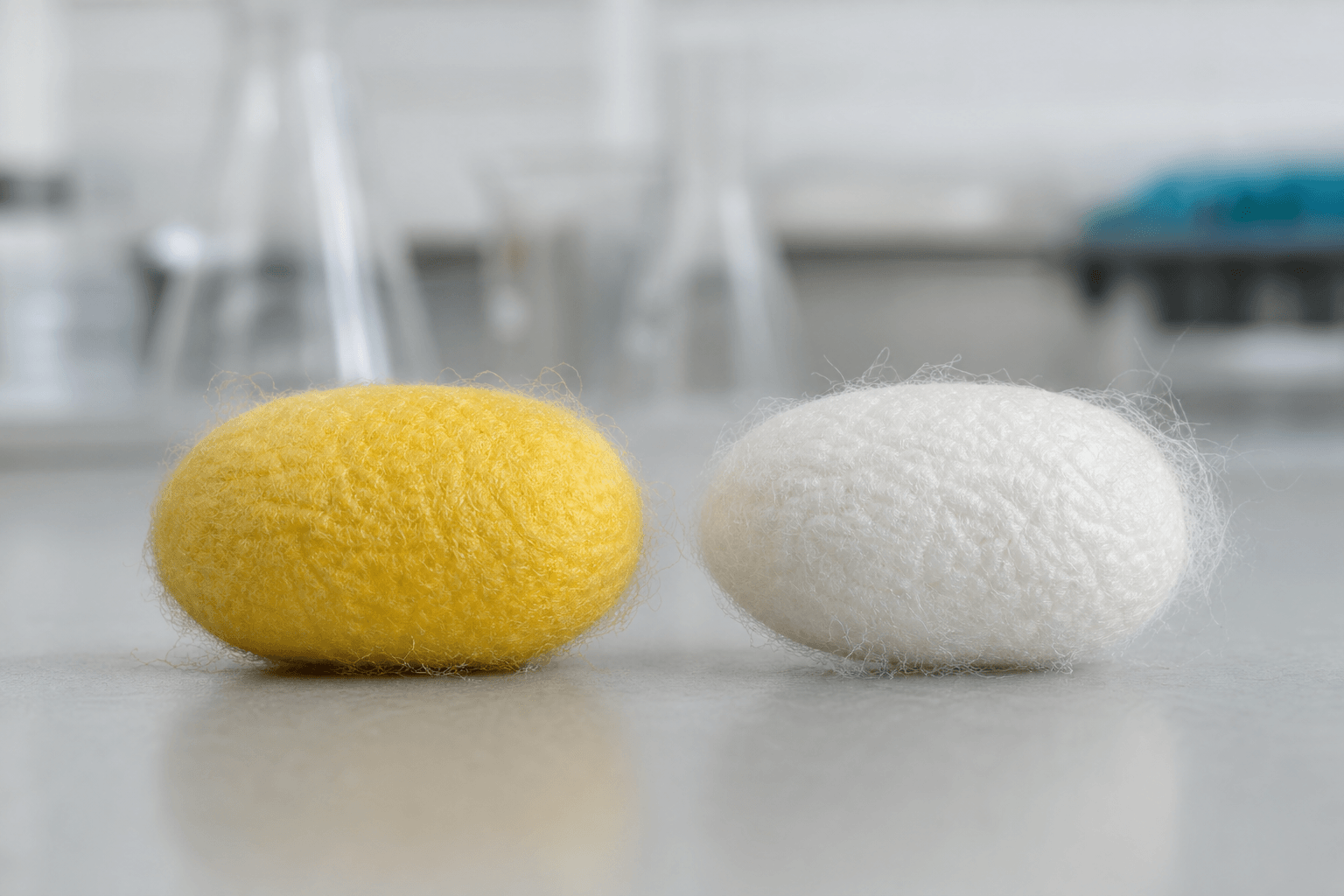
Golden cocoon silk and traditional white silk differ in coloration, processing, and functional properties.
| Feature | Golden Cocoon Silk | Traditional Silk |
|---|---|---|
| Color | Natural gold, inherent to fiber | Requires dyeing |
| Environmental impact | Lower, no dyeing step | Higher, due to chemical dyes |
| UV protection | Associated with carotenoid content | Standard |
| Antibacterial properties | Associated with carotenoid content | Minimal |
| Colorfastness | Inherent, generally stable | Depends on dye process |
| Ideal for sustainable fashion | Yes | Less optimal |
Both materials have merits. Golden cocoon silk stands out when natural coloration and reduced processing are priorities.
FAQ
1. What makes golden cocoon silk unique?
Golden cocoon silk has a naturally gold color derived from carotenoids, primarily lutein, deposited into the silk fiber during spinning. The color is inherent to the fiber and does not fade easily compared with dyed silk.
2. How is golden cocoon silk produced?
It is produced by the "Jinqiu × Churi" silkworm breed, cultivated mainly in Zhejiang, Sichuan, and Chongqing. The silkworms absorb carotenoids from mulberry leaves and deposit them into the silk fibroin during spinning.
3. Can golden cocoon silk be used in sustainable fashion?
Yes. Its natural coloration reduces the need for chemical dyes, lowering water use and chemical discharge. Brands should still verify environmental claims with supplier documentation.
4. What are the primary regions for golden cocoon silk production?
The main production regions are Zhejiang, Sichuan, and Chongqing in China. These areas have established sericulture infrastructure and large-scale reeling capacity.
5. What does COCOONMAN supply?
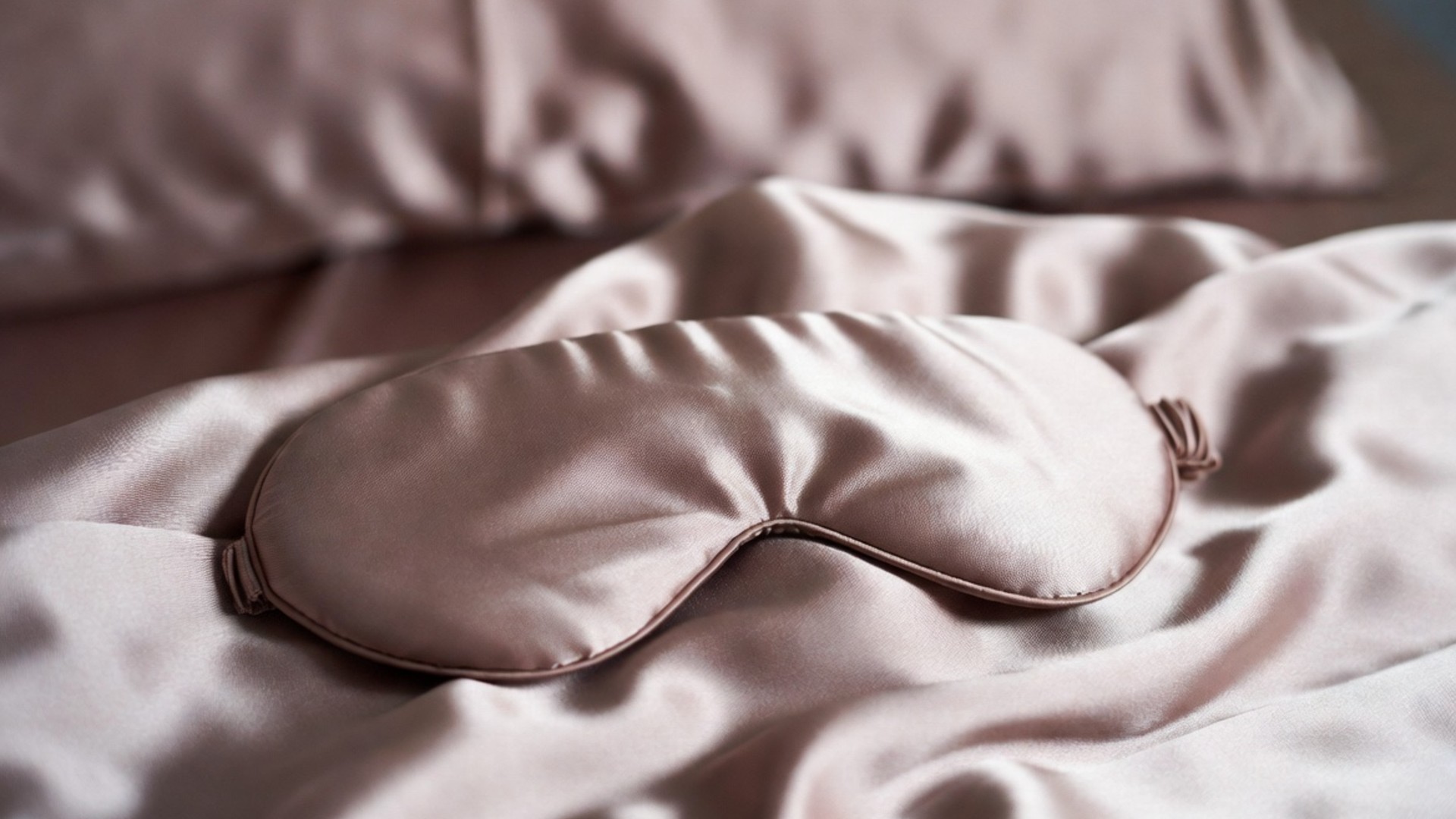
COCOONMAN supplies finished silk products, including bedding, hair accessories, sleep masks, and scarves, along with silk fabrics. We work with brand sourcing teams and product developers, and can share market knowledge on specialty silk options.
Conclusion
Golden cocoon silk is a distinctive material for brands exploring natural coloration and sustainable positioning. Its color is inherent to the fiber, its processing avoids dyeing, and its functional properties are associated with carotenoid content.
COCOONMAN supplies finished silk products, including bedding, hair accessories, sleep masks, and scarves, along with silk fabrics for brand sourcing teams and product developers. If you are evaluating specialty silk for an upcoming collection, our team can share market knowledge and discuss material options.