الدليل الكامل لسلسلة توريد خيوط الحرير في الصين (لمؤسسي العلامات التجارية)
الدليل الكامل لسلسلة توريد خيوط الحرير في الصين (لمؤسسي العلامات التجارية)
We wrote this guide for DTC founders, Etsy & Amazon sellers, and emerging small-business owners who want to understand where their silk actually comes from — before they place a bulk order.
> ما يقدمه هذا الدليل: Our insider's map of China's silk yarn supply chain, written for people who buy silk, not people who run factories.
> ما لا يقدمه هذا الدليل: A sourcing manual for building your own mill. You don't need one.
لماذا يجب أن تفهم سلسلة التوريد حتى إن لم تتعامل معها مباشرة
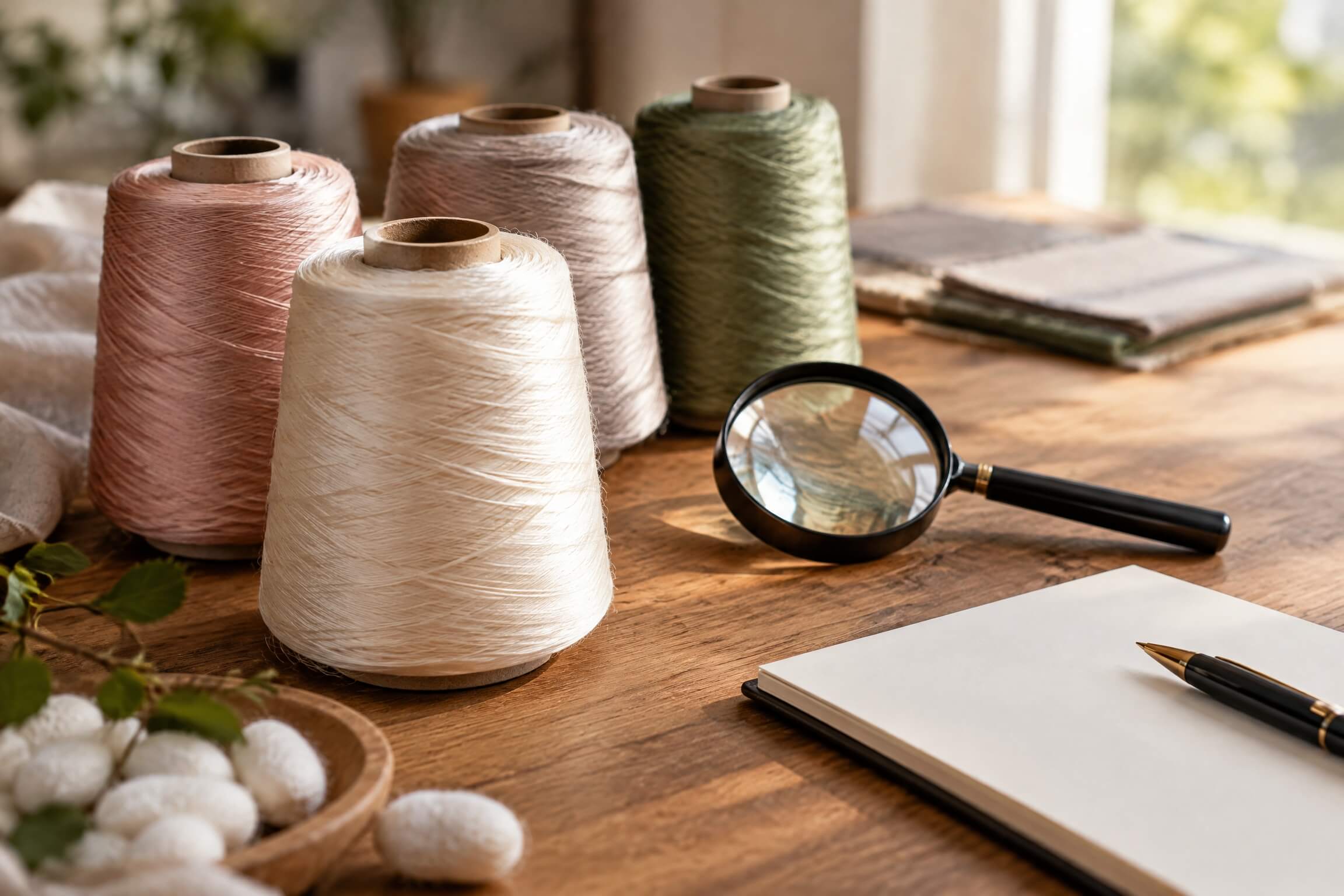
Here's the uncomfortable truth about silk: the quality of your final product is decided before it ever reaches your supplier's sewing floor.
It's decided at the cocoon stage, the grading stage, and the reeling stage — decisions made by people you'll never meet, in factories you'll never visit.
You don't need to run the supply chain. But you do need to understand it well enough to ask the right questions, spot the wrong answers, and avoid the three traps that kill most first-time silk brands.
We're going to walk you through China's silk yarn supply chain stage by stage — what happens, what can go wrong, and what it means for you as a buyer.
المرحلة الأولى: الشرانق — حيث يبدأ الحرير فعلياً
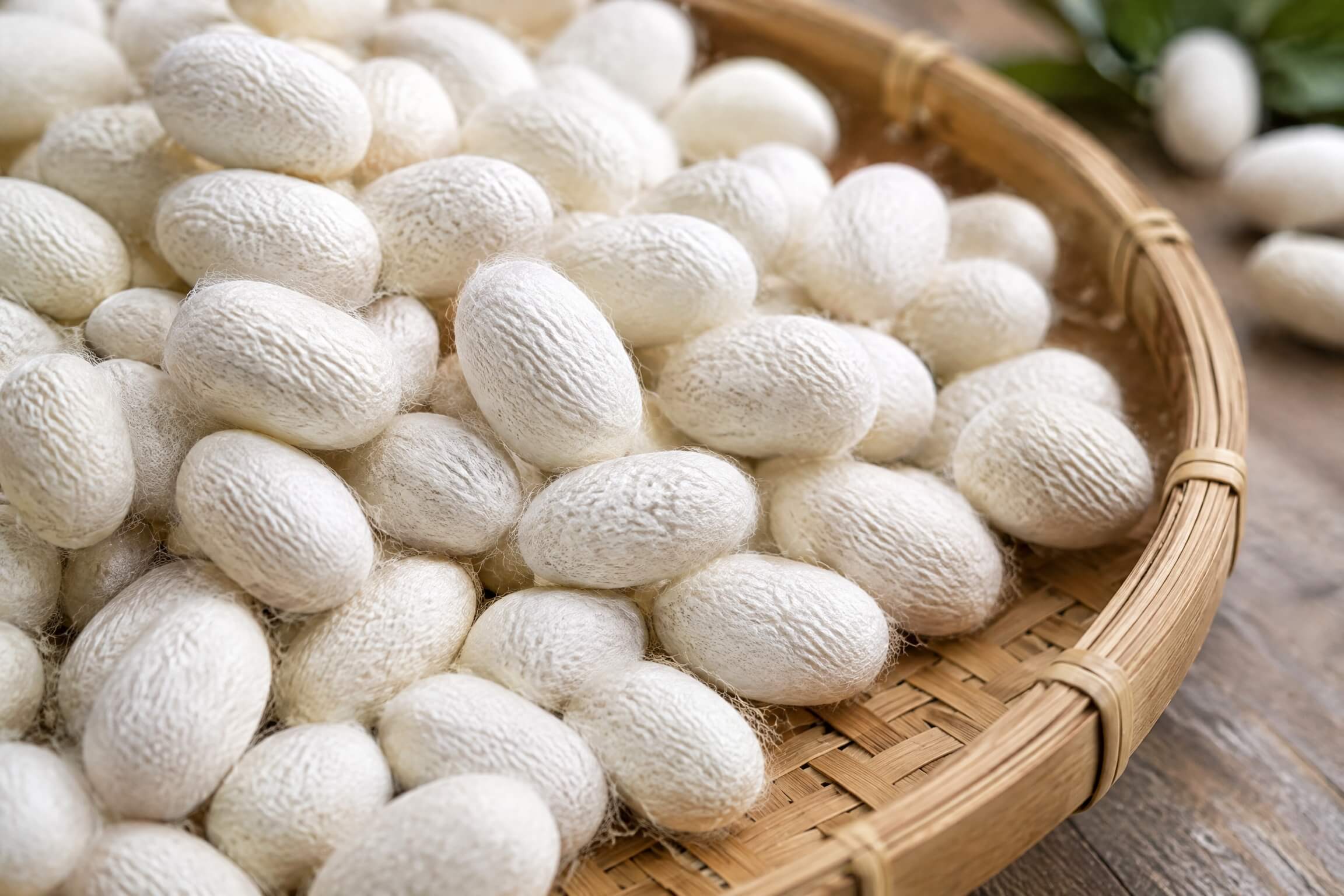
Silk starts with mulberry silkworms. Not all silk is mulberry silk — there's also tussah (wild silk), eri, and muga — but mulberry silk is what the premium market means when it says "silk." It's the softest, the most uniform, and the easiest to dye consistently.
Where China's cocoons come from:
China produces roughly 70% of the world's mulberry silk. But not all regions are equal.
- Guangxi and Sichuan are the volume leaders. Hot, humid, fast cocoon cycles. High output, shorter fiber length. Best for mid-tier fabric.
- Zhejiang and Jiangsu produce less volume but higher-grade cocoons. Longer fibers, better uniformity. This is where premium raw silk comes from.
- Yunnan and Shandong sit in between — decent quality, moderate volume.
لماذا يهمك هذا:
If a supplier tells you their cocoons are "from Zhejiang," and their price is suspiciously low, one of two things is true: they're lying, or they're mixing Zhejiang cocoons with lower-grade material and calling the whole batch "Zhejiang."
ما ينبغي أن تسأل عنه: "Which province do your cocoons come from, and can you provide the raw silk grading certificate from the reeling mill?"
المرحلة الثانية: تصنيف الحرير الخام — الرقم الذي يحدد كل شيء
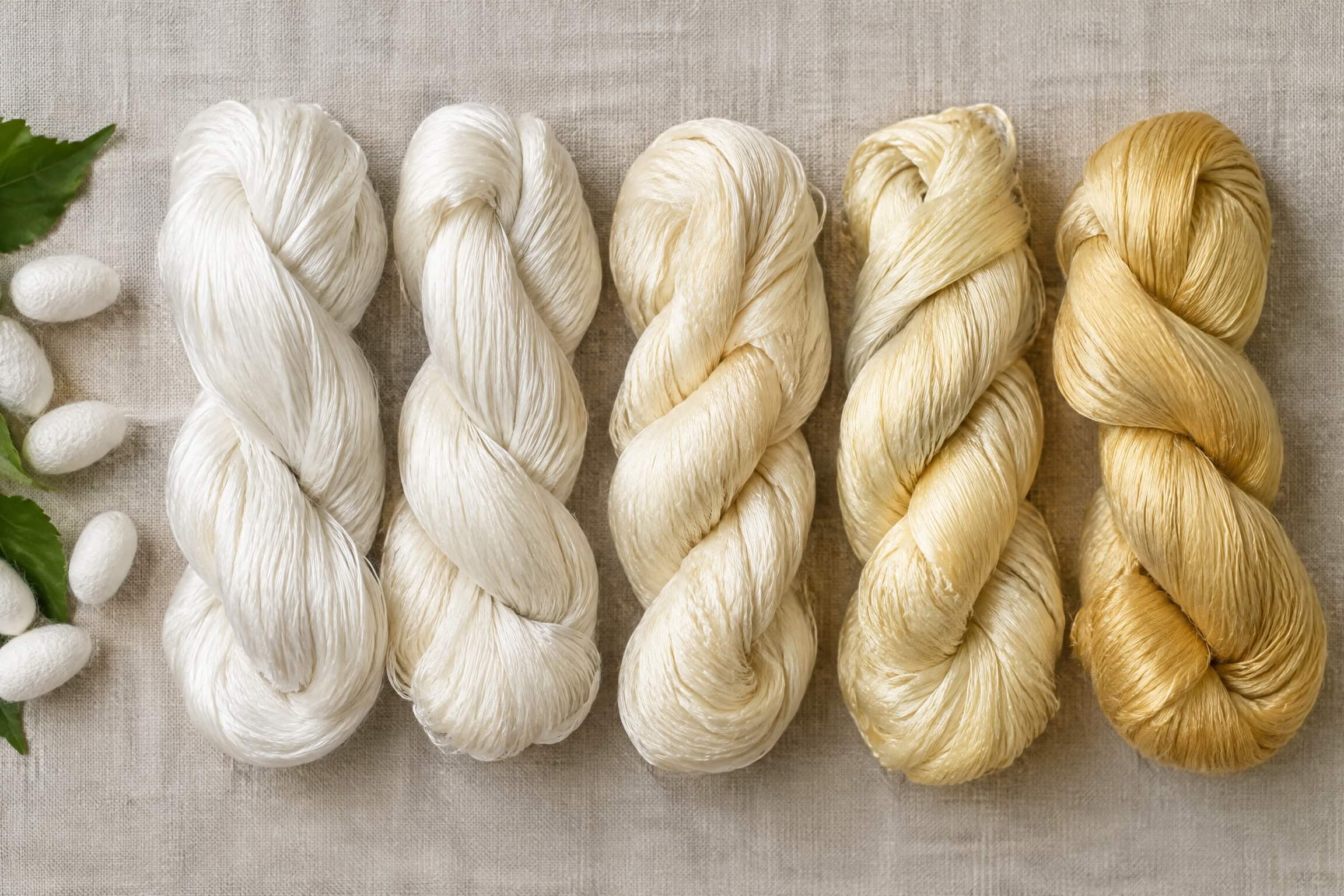
Once cocoons are reeled into raw silk, the silk is graded. In China, the standard grading system runs from 6A (best) down to A (lowest commercial grade).
Here's what the grades actually mean in practice:
- 6A — Top 1–2% of production. Long, uniform fibers. Minimal breaks. Used in luxury scarves, high-end bedding, and anything that needs to drape perfectly. Price premium: significant.
- 5A — Excellent quality. Very close to 6A, often indistinguishable in finished fabric. Most premium brands use 5A or 6A.
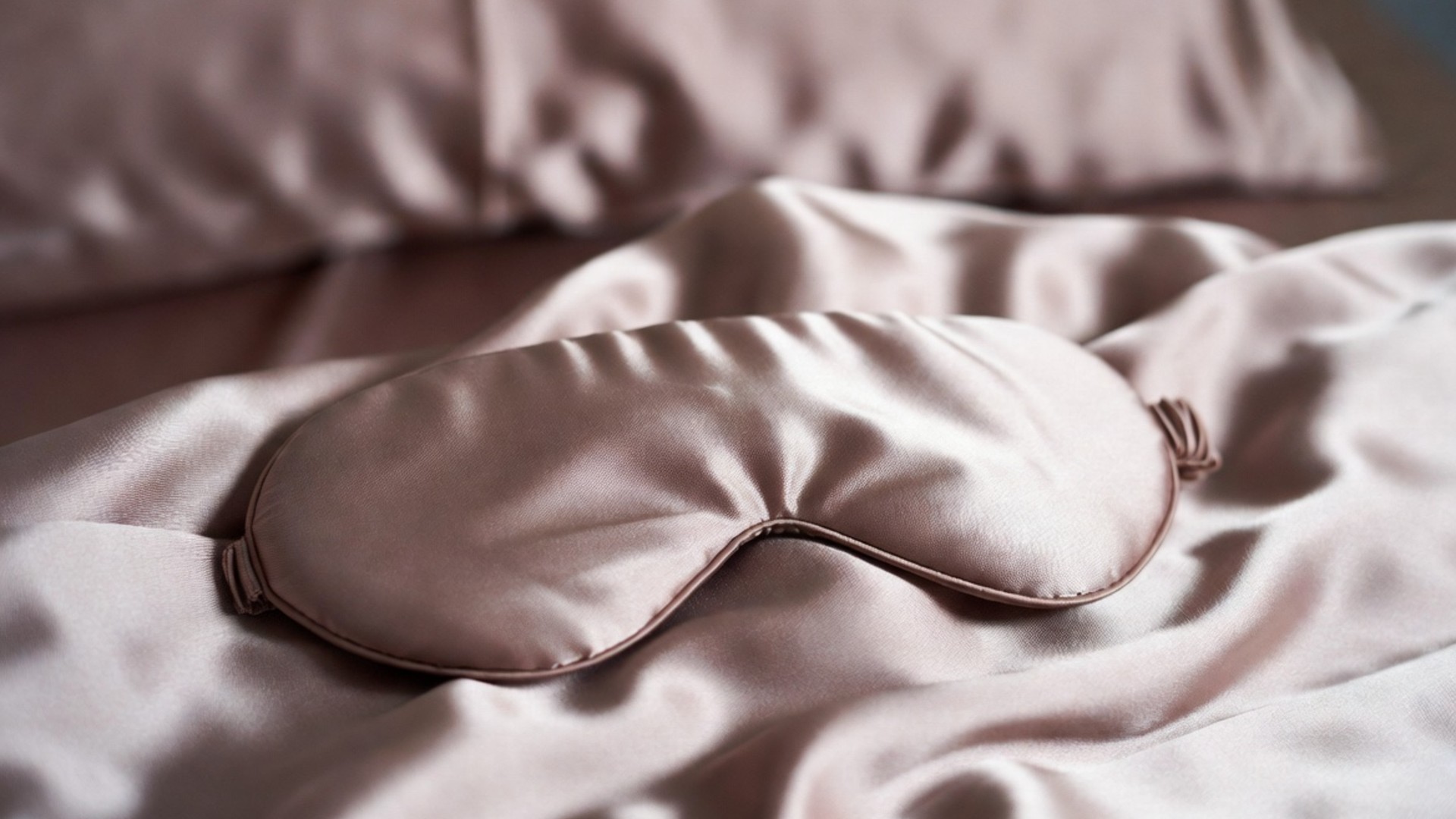
- 4A — Solid commercial grade. Good for sleepwear, eye masks, and mid-tier pillowcases. Slight variation in fiber length.
- 3A and below — Short fibers, more breaks, less luster. Used in lower-cost products, linings, and blends.
المصيدة: Many suppliers quote "6A" without documentation. The grading certificate is issued by the reeling mill or a third-party inspection body. If a supplier can't produce the certificate, the "6A" claim is marketing, not fact.
ما ينبغي أن تسأل عنه: "Can you provide the raw silk grading certificate for the batch you're quoting?"
المرحلة الثالثة: الحلّ والبرم — حيث تُكتسب الجودة أو تُفقد
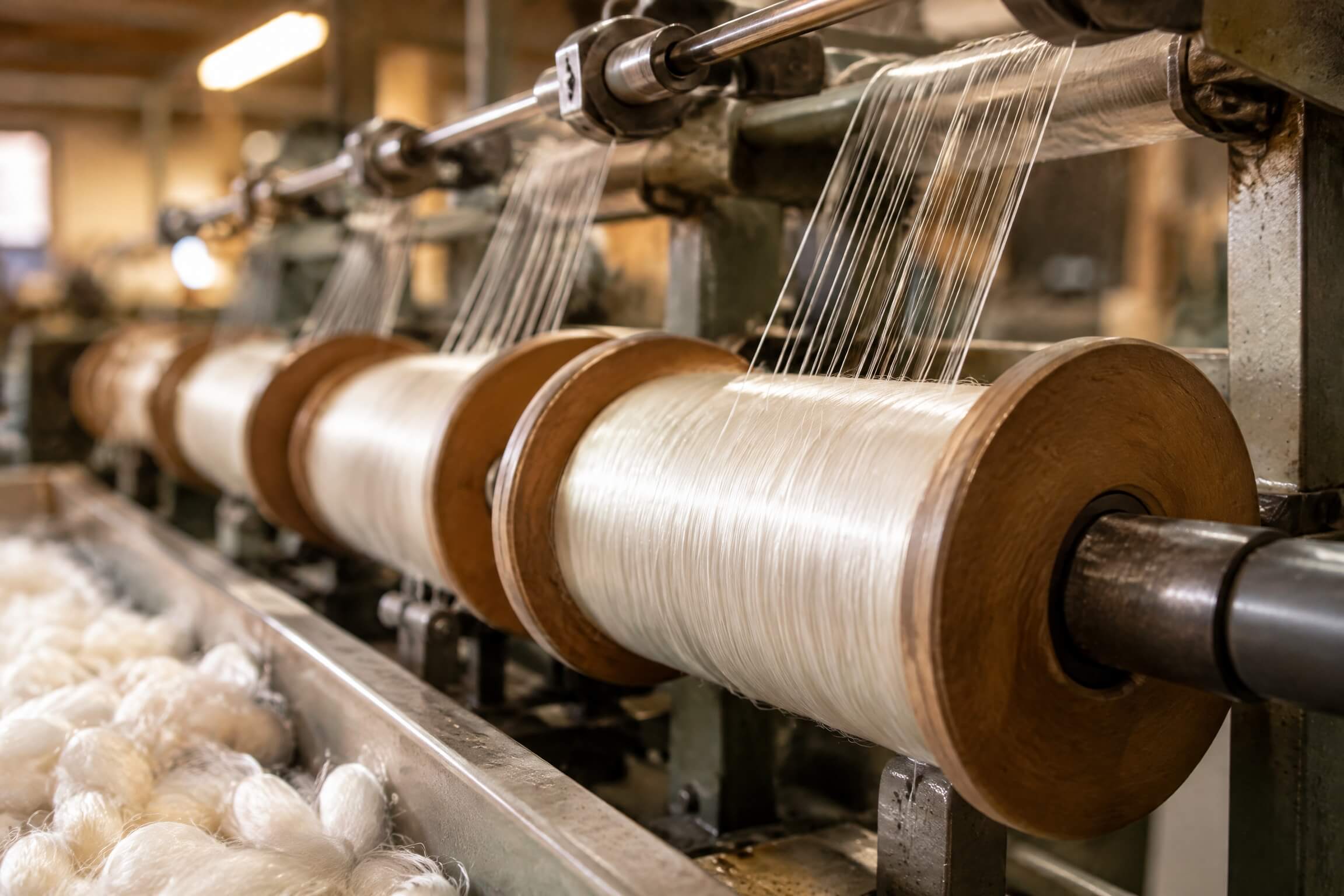
Reeling is the process of unwinding silk filaments from cocoons and twisting them into usable yarn. This is where the fiber's strength and uniformity are determined — and where two batches of the same cocoon grade can end up with very different quality.
ما يحدث في هذه المرحلة:
- Cocoons are softened in hot water (typically 60–70°C; temperature control is critical).
- Filaments from 6–8 cocoons are combined into a single thread.
- Threads are twisted to increase strength and consistency.
- The yarn is wound onto spools, ready for weaving or dyeing.
ما قد يحدث من أخطاء:
- Temperature variance. A 2°C difference in water temperature can increase filament breakage by 15%.
- Twist inconsistency. Too little twist, and the yarn is weak. Too much, and the fabric feels stiff and loses its natural drape.
- Contamination. Dust, oil, or fiber debris in the reeling area can end up in the yarn, causing dye defects later.
لماذا يهمك هذا:
We've seen 22mm pillowcases made from poorly reeled yarn feel rougher and wear out faster than the same 22mm pillowcase made from well-reeled yarn. The momme number doesn't tell you everything.
ما ينبغي أن تسأل عنه: "What's your twist-per-meter standard, and how do you control tension during reeling?"
المرحلة الرابعة: النسج والصباغة — حيث تتكبد معظم العلامات الخسائر
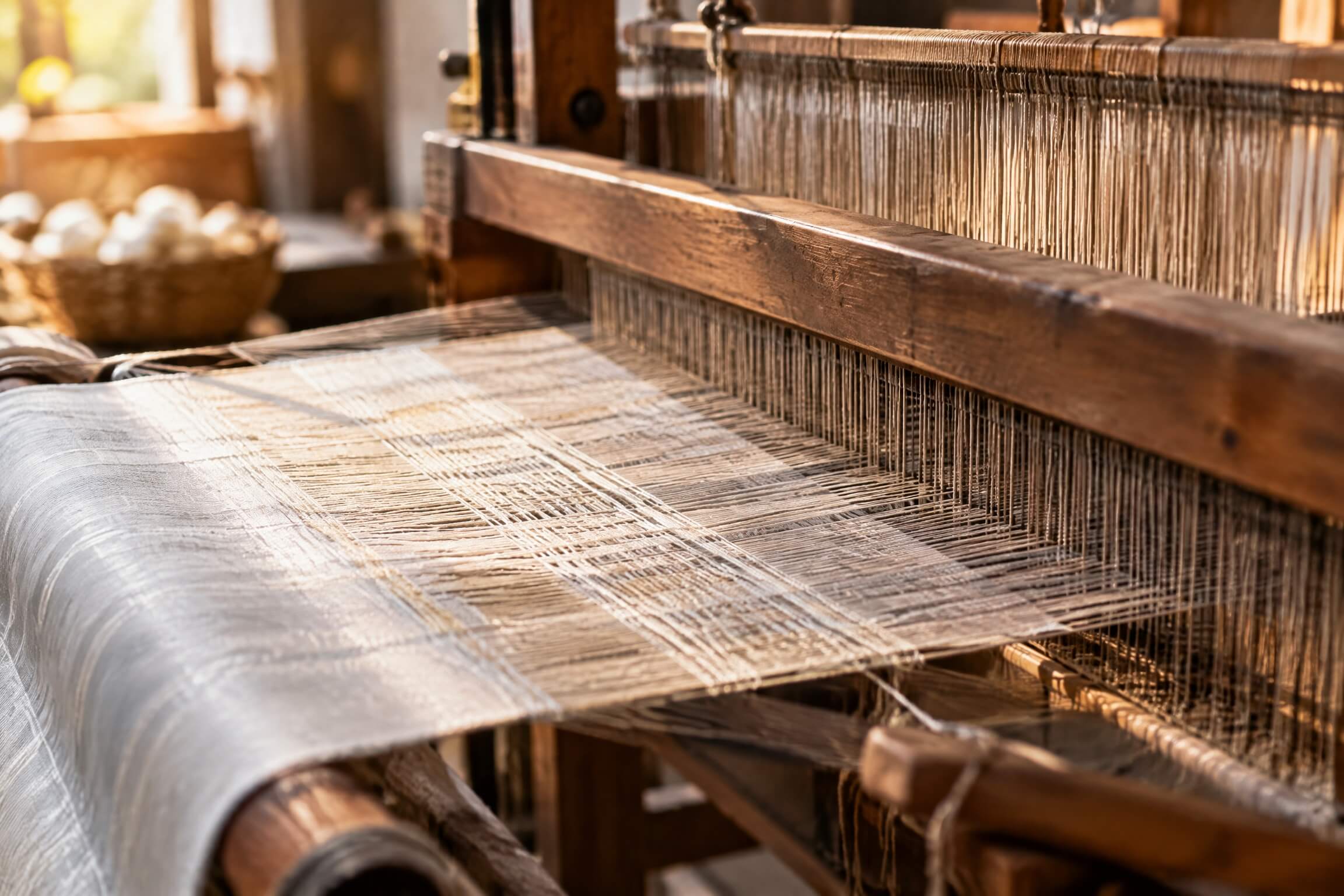
النسج turns silk yarn into fabric. الصباغة gives it color. Both stages are where quality problems become visible — and where most first-time brands discover the fabric they ordered isn't what they approved.
النسج:
- Charmeuse — glossy front, matte back. The "classic silk" look. Good for pillowcases and sleepwear.
- Crepe de chine — matte, slight texture. Better for garments that need structure.
- Habotai — lightweight, smooth. Common for scarves.
- Chiffon — sheer, delicate. Used for overlays and lightweight scarves.
Each weave requires different loom settings. If the tension is off, you get uneven patterns, weak spots, or visible defects.
الصباغة:
الصباغة is where the biggest surprises happen. Two batches of the same fabric, dyed at different times, can come out visibly different — even if the supplier used the same dye formula.
- Dye lot variation — the most common source of "the bulk doesn't match the sample" complaints.
- Color fastness — how well the color holds up after washing. Low fastness means fading, bleeding, and returns.
- Chemical residue — low-quality dyes can leave residue that irritates skin. This is where OEKO-TEX certification matters.
لماذا يهمك هذا:
If you approve a sample and don't specify "dye lot match to approved sample" in your purchase order, you have no recourse when the bulk arrives two shades off. The supplier will say "within tolerance." You'll eat the loss.
ما ينبغي أن تسأل عنه: "Can you guarantee dye lot match to the approved sample? What's your color fastness rating?"
المرحلة الخامسة: التشطيب وتصنيف القماش
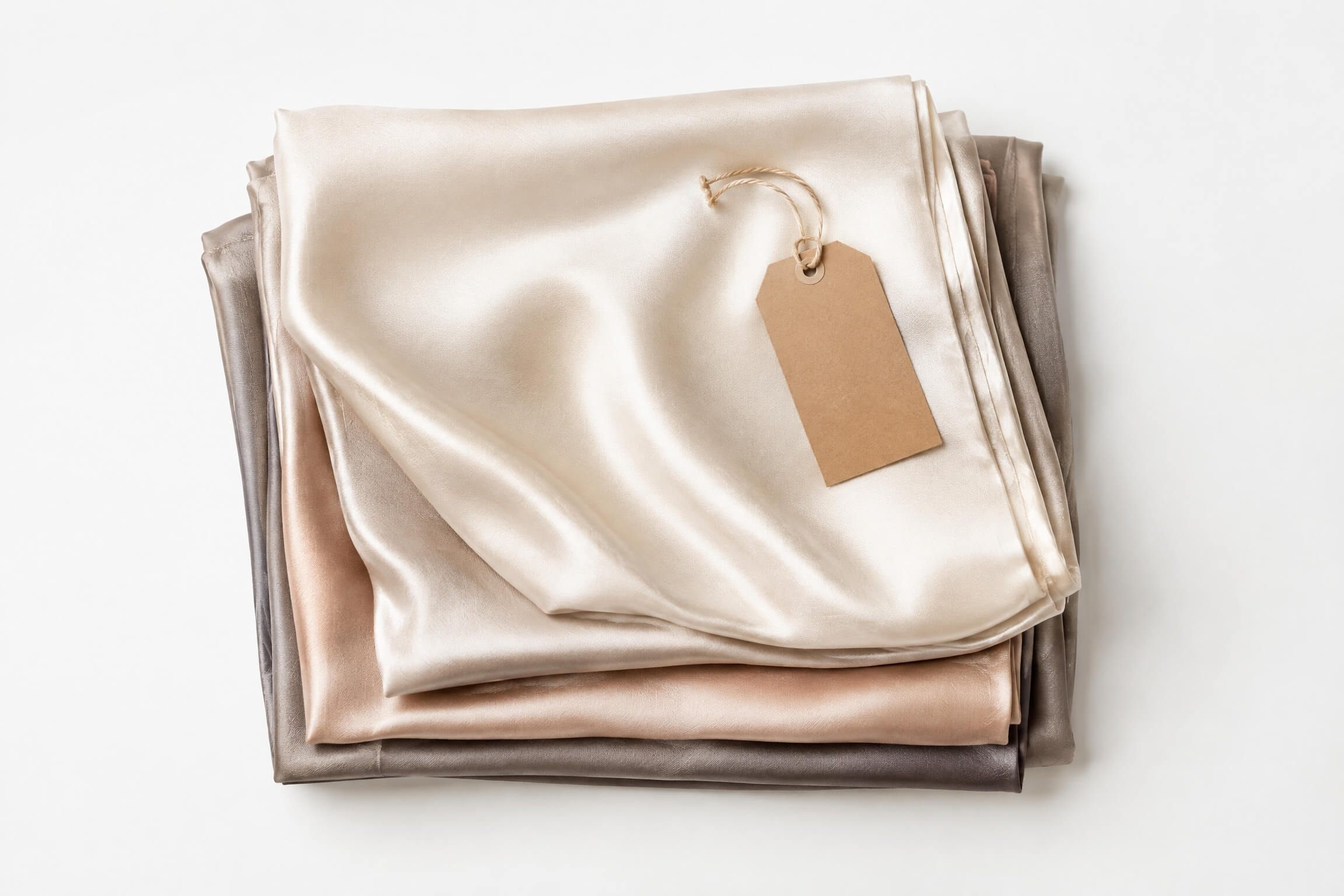
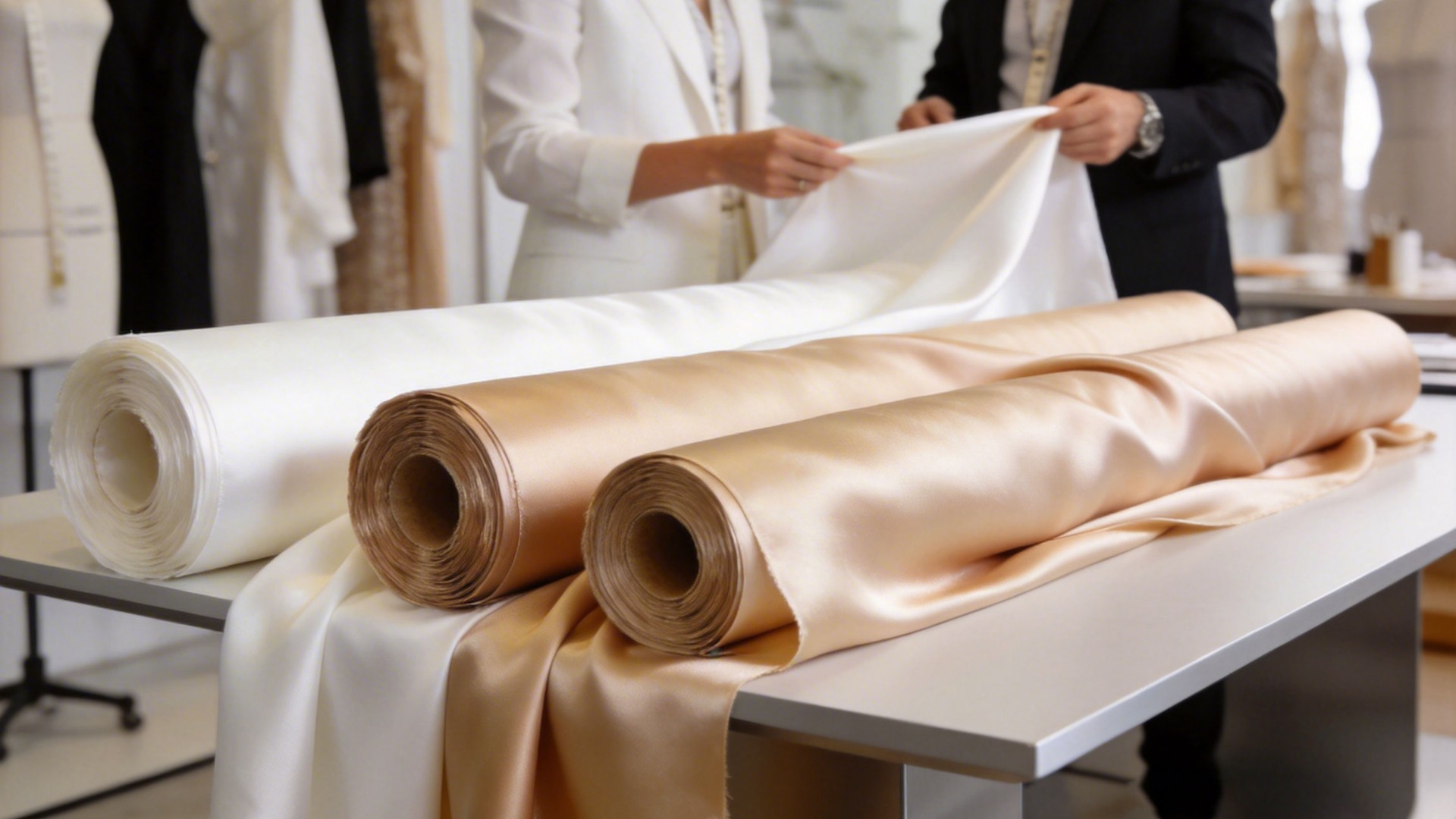
After weaving and dyeing, silk goes through finishing — treatments that enhance feel, appearance, and durability. This is the last chance to catch defects before fabric ships to your supplier's sewing floor.
ما يفعله التشطيب:
- Softening treatments to improve hand feel.
- Calendering to enhance luster.
- Pre-shrinking to reduce shrinkage after washing — this is why two identical silk pillowcases can shrink differently.
- Final inspection and grading.
تصنيف القماش:
Finished silk fabric is graded on:
- Weight consistency — does the actual momme match the spec?
- Color uniformity — any streaks, patches, or dye lot variation?
- Surface defects — slubs, pulls, or uneven weave?
- Hand feel — softness, drape, and smoothness.
لماذا يهمك هذا:
This is where you, as the buyer, have the most power. You can request a pre-shipment inspection. You can ask for the fabric grading report. You can reject a batch that doesn't meet spec — if you put the spec in writing.
ما ينبغي أن تسأل عنه: "Can you provide a pre-shipment fabric inspection report before the order ships?"
كيف يندرج حرير OEM في السلسلة
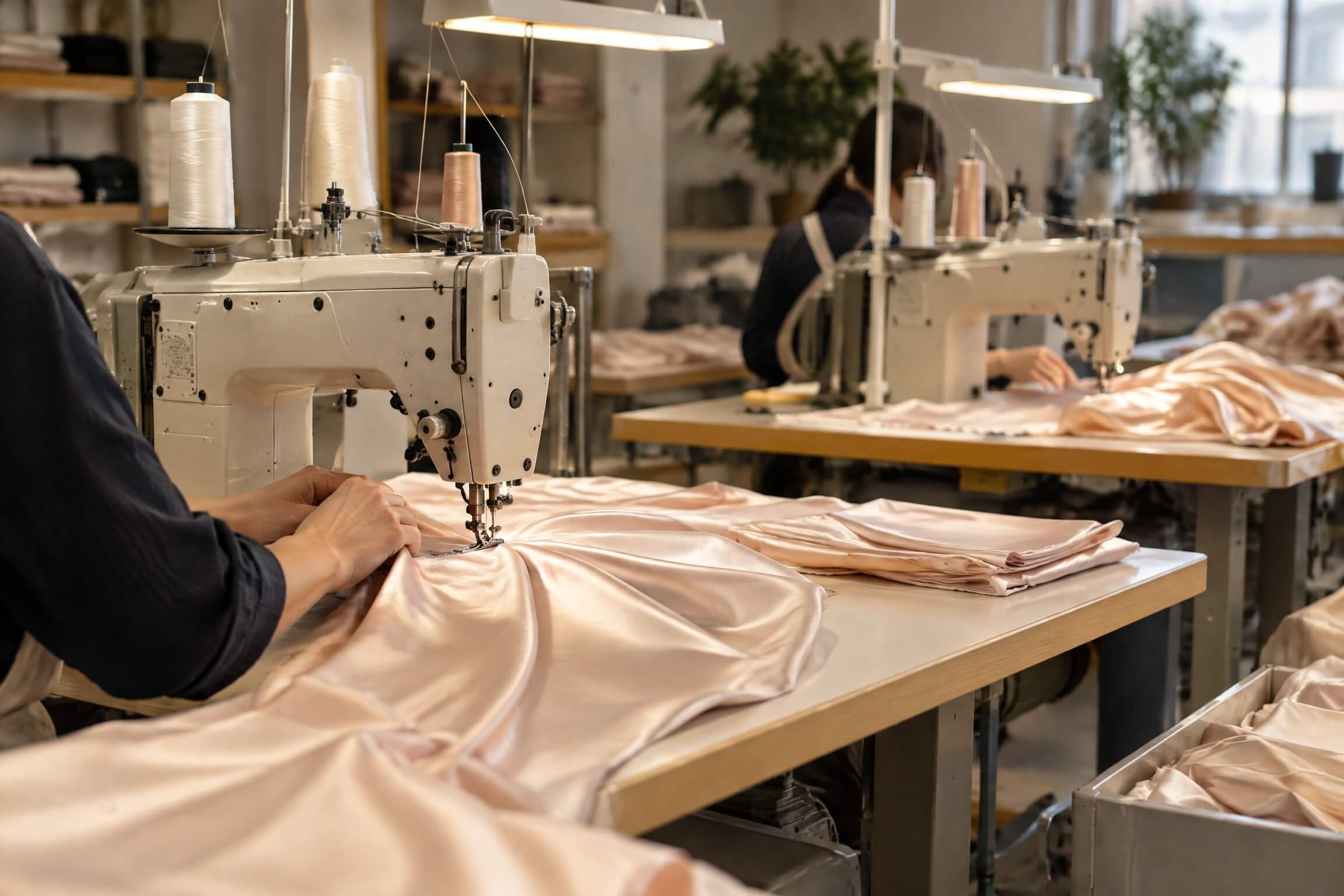
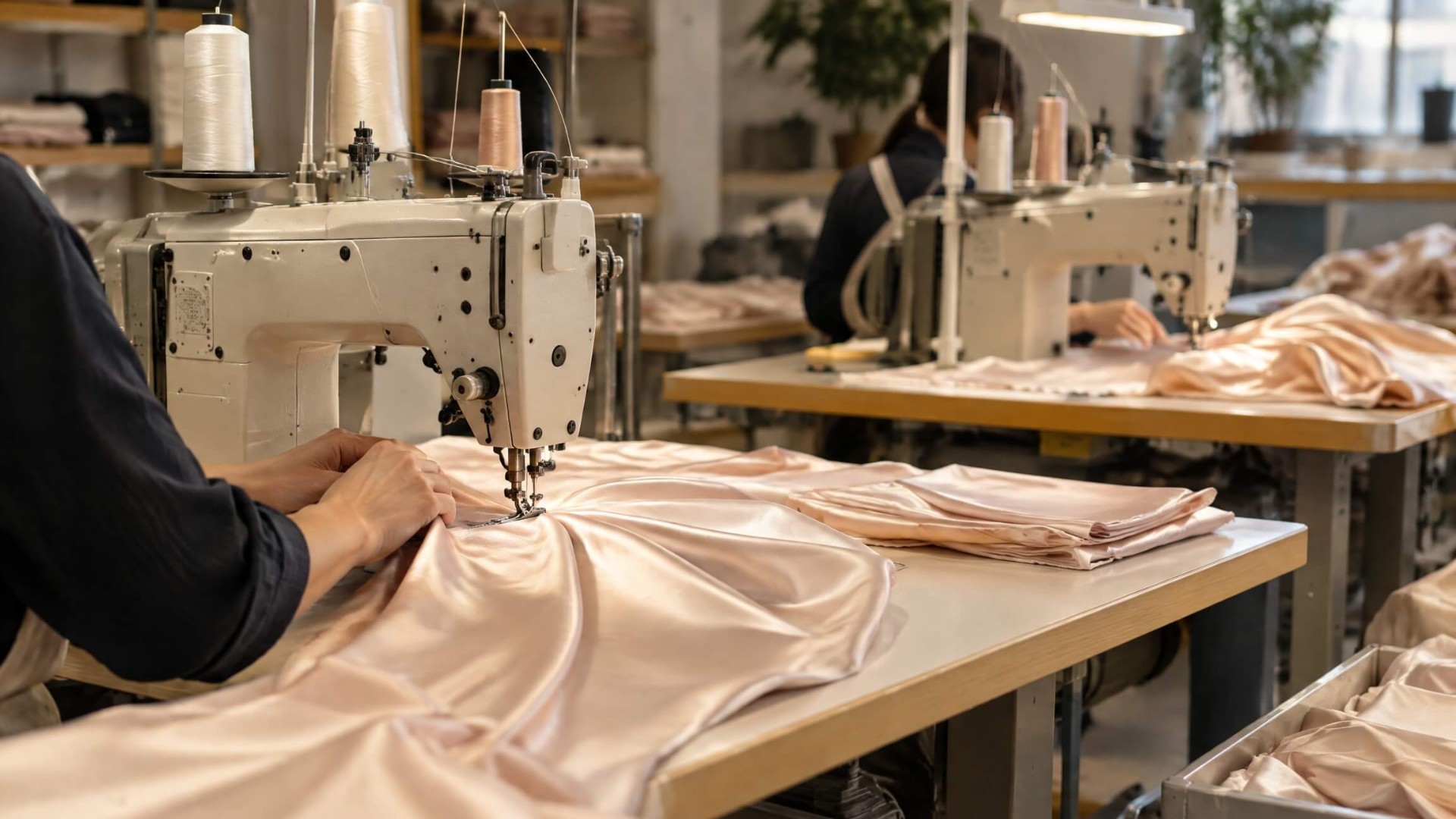
If you're a small brand, you're not going to buy directly from a reeling mill or a weaving factory. Their MOQs are in tons, not meters. You'll work with an OEM supplier who sits at the end of the chain and handles fabric sourcing, cutting, sewing, and packaging for you.
What OEM actually means for you:
- You skip the cocoon, grading, reeling, and weaving stages entirely.
- You specify the fabric (weave, momme, color), the product (size, construction), and the packaging.
- Your OEM partner sources the fabric, produces the product, and ships it to you.
The trade-off: You give up direct control over upstream quality, in exchange for a much lower entry point. The right OEM partner has direct relationships with the mills — so you get their quality control, not just their sewing capacity.
The catch: Not all OEM suppliers are equal. Some are trading companies that outsource production. Some are factories that only want large orders. The ones worth working with are purpose-built for small-batch production and have direct relationships with the mills upstream. That's the model we built COCOONMAN around — because we kept seeing small brands get burned by suppliers who weren't set up for them.
ما ينبغي أن تسأل عنه: "Do you own your production facility, or do you outsource? Can you introduce me to your fabric mill?"
أكثر ثلاثة مصائد شيوعاً في سلسلة التوريد
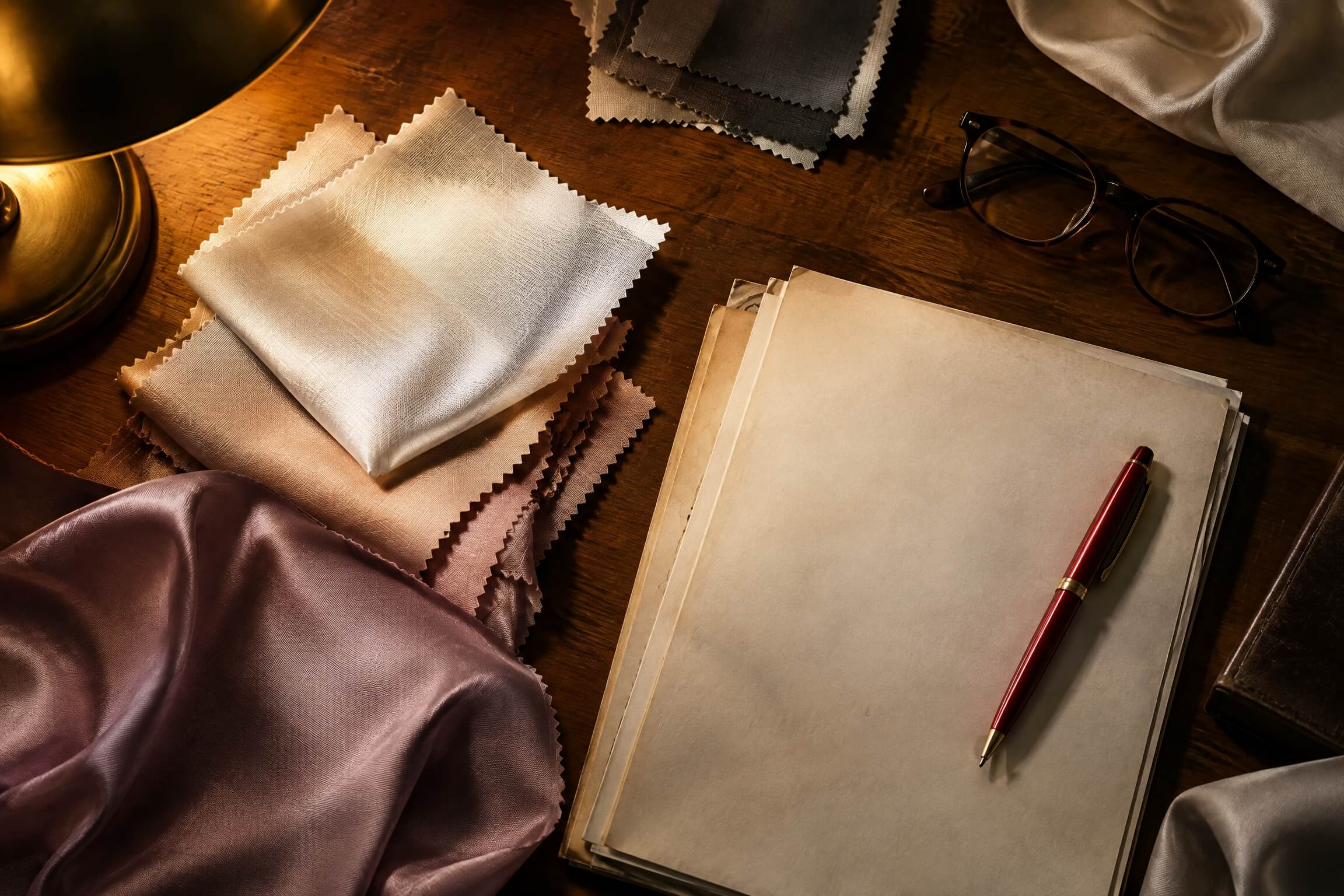
Trap 1: The grading gap.
The sample is 6A. The bulk is 4A. You can't tell by looking. You can't tell by touching. You only find out when customers start complaining about roughness or pilling.
The signal: Ask for the grading certificate. If the supplier hesitates, that's your answer.
Trap 2: The dye lot drift.
The sample is dusty rose. The bulk is dusty rose, but slightly warmer. Two batches, same formula, different result.
The signal: Specify "dye lot match to approved sample" and request a pre-shipment color check. If the supplier won't commit to this in writing, walk away.
Trap 3: The momme illusion.
The fabric is labeled 22mm. It feels close. But a lab test shows 19mm with a small polyester blend. The supplier says "within industry tolerance."
The signal: Third-party lab test on the bulk batch. Put the tolerance in the PO. "22mm ± 0.5mm, 100% mulberry silk" is a spec. "22mm" is a hope.
All three traps have the same root cause: no written spec, no recourse. We've seen all three happen to first-time founders — and we've helped brands recover from all three.
الأسئلة الشائعة
1. What is the main challenge in the silk yarn supply chain?
Consistency. The cocoon stage, the reeling stage, and the dyeing stage all introduce variation. Keeping quality consistent from raw material to finished fabric is the hardest part — and the part most likely to affect your product.
2. How important is mulberry silk in the production process?
Mulberry silk is the backbone of premium silk products. Its longer, more uniform fibers create the smoothness, sheen, and durability that customers expect from "silk." Other silks (tussah, eri, muga) have their uses, but mulberry is the standard for premium bedding and apparel.
3. What role does OEM silk play in the supply chain?
OEM silk lets small brands access the end of the supply chain without buying from mills directly. You specify the fabric and product; the OEM partner handles sourcing, production, and packaging. It's the only realistic entry point for brands ordering 50–500 pieces.
4. What's the minimum order I can place with an OEM silk supplier?
For most small-batch OEM partners, the minimum is 50–100 pieces per design. Some will go lower for samples. The key is finding a supplier who's set up for small-batch production — not one who's making an exception for you.
5. What measures ensure quality control in silk manufacturing?
Three things: written specs, pre-shipment inspection, and third-party testing. Written specs define what "quality" means. Pre-shipment inspection catches defects before they ship. Third-party testing verifies what the supplier claims. Without all three, you're relying on trust — and trust doesn't scale. This is the exact process we run at COCOONMAN for every batch.
6. How do I verify momme weight before placing a bulk order?
Ask for a fabric swatch and a lab test report. If the supplier can't provide a lab test, order a third-party test yourself on the sample. A 22mm claim that comes back as 19mm is a red flag — and a reason to walk away.
7. What's the difference between 5A and 6A raw silk?
6A is the top 1–2% of production: longer fibers, fewer breaks, better uniformity. 5A is very close and often indistinguishable in finished fabric. For most small brands, 5A is more than enough. The premium for 6A is only worth it for luxury positioning.
8. Can I visit the factory or mill before ordering?
For small orders, usually no — and you don't need to. Instead, ask for a video walkthrough of the production floor, the fabric inspection report, and references from other small brands they've worked with.
الخلاصة
Understanding China's silk yarn supply chain doesn't mean you need to run it. It means you know where quality is decided, where problems come from, and what questions to ask before you pay a deposit.
The brands that succeed in silk are not the ones with the lowest unit cost. They're the ones who specified their fabric properly, verified their supplier's claims, and built a supply chain they can trust.
If you'd rather not navigate this alone, COCOONMAN specializes in small-batch OEM & ODM silk manufacturing for emerging brands and first-time founders. We've already built the mill relationships, the QC process, and the small-batch workflow — so you can focus on your product, not your supply chain.
🎯 Two ways to move forward:
- Want professional feedback on your product concept? Get honest, no-pressure feasibility & cost feedback from our sourcing team.
[Talk to a Sourcing Advisor →]
- Prefer evaluating fabric & product quality first hand? Order our sample kit to inspect materials, stitching and finish.
*COCOONMAN is a small-batch silk OEM / ODM manufacturer for emerging consumer DTC brands. We wrote this guide because we believe informed buyers make better partners.*